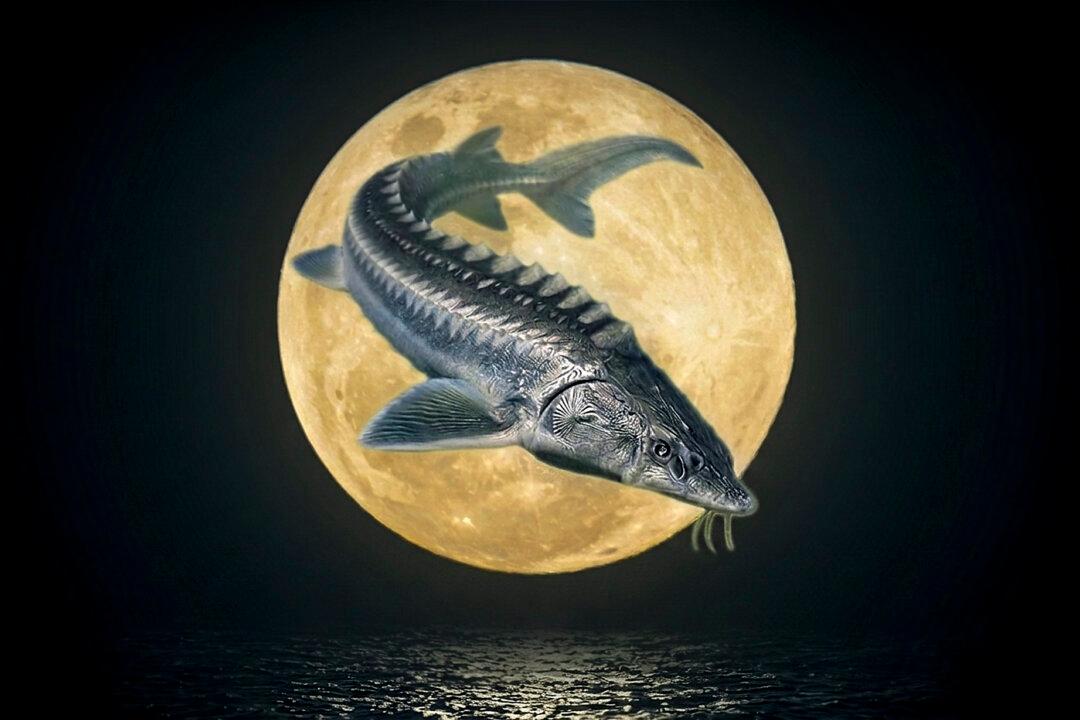
It shines in the night sky every mid-summer fishing season, and its name is steeped in Native American folklore. The full moon in August acquired the moniker of Sturgeon Moon after the overabundance of the bottom-dwelling fish that for centuries helped sustain tribes around the Great Lakes region.
A ‘Fossil’ of a Fish
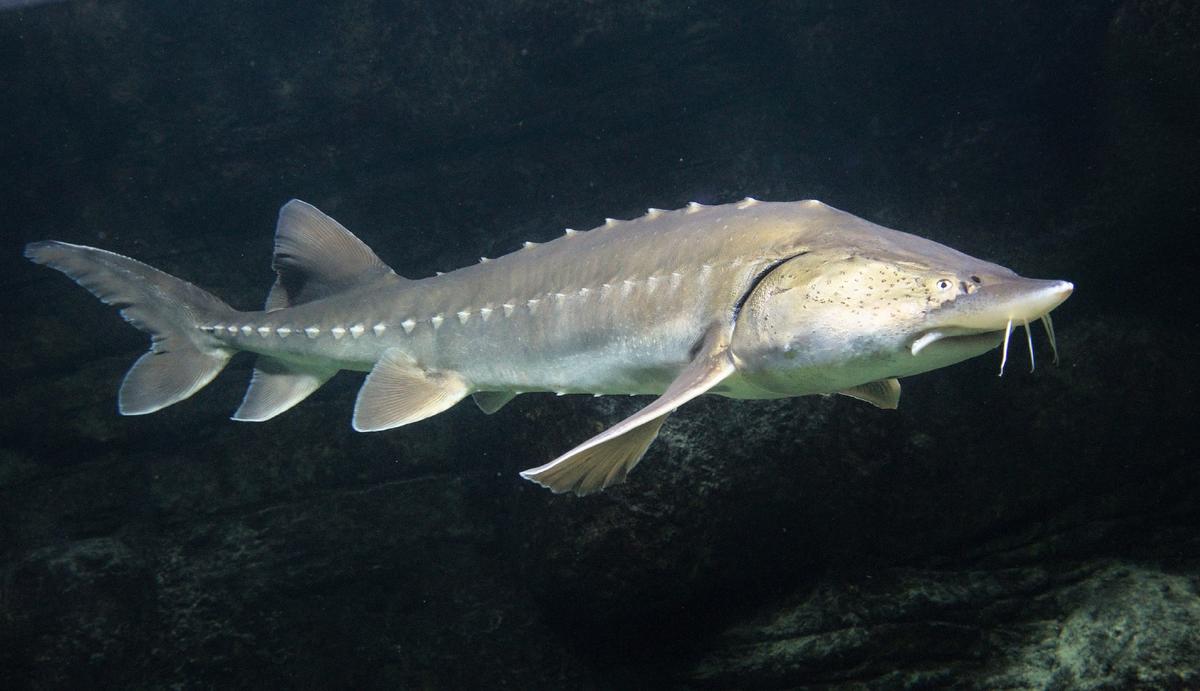
Considered a “living fossil,” sturgeon have fed indigenous tribes since before the time of the pyramids in Egypt over 4,000 years ago, and was even a food source for the first settlers of Jamestown in 1607, saving their lives. Taking on greater significance than mere sustenance, sturgeon embedded themselves into native folklore and spirituality.As both native and colonial Americans traditionally gave full moons seasonal names—like the October Hunter’s Moon or June’s Strawberry Moon—the August full moon was likewise christened the Sturgeon Moon after this life-giving freshwater fish, which were so plentiful during summertime.
Special Moon Viewing Phenomena
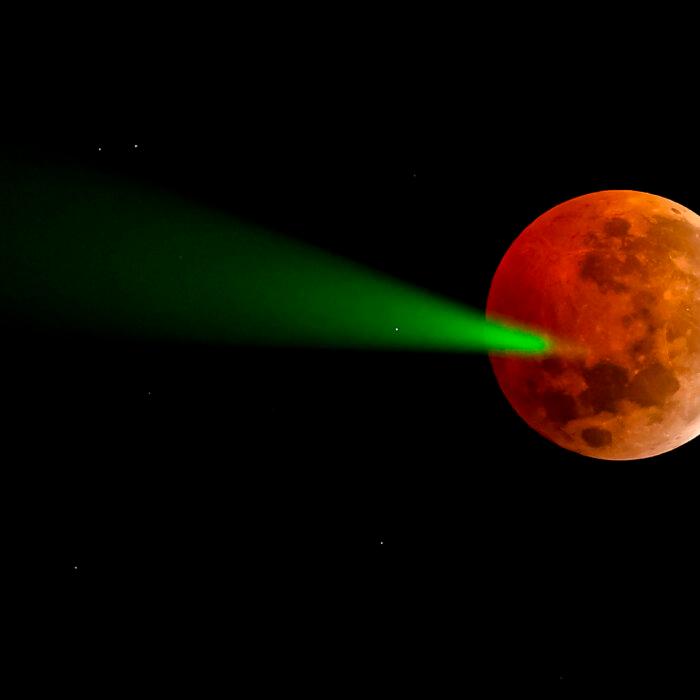
When the full Sturgeon Moon falls next month it may take on a reddish hue due to haze caused by summertime heat and aridity, according to the Old Farmer’s Almanac. Although it reaches technical fullness on Aug. 9, it will still appear full for a day or so before and after.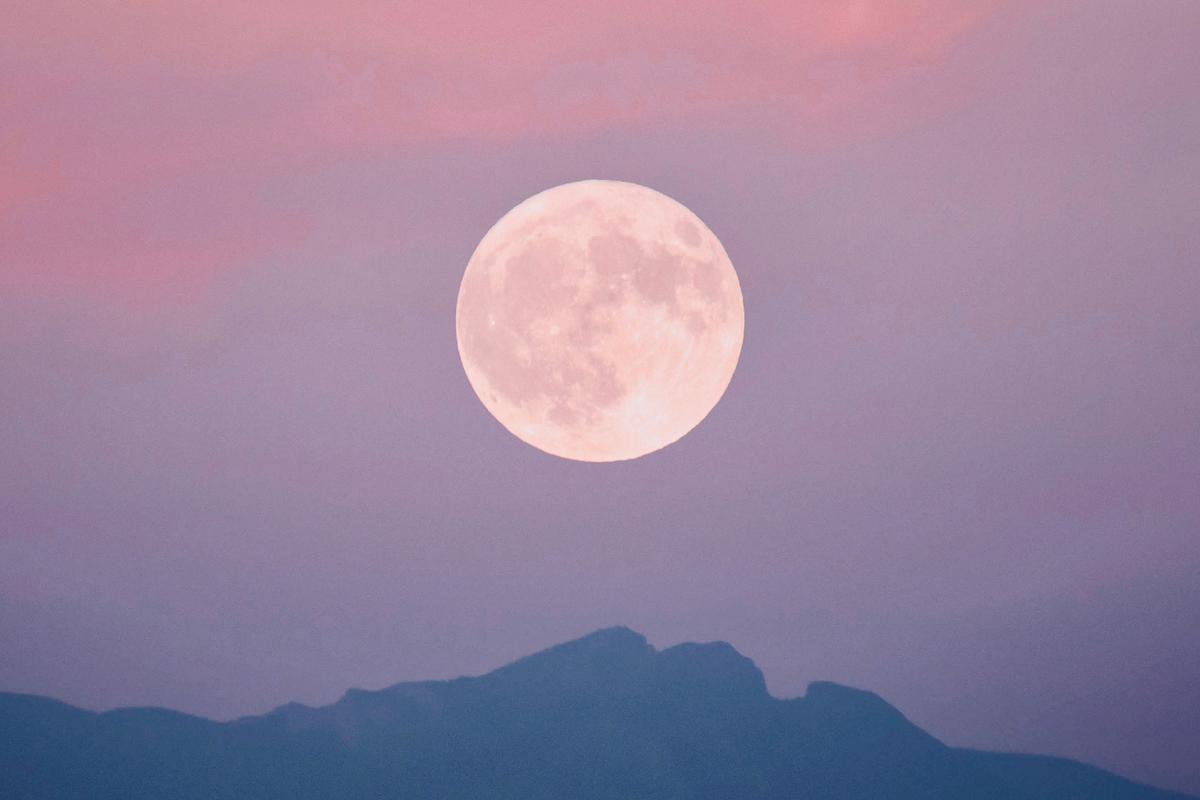
Shining to the moon’s left side, Saturn will appear within Pisces. Just a few days later, the distance between the ringed planet and moon will have closed to around 3 degrees, almost forming a conjunction.
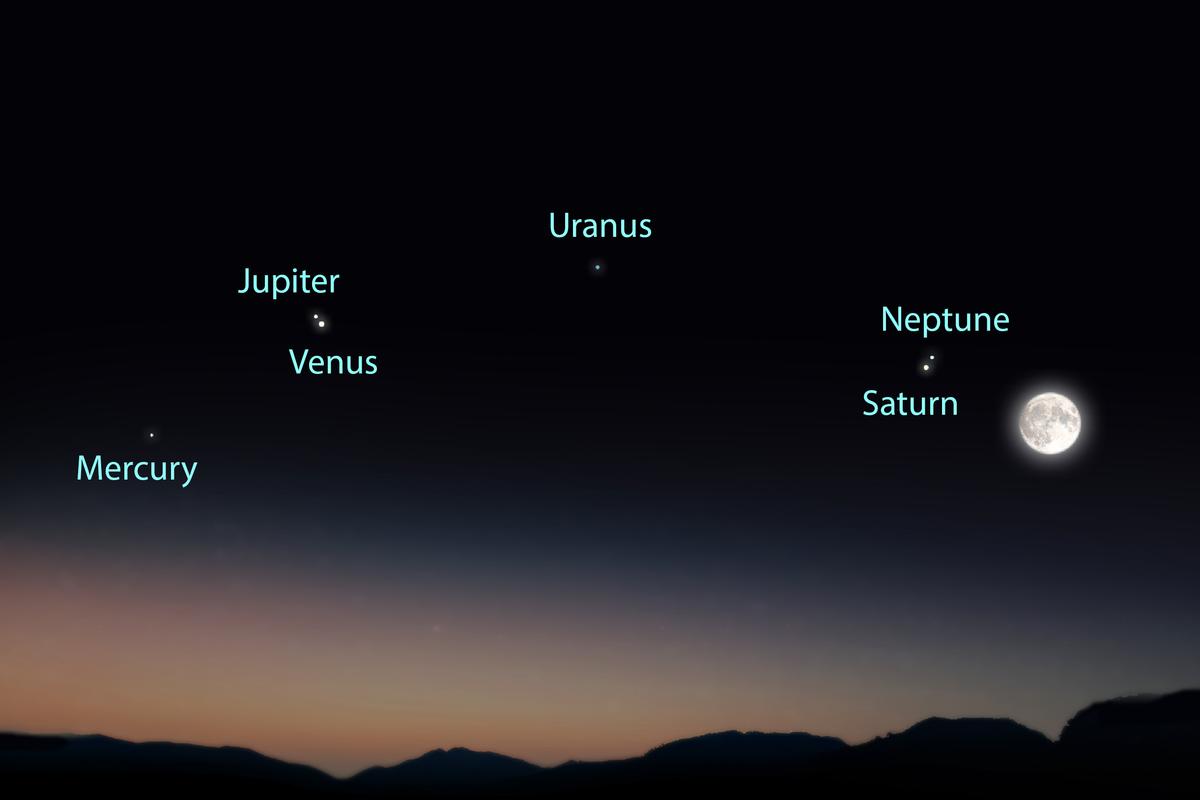
Sitting a smidge higher than Saturn, the planet Neptune will glow faintly and be invisible to the naked eye, though a telescope or pair of binoculars could help you see it. Several degrees to the left of these two planets, Uranus will also be immensely hard to see without visual aids.
Further east, Venus and Jupiter will be grouped tightly together, both shining brilliantly in the constellation Gemini; by Aug. 12 they will have formed a conjunction, set apart by only a fraction of a degree.
Still further east, Mercury will sit at the other end, low near the horizon.
To be considered an “alignment,” planets do not have to form anything remotely close to a straight line. Such a perfect formation in a three-dimensional space is essentially impossible, since there are infinite possible viewpoints and the planets’ orbits are inherently misaligned.
More August Moon Names
As for the full moon, it has myriad other names; they’re as diverse as native cultures themselves. What ties them together is the seasons. Since August is when waterfowl were seen molting their feathers, tribes of the Passamaquoddy of the northeast called it the “Geese Shedding Their Feathers Moon“ while the Cree of eastern and central Canada called it the ”Young Ducks Begin to Fly Moon.”Summer is also known for its bountiful harvests, so the August full moon was called the “Corn Moon,” “Ricing Moon,” and “Black Cherries Moon” by other Native Americans.
It’s not at all surprising that cultures beyond America have also named moons by the seasons; they’re universal after all. The Anglo-Saxons called the August full moon the “Grain Moon,” while it was similarly christened the “Harvest Moon” by the Chinese.
South of the equator, the seasons are reversed, so full moons were named accordingly. In the Southern Hemisphere, the August full moon has been called the “Snow Moon,” “Hunger Moon,” and “Wolf Moon.”
The bottom line? Next month, on Aug. 9, the night sky will boast more than just the Sturgeon Moon bathed in shades of red; the lunar disk will be joined by a show-stopping parade of six planets.