The frontrunner in South Korea’s upcoming presidential election proposed on May 30 amending the constitution to make it harder for future presidents to impose martial law.
The snap vote is being held to replace former leader Yoon Suk Yeol, who was ousted after a brief declaration of martial law.
That move plunged the country into months of political turmoil and led to the Constitutional Court eventually relieving him of the presidency in April.
Yoon denies the charges.
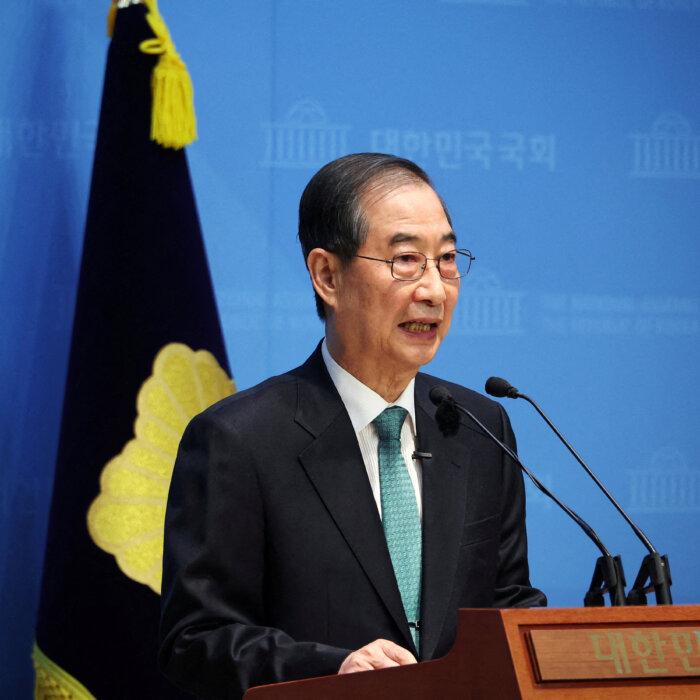
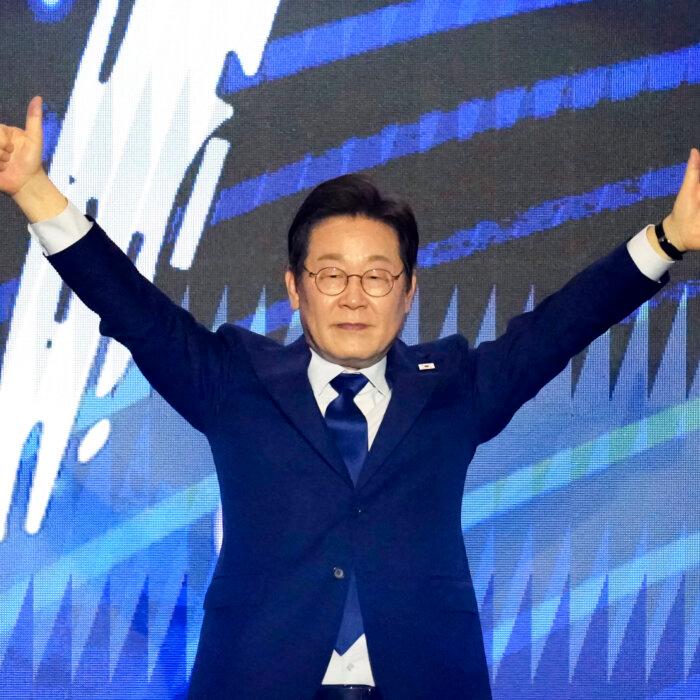
Now, Lee, the candidate for the progressive Democratic Party, has said that he would seek to revise the constitution to make it harder to impose martial law in order to prevent Seoul from being plunged into the disorder it experienced at the end of 2024.
“Overcoming the insurrection [crisis] is a no-brainer. Without it, our country will collapse.”
One method he suggested to prevent what happened under Yoon from recurring is to not allow leaders to implement martial law without securing parliament’s approval within 24 hours.
Lee also said a special prosecutor should be appointed to investigate the Dec. 3, 2024, martial law incident to make sure those responsible are brought to justice; however, military officials who were reluctant to follow orders should be granted leniency, he said.
“To bring the insurrection to a complete end, all those responsible or complicit must be identified and held accountable,” he said.
In the same interview, Lee said a supplementary budget under his rule would revitalize the economy and support the world’s 13th-largest economy’s working-class citizens.
He pointed to his flagship policy of issuing local currency vouchers designed to help small traders and the self-employed as one way in which an administration under his leadership would do this.
South Korea is currently struggling with a slowing economy because of global trade tensions and an aging population.
Lee’s comments come as the campaign enters its final stages ahead of the June 3 election.
South Koreans are still casting early ballots on May 30 ahead of the 6 p.m. cutoff point.
As of 3 p.m. in Seoul, South Korea, nearly 30 percent of those eligible, more than 13 million voters according to South Korean news agency Yonhap, had turned out.
Some 44.3 million South Koreans are eligible to vote in the election.
Kim Moon-soo, from the conservative People Power Party (PPP), said he would stop the “monstrous dictatorship” by Lee’s Democratic Party, which currently has a parliamentary majority.
“If candidate Lee Jae-myung grabs hold of the three powers and makes laws, conducts trials, and conducts investigations as he pleases, that is a monstrous dictatorship.”
Kim, who was previously the labor minister under Yoon, has avoided direct criticism of his former boss over the martial law decree, which has formed a large proportion of Lee’s criticism of Kim.
Polling third is Lee Jun-seok of the conservative Reform Party, which only formed in January 2024 after splitting from the PPP, at 10.3 percent.
There are three other candidates, but none are registering significant numbers in the polls.
The election is run on a single-round, first-past-the-post system, with the winner simply being the candidate who gains the most votes.
Whoever is successful can hold the post for a five-year term and is not permitted to stand for reelection.
The president is head of state, head of government, and commander in chief of the nation’s armed forces.