Neil the seal’s résumé continues to grow.
The celebrity elephant seal was an internet sensation, a traffic-cone crusher, and a favourite of wildlife lovers.
Now he can add “art muse” to the list after inspiring Australiana painter Nicoletta Revis.
“I’m working on all these other paintings at the moment, but you know, I just sort of had this urge to paint him,” she told The Epoch Times.
“When I felt that urge, I was like, ‘Oh, I absolutely have to paint him straight away.’ It definitely ties in with our whole affection for animals in our society today.”

Neil, a southern elephant seal, has been visiting Tasmania’s coastline for around five years and has surfed to popularity with a fanbase across the world, inspiring a range of T-shirts, mugs, toys, jewellery, and even Christmas decorations for sale online.
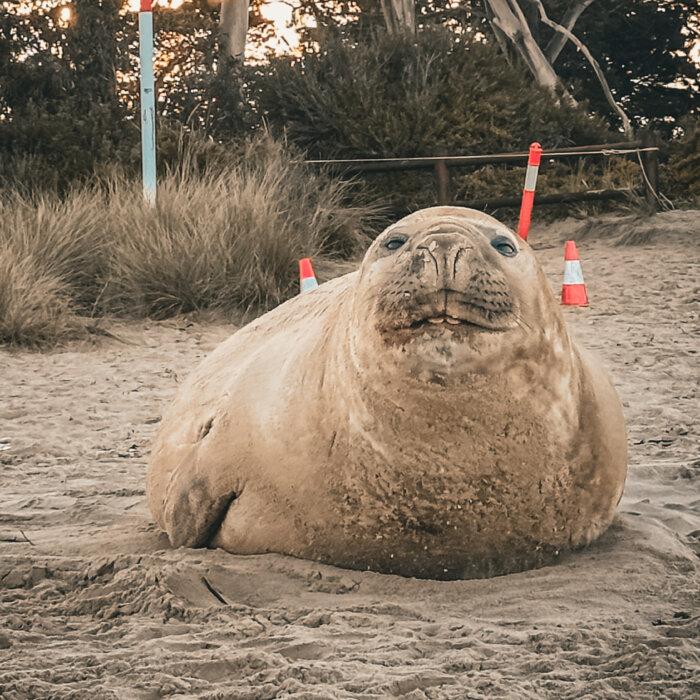
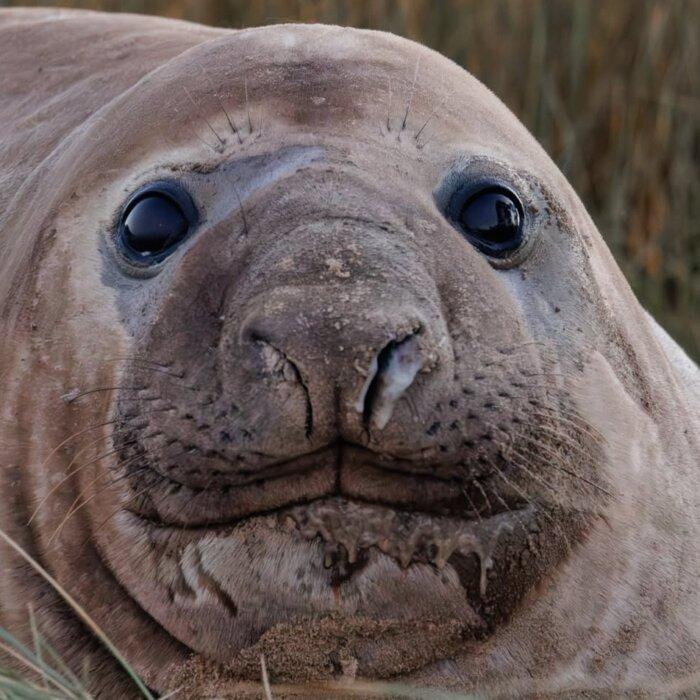
The one-tonne mammal was rescued as a pup by wildlife workers after becoming stranded on a sand bank, and has regularly returned to Tasmania ever since, causing all sorts of loveable havoc.
While some of Revis’s paintings take weeks to complete, her 25 x 25 centimetre portrait of Neil took around five hours.
The self-taught artist has been shortlisted for the National Emerging Artist Prize in Sydney and the National Contemporary Art Prize in Canberra.

Her other works focus heavily on Australian wildlife, ranging from magpies to kangaroos.
“I just sort of found my own little style, and I love it,” Revis said, sharing how her art is also a nostalgic gateway to forgotten styles.
“The art world’s like fashion, it sort of goes in circles,” she said.
“And I think what I’m doing is painting this narrative style that was around in the ‘80s and ’90s.

“That more narrative style and the storytelling was around back then. But there’s not much of it now.”
Neil’s Got ‘Rock Star’ Appeal: Academic
Clive McMahon, a scientist of the University of Tasmania, said that as a “philopatric” animal, Neil is hardwired to return to the same area.“He will feed in the waters south of Tasmania, as he has been doing. He’s clearly managing to find plenty of food, and he will continue to grow until he’s an adult, all things being equal,” he previously told The Epoch Times.

Nahir Bartes, PhD candidate at Deakin University’s Marine Research and Innovation Centre, said it was hard to say why people were so fascinated by Neil.
“I think the fantasy is he keeps coming back to the same spot and the same people see him—like around in their backyards or next to their car.
“I also think ... the fact that he’s crushing cones and getting rebellious. I like to call ... [him being a] big rock star.
Neil is also not the only seal to enchant locals in the nation’s southern states.
In May, Victorians on the Mornington Peninsula were saddened by the news that an Australian fur seal affectionately known as “Sammy” had passed away.
“I think the fact that the seal population is recovering around the world is why we may encounter them more frequently,” Bartes said.
“Their numbers are, of course, increasing. So I also think that we may be encountering more seals around in upcoming years.”
Bartes also acknowledged how well bystanders behaved around Neil.
“Which is amazing, and that’s what we want.”