CALAIS, France—For years, France and the UK have been locked in a tense back-and-forth over how to handle the steady flow of illegal immigrants across the English Channel, between Calais and Dover, twin towns separated by just 20 miles of sea.
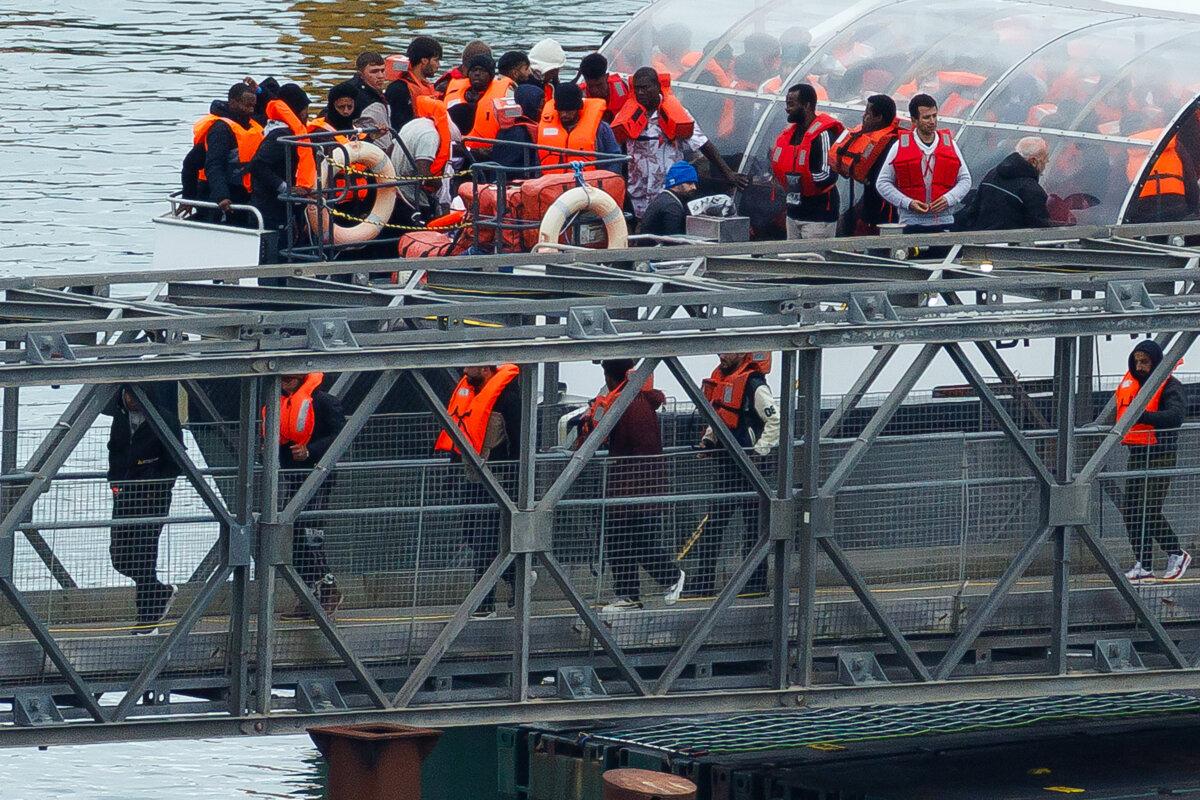
Inflatable boat crossings—already ferrying more than 30,000 people this year—are now a defining political issue in Britain and France, testing both governments’ promises to take back control of their borders.
The latest attempt to stem the tide is a “one in, one out” deal between the two countries, which, after much fanfare, got off to a slow start in September with only a handful of immigrants being swapped so far.
Calais
Calais has become a bottleneck for thousands of illegal immigrants hoping to slip across the Strait of Dover, the narrow stretch that forms the shortest gap between Britain and France.For hundreds of years, especially in the 18th and early 19th centuries, huge quantities of illicit booze were run across the channel, ferried in small boats under cover of the night, landing on beaches, and then brought inland via hidden lanes and tunnels.
Now, human traffickers are exploiting the same short route, launching boats in the moonlight from the same beaches.
This year, there were about 14,800 crossings from January to May.
‘One In, One Out’
According to a July report from the UK government, people have been arriving by small boat at a faster rate this year than they had in previous years, and arrivals in the first six months were 48 percent higher than in the same period in 2024.Under the plan, migrants who reach the UK illegally by sea can be detained and returned to France, while the UK agrees to accept an equal number of asylum-seekers who are already in France but have passed strict eligibility checks and haven’t tried to cross illegally.
‘They Hide in the Trees’
On the French side, locals spoke about the subject with weary eyes and a shoulder-shrugging Gallic attitude.In the morning, there were little to no signs of any migrants in the Calais town center.
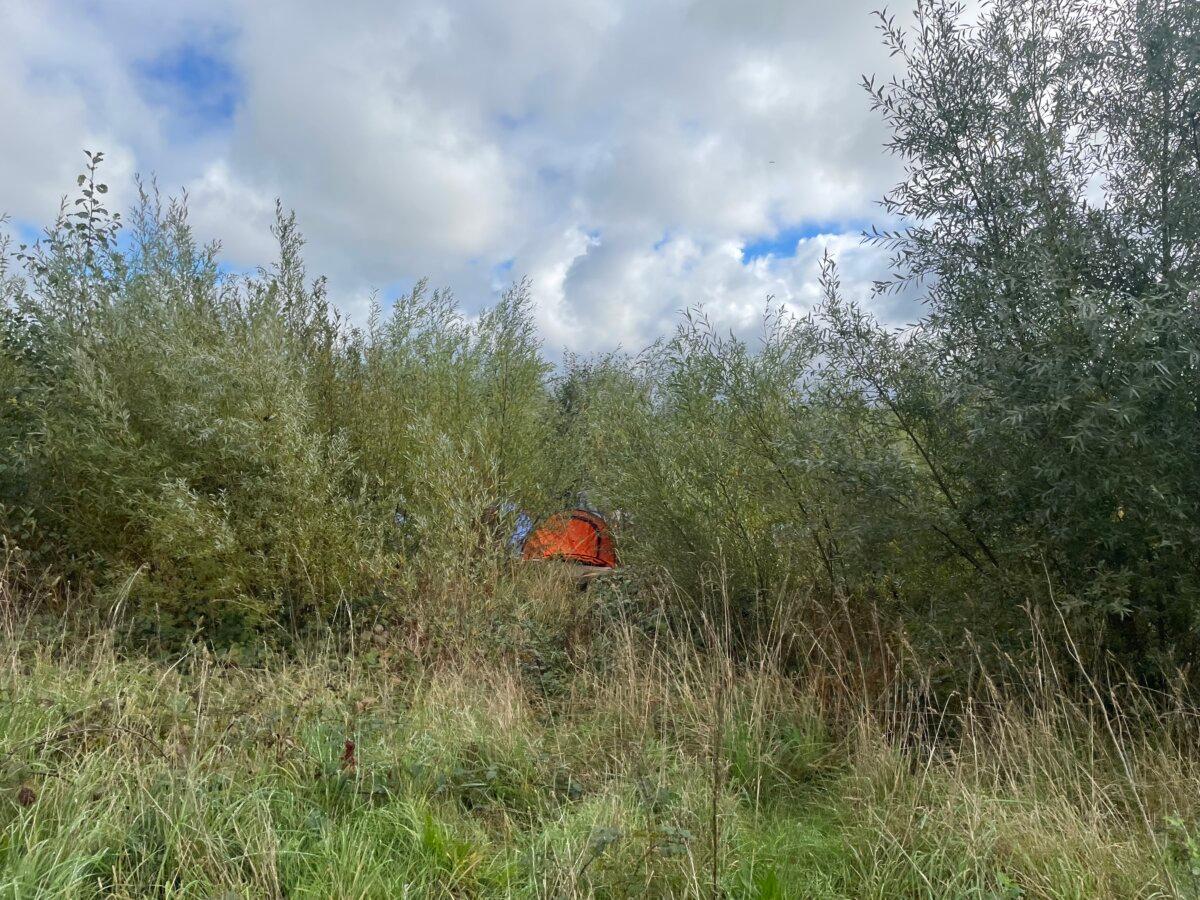
“You won’t see them in the morning, especially when it rains,” a taxi driver who gave his name only as Hugues told The Epoch Times.
“They hide in the trees.”
He said taxi drivers face a dilemma: They can be punished if they knowingly transport illegal migrants, but also sued for discrimination if they refuse fares.
“We can’t typecast,” he said. “It’s discrimination.”
Farther inland, signs of makeshift camps dot the outskirts of Calais, between warehouses, truck stops, and abandoned buildings.
“The coast is unmanageable,” Hugues said.
At a bus stop in Marck, a commune east of Calais, a hunter told The Epoch Times, “There’s too many people here.”
He said it had been happening for “10 or 20 years,” but now “there are thousands more.”
“We’re not racist,” he said. However, he said, the new deal means that “the English keep the good ones, and [France keeps] the bad ones.”
Nearby, a woman working in a café told The Epoch Times that she had grown used to the sight of migrants congregating in Calais’s ZUP housing estates (“HLM banlieue”), France’s segregated social housing system.
Outside a supermarket parking lot in the ZUP district, a van from the compagnies républicaines de sécurité, France’s riot police, was parked nearby, a routine presence in the town.
In the Parc Richelieu in Calais’s town center, a French man named Didier told The Epoch Times that illegal groups tend to separate along ethnic lines.
“Africans on one side, Afghans on the other,” he said.
“The police do what they can.”
Calais’s ferry and Eurotunnels terminals are heavily surveilled. Migrants who do not have the means to pay people smugglers, up to 12,000 pounds (about $16,000), will often try to hide inside bike rack covers or jump onto the backs of trucks.
‘England Is a Dream for Me’
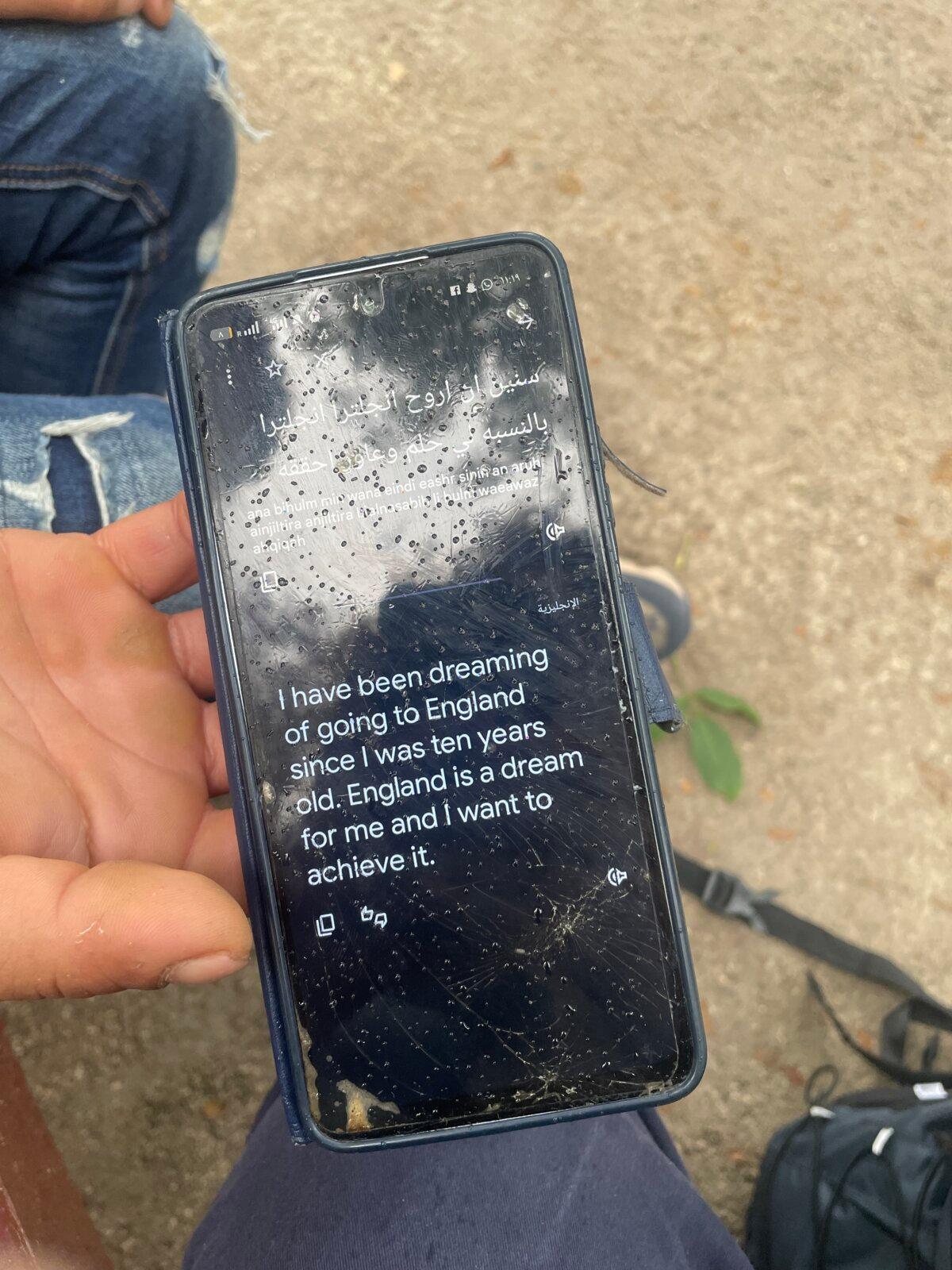
In the same park in the center of Calais, 25-year-old Mohammed, who had arrived three days earlier, typed into Google Translate that he came “to find a better life.” He said he spoke no English.“I have been dreaming of going to England since I was 10 years old,” he told The Epoch Times, according to the translated text. “England is a dream for me, and I want to achieve it.”
Near the Clinique du Virval, a psychiatric hospital, a Red Cross van distributed food in the grasslands to hundreds of young men, mostly from sub-Saharan Africa. There were no women or children.
The site was covered in large plastic bags and strewn with rubbish.
Nothing Changes
A nearby resident, who gave his name only as Gérard, said charities feed migrants at sites separated by ethnic background.“The immigrants near my house are respectful, but they throw rubbish everywhere,” he said.
Gérard said he has lived in the spot for a decade and remembers the days when Iraqi groups would “break cars.”
He said he keeps two dogs—one of them a pitbull—for when his wife goes for a walk. Police often evict camps, Gérard said.
“They move them 200 kilometers [about 124 miles] away, but they come back,” he said. “It’s a vicious circle.”
“Nothing changes.”
There was no sign of migrants at the coastal village of Wissant, a short drive from Calais, where French families and holidaymakers flew kites along the beach. Yet three armed police officers patrolling the wide shoreline on foot were a reminder that authorities are keeping a close eye on the situation.
12 Civil Servants
There are just 12 civil servants working full time on the government’s “one in, one out” migration deal with France, Border Security Commander Martin Hewitt told members of Parliament at a home affairs committee on Oct. 17.For comparison, the committee learned that there were 1,000 Home Office staff on the Rwanda deportation scheme. The Rwanda scheme, agreed upon in April 2022, would have seen migrants who entered the UK illegally, including those who crossed the English Channel in small boats, put on flights to Rwanda’s capital of Kigali.
“It’s a pilot scheme; it is very new,” Hewitt said.
“It is really important to send the message that if you come over on a boat illegally, there is the jeopardy that you may well be detained at that stage, taken to an immigration removal center and removed back to France.”
‘They’re Still Going to Risk It’
Tony Smith, former director general of the UK Border Force, told The Epoch Times that he believed that the government’s “one in, one out” plan with France has yet to make an impact.“And ultimately, it’s not been ‘one in, one out,’ has it?” he asked, adding that about 30 people have been removed to France while thousands have entered the UK during the same period.
“So clearly, it doesn’t balance,” he said.
Smith said there needs to be a “very big ramp-up in the number of returns” to France for this to have any deterrent effect on those who are waiting to cross over from Calais.
“So I don’t expect that the smugglers or the migrants that are in Calais are thinking, ‘Oh, I better not get in this dinghy, because I might be one of the chosen few that gets detained and sent back to France again.’ I think they’re still going to risk it,” he said.
Smith, who spent 40 years with the Home Office tackling organized immigration crime and human smuggling, said deterrence works only if arrivals are detained and removed. He also worked with the previous Conservative government on the Rwanda scheme.
“What you need to be able to do to stop this kind of thing is to demonstrate that when you come off a small boat into the UK, you will be detained and you will be deported,” he said.
But Smith said that in practice, the vast majority of those who enter the UK on small boats are not being detained.
“They’re being screened briefly for 24 hours or so, and if they claim to be destitute, they will be provided with accommodation in the UK, and they enter this interminable asylum process,” he said.
Smith said the lengthy process and appeal rights make removal harder.
“So the longer people are here, the more likely it is that ultimately they’re going to be allowed to stay, and quite a lot of those appeals are being won by the appellant on quite spurious grounds under various interpretations of the European Convention on Human Rights,” he said.

Smith said a tougher approach would require building more detention centers, along with legal reform.
“Whilst they are in detention, they need to change the legal framework before that, to say: ‘Anybody who arrives from a safe third country like France, we will not entertain any application for asylum or human rights or modern slavery in this country. You could have claimed all of those things in France; therefore, you’re not admissible to these systems, and we’re going to remove you,’” he said.
Smith said there has been violence among smugglers in Calais.
“There are gang battles going on between the smugglers. I think the Kurds are involved in this, and I think the Albanians are involved in this. So there is a bit of a turf war going on. And so these are dangerous places,” he said.
Smith also pointed to the network of nongovernmental organizations supporting migrants.
“There’s a very comprehensive network of charities that have set themselves up in Calais that will ensure that they are adequately clothed, fed, and so on, which gives them an incentive to stay in the Calais region. So you have got a very volatile situation,” he said.
Ultimately, Smith said, weak screening means that authorities have little idea who is arriving.
“The concern is that people that do make it across here, we don’t know who they are,“ he said. ”They might be criminals in their own country, but we don’t know that. Because they claim asylum and human rights, we’re not allowed to contain them. So there is a worry that there will be some quite dangerous people amongst the cohorts of migrants that are arriving here.”
‘They Just Ain’t Listening’
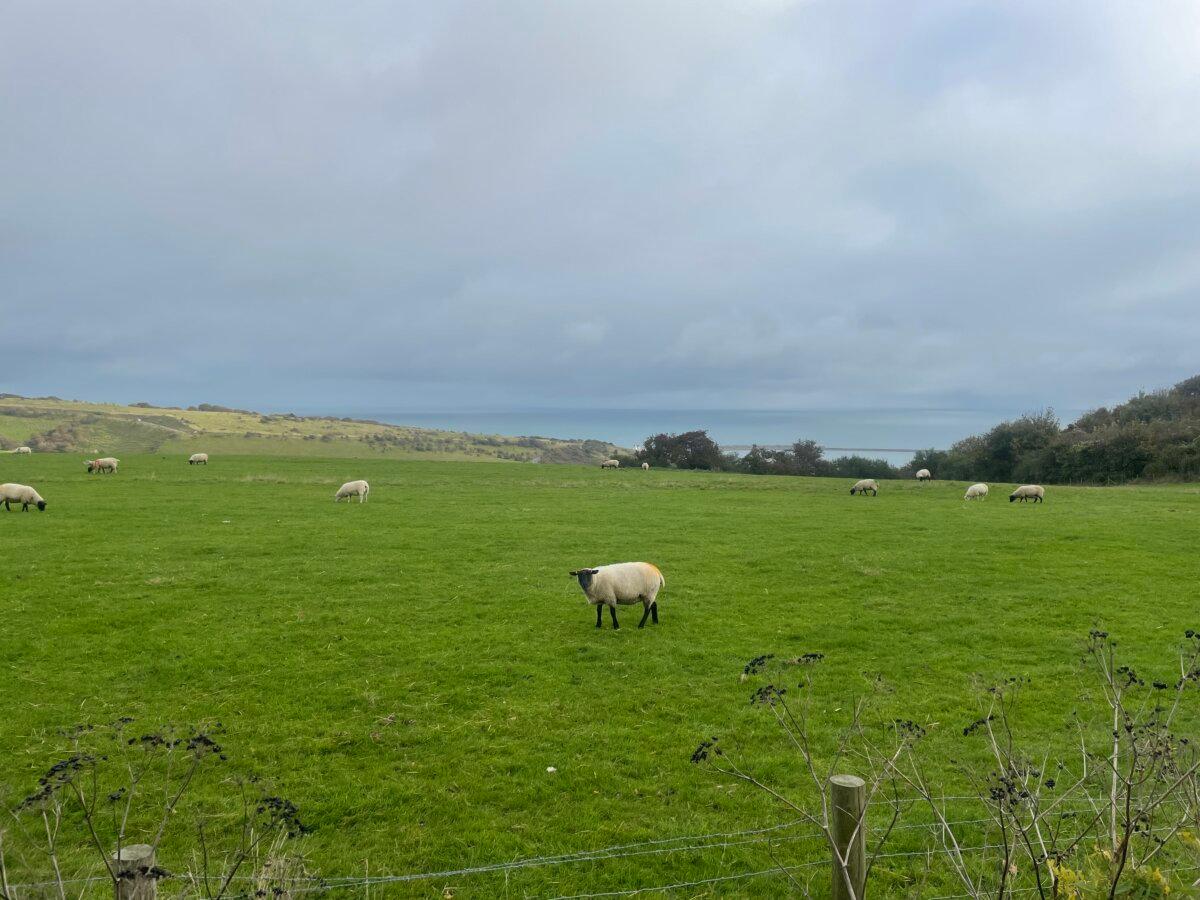
“I think whatever they do, they just ain’t listening,” said a Dover resident who gave his name only as Sam who was walking past the famous cliffs, from which ferries could be seen moving through the English Channel.He said he didn’t think the situation in the Kent port was “crazy,” noting that “most people get off the boat and they go up north to poor places like that.”
“The people up north are the ones who bear the brunt,” he said. “Dover’s lucky in some ways. It’s just a doorway.”
The Home Office did not respond to a request for comment from The Epoch Times.