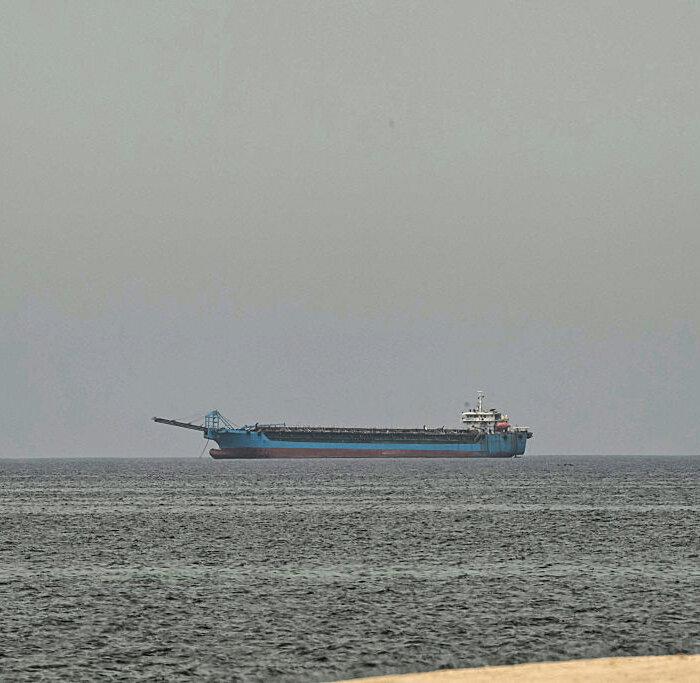
France and the UK are convening a high-level international summit on April 17 to push for the reopening of the Strait of Hormuz, a critical global oil artery that has been effectively shut since late February amid the Iran war.
The meeting in Paris, co-hosted by French President Emmanuel Macron and British Prime Minister Keir Starmer, brings together representatives from roughly 40 countries. Washington will not be part of the initiative, which is formally known as the Strait of Hormuz Maritime Freedom of Navigation Initiative.
The gathering underscores mounting concern among global leaders over the economic and security consequences of the disruption, as approximately one-fifth of the world’s oil supply typically flows through the narrow waterway.
Starmer is expected to say that “the unconditional and immediate reopening of the Strait” is a “global responsibility.”
“We need to act to get global energy and trade flowing freely again,” he is set to tell participants, according to a statement released by his office.
Starmer also plans to reaffirm a joint commitment with Macron to reassure commercial shipping and support mine clearance operations.
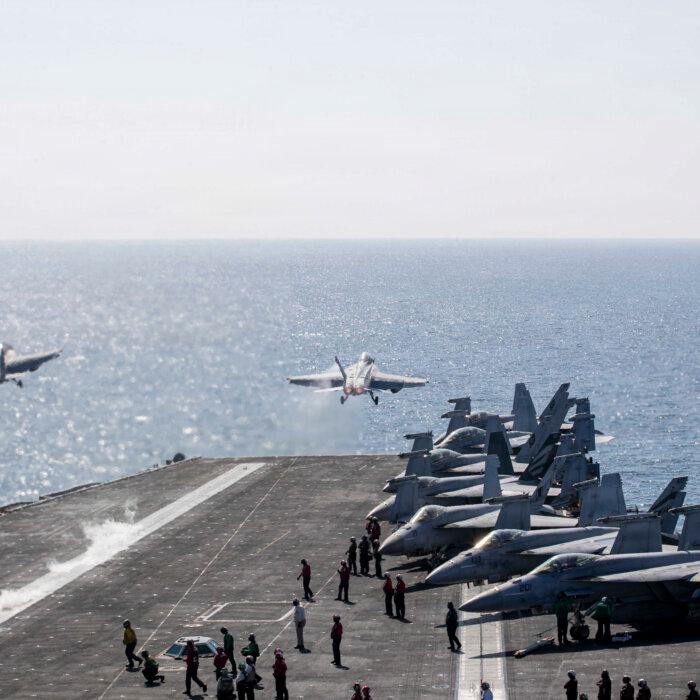
French officials have similarly said that any mission would remain limited in scope. In an April 14 post on X, Macron said the proposed deployment would be “strictly defensive,” involving non-belligerent countries and implemented “when security conditions allow.”
In an April 17 post on X, Macron said he “fully support[s] the ceasefire between Hezbollah and Israel as announced by President [Donald] Trump,” but added concern that it “may already be undermined by the continuation of military operations.”
The day before, Trump announced a ceasefire between the states of Israel and Lebanon. In a separate Truth Social post, Trump called on Lebanon-based terrorist group Hezbollah to cease its attacks against Israel amid the temporary ceasefire.
In his post, Macron called for civilian protections and restraint on both sides, adding that the Hezbollah terror group “must renounce its weapons” while Israel must “respect Lebanese sovereignty and stop the war.”
A follow-up summit is scheduled for next week at the UK’s Permanent Joint Headquarters in Northwood, where participating nations will refine operational details. Partners are also expected to step up engagement with the insurance industry to accelerate the mobilization of commercial shipping when the conditions allow.
In addition to the Hormuz initiative, Starmer and Macron are expected to hold bilateral talks addressing wider geopolitical issues. These include continued support for Ukraine, efforts to curb illegal migration, and strategies to strengthen European security and economic growth.
NATO Involvement
The closure of the Strait of Hormuz since Feb. 28 has sent shockwaves through global energy markets, contributing to rising oil prices and increased economic uncertainty worldwide.NATO allies said on April 13 they wouldn’t support Washington’s blockade of the Strait of Hormuz during its ongoing conflict with Iran, highlighting growing tensions between Trump and the alliance.
When asked on April 17 what message the ceasefire in Lebanon sends to the UK and other nations that chose not to get involved in the war, Trump told journalists: “We spend trillions and trillions of dollars on NATO, and when I asked them to get involved in a much smaller situation, which is Hormuz and Iran, they weren’t there for us. They weren’t there. None of them. They weren’t there. So we were there on Ukraine. ... When they’ve had problems over the years, we were there.”