Eighty-six empty blue chairs stood in an arc on the Place Masséna in Nice on July 14, each engraved with the name of someone who never came home from the fireworks.
As a cello played and the names were read aloud, 43 children and 43 of the firefighters, police officers, and rescue workers who reached the Promenade des Anglais that night laid an olive branch on every seat.
Ten years earlier to the day, on the evening of France’s national holiday, Mohamed Lahouaiej-Bouhlel, a Tunisian national, drove a 19-ton truck for nearly two kilometers (about 1.2 miles) into the crowd leaving the fireworks display. Police shot him dead. Behind, he left 86 people dead and more than 400 injured: residents and visitors of every age, with entire families wiped out. The youngest victim was 2 years old. The oldest was 79.
Jean-Claude Hubler was still on the beach with his family when the truck went past. A trained first responder, he understood at once what was happening.
“I asked my family to take shelter, then I went up onto the promenade to try to help,” he told The Epoch Times. “At the spot where I was, at the corner of Masséna and Gambetta, there were about 10 dead. I stayed with two people until their final moments.”
Hubler founded Life for Nice shortly afterward. The association supports bereaved families and the wounded and works to keep the memory of the dead alive. The wounds, he said, have not closed.
Remembering the Victims
Nice gave the anniversary three days. More than a thousand people walked the truck’s route on Sunday, a white rose in hand. An interfaith ceremony followed on Monday. On Tuesday morning, relatives and survivors applauded the emergency workers filing past in the city’s military parade.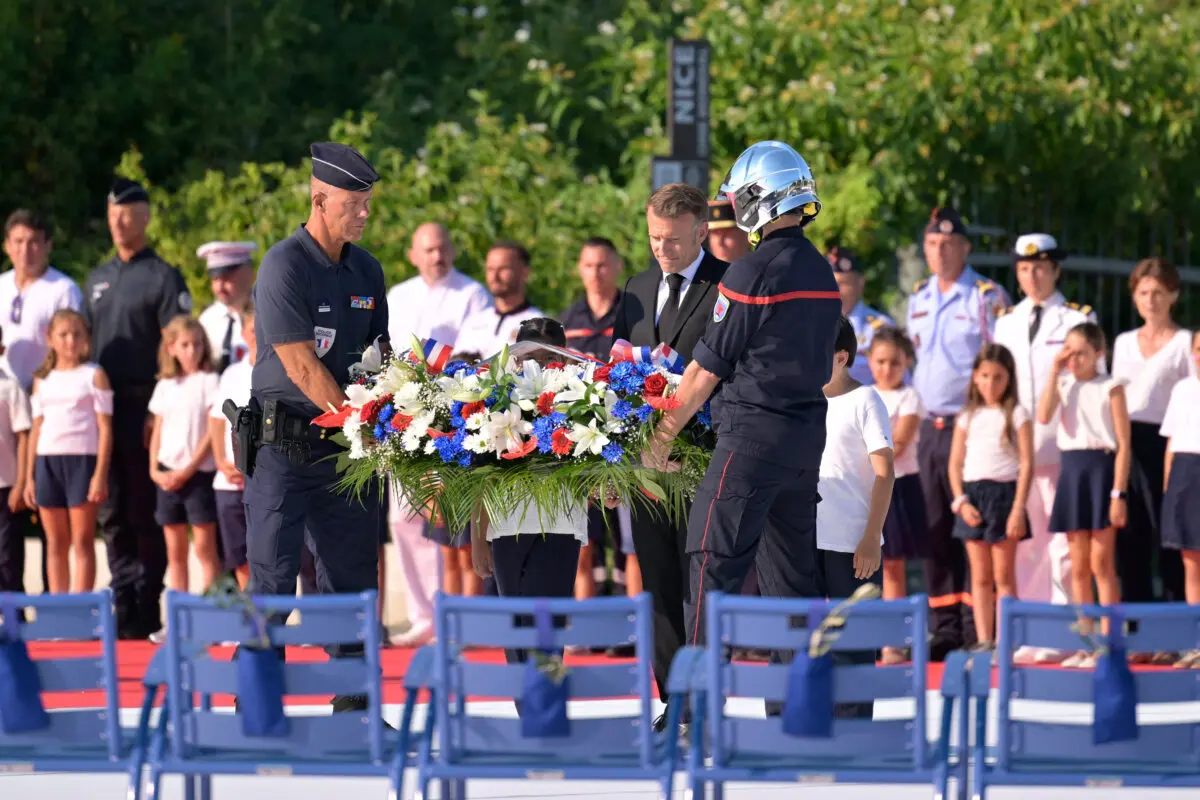
The memorial ceremony opened at 6 p.m. on the Place Masséna, under a vast French flag and a heavy Riviera heat. President Emmanuel Macron presided, joined by his predecessors François Hollande and Nicolas Sarkozy, several ministers, and National Rally leaders Marine Le Pen and Jordan Bardella.
Nice Mayor Éric Ciotti spoke first, his voice breaking at moments.
“Ten years ago, the worst of twilights fell on Nice. It was ten years ago. It was yesterday. It is today,” he said.
Macron said none of the victims have been forgotten.
“Here we are, gathered 10 years later. None of us has forgotten. Never,” he said. “We have forgotten no name, no face, no story.”
He listed the resources France has added to counterterrorism over the decade, said the country is now “stronger,” and named the “Islamist ideology” behind the attack and its aim “of turning the French against one another.”
“Nice answered differently,” Macron said. “For there is only one community in France, the nation, inseparable from the Republic.”
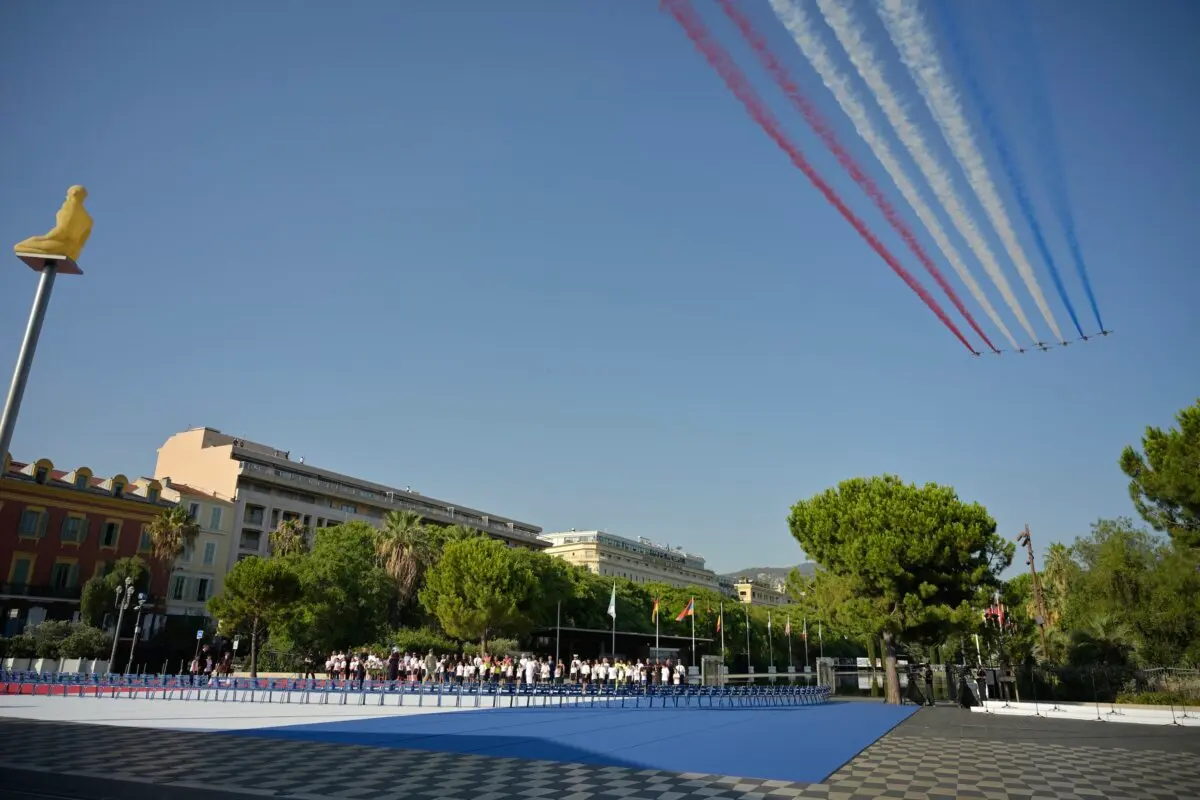
Unity was not the only note struck on the square. Many families have carried for 10 years the impression that their grief moves the country less than that of the victims of the November 2015 attacks in Paris.
“We realize that very little is said about it,” Hubler told The Epoch Times. “Nice is far from Paris, and the victims feel somewhat forgotten.”
Ongoing Threat
France has not suffered a mass-casualty attack on the scale of Nice in recent years.Le Pen, invited to the parade by Ciotti, her ally, warned against reading too much into the calm. Her presence was “extremely important,” she said, to affirm “the will to make sure that we do not fall asleep in the fight against terrorism.”
She added, “It is not because there has been no attack that we should lower our guard.”
Hubler was blunter, judging France had not learned the lessons of the attacks on immigration policy.
“No,” he said. “Even today, terrorists must manage to cross the borders.”
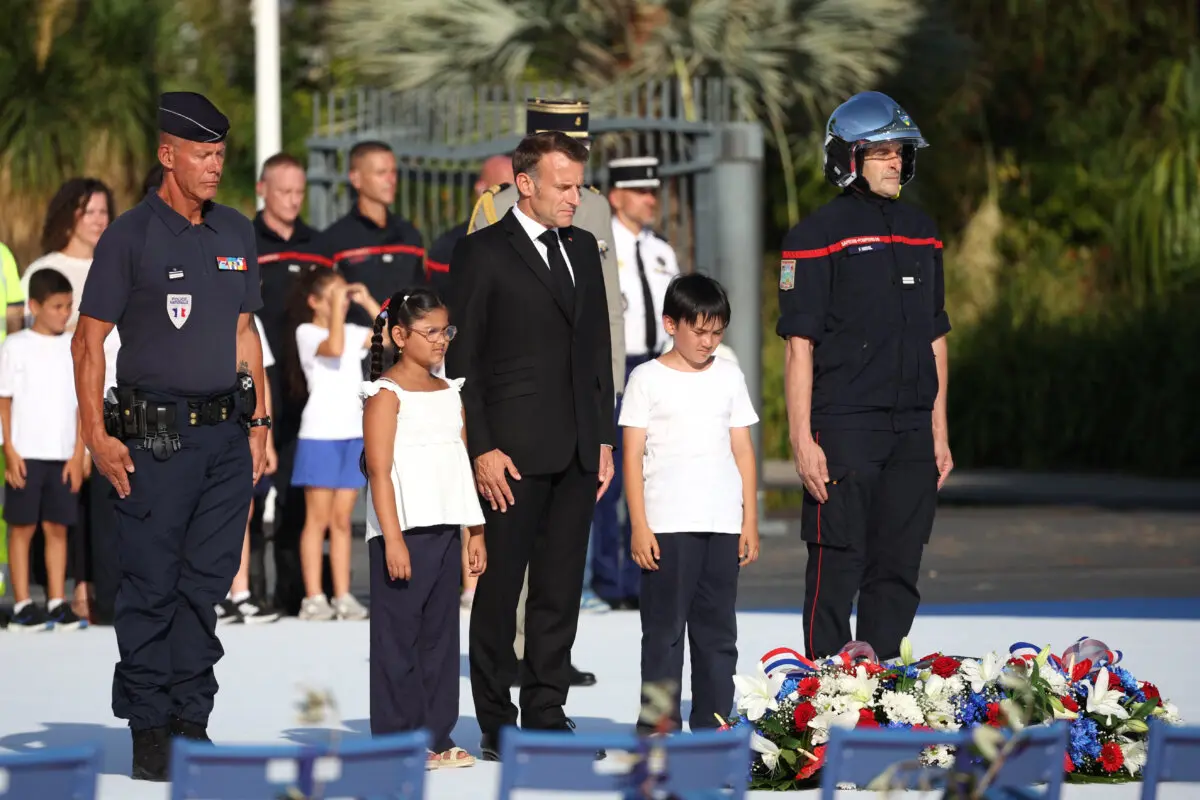
The obstacle, in his view, is political.
“As long as certain parties keep up this laxity in the National Assembly, it will be difficult.”
Lina Murr Nehmé, a Franco-Lebanese historian, Islam specialist, and professor at the Lebanese University in Beirut, also offered a sharp assessment.
“I do not have the impression that political leaders have grasped the scale of the Islamist threat,” she told The Epoch Times, referring to Macron’s government. “It costs nothing to condemn terrorists.”
What ought to be done instead, in her view, is to pursue those who spread and finance Islamism, above all those who do so “under benevolent appearances.”
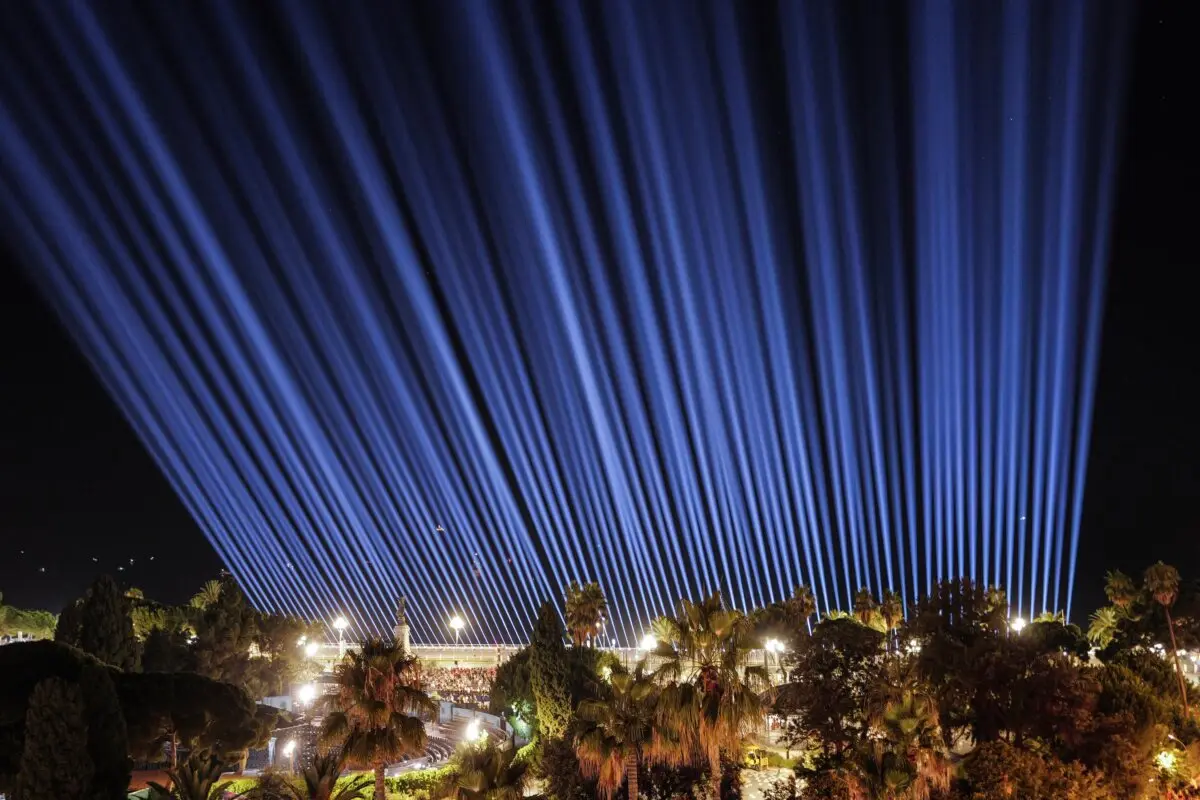
By nightfall, the Promenade des Anglais had returned to its palm trees and its joggers. Then, at 10 p.m., 2,016 drones rose over the bay, a nod to the year of the attack. At 10:34 p.m., the hour of the truck’s rampage, 86 blue beams were pointed at the sky, one for each name engraved on an empty chair.