The withdrawal from the Ottawa Anti-Personnel Landmines Convention will take effect in January 2026, the ministry said in a statement.
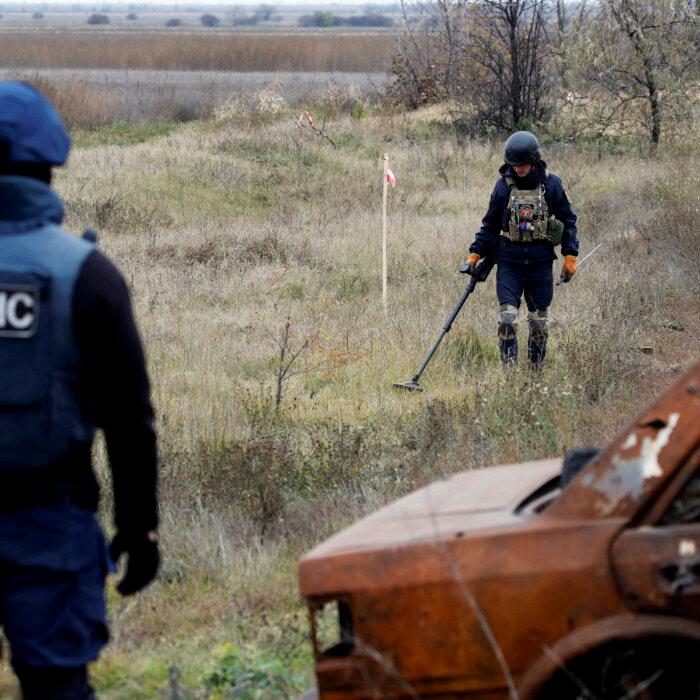
“The withdrawal from the Convention will enable Finland to reintroduce anti-personnel mines to the range of its available means of defence,” the ministry stated. “Finland gave notice of withdrawal to all other States Parties of the Convention, to the Depositary of the Convention, that is the Secretary-General of the United Nations, and to the United Nations Security Council.”
It added that the decision will not affect Finland’s other obligations under international humanitarian law related to the treatment of civilians during armed conflict.
The move comes against a backdrop of regional instability, with the Russia–Ukraine war now well into its third year.

Finnish President Alexander Stubb said at the time, “Finland is committed to its international obligations on the responsible use of mines. Finland will always remain a responsible actor in the world, safeguarding its security and defense.”
Baltic States, Poland
In recent months, NATO and EU member states Estonia, Latvia, Lithuania, and Poland—all of which border Russia—have announced their intentions to leave the Ottawa treaty.On March 18, all three Baltic states and Poland issued a joint statement on their intention, saying that since the convention came into force, the security situation in their region “has fundamentally deteriorated.”
The countries’ defense ministers said in a joint statement that “military threats to NATO Member States bordering Russia and Belarus have significantly increased,” and as a result, “it is essential to evaluate all measures to strengthen our deterrence and defense capabilities.”
Leaving the convention would give the countries the flexibility they needed “to potentially use new weapons systems and solutions,” the ministers said.
Ottawa Convention
After Finland’s initial announcement in the spring, humanitarian campaigners said they feared it marked the end of decades of progress.He said the Ottawa convention “was never just about banning a weapon, it was a global commitment to protect civilians from indiscriminate harm.”
“When nations now walk away from that pledge, they’re not only reigniting the landmine threat, they’re sending a message that civilian protection is optional in times of geopolitical tension,” he added.
The Ottawa Anti-Personnel Landmines Convention was signed in the Canadian capital of Ottawa in 1997 and came into force in 1999.
To date, 165 countries have agreed to be bound by the convention. Among the notable nations that do not subscribe to the treaty are the United States, China, India, Iran, Israel, Russia, and Saudi Arabia.