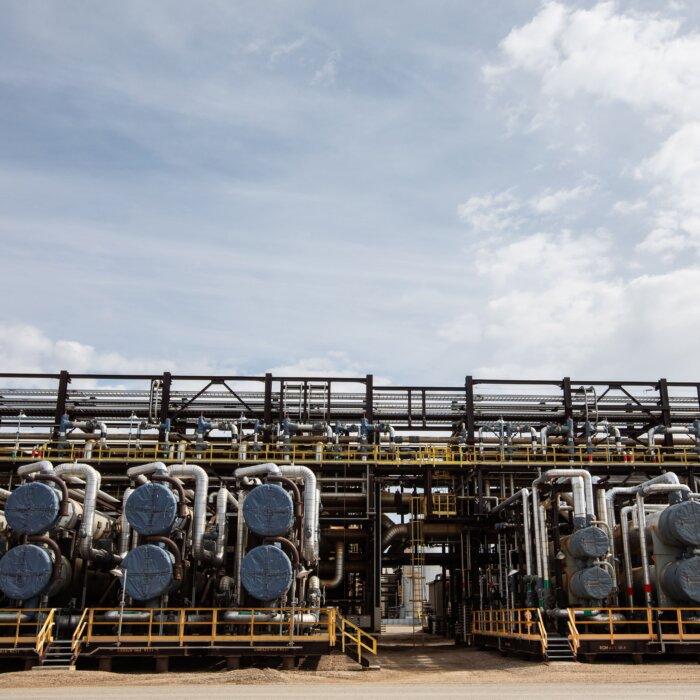
The federal government, Alberta, and five major oilsands companies have announced the signing of a memorandum of understanding that they say will advance the multibillion-dollar Pathways carbon capture and storage project.
‘Mutually Dependent’
The July 2 MOU was announced July 13 and proposes to “responsibly” boost oilsands production while lessening carbon emissions. The MOU specifically notes that the proposed new pipeline and the Pathways project are “mutually dependent,” echoing past statements from Prime Minister Mark Carney that any new pipeline will carry “decarbonized” oil.The Pathways project was put forward by five major oilsands companies that make up the Oil Sands Alliance, namely Canadian Natural Resources, Cenovus Energy, ConocoPhillips Canada, Imperial, and Suncor.
The new agreement proposes that Ottawa and Alberta work together to develop tax and regulatory policies that will incentivize oilsands production and make sure there is sufficient crude oil to fill the proposed new pipeline to B.C.
Cooperation
Under the July 2 MOU, federal investment tax credits for eligible carbon capture spending are extended until 2035 and cover 50 percent of eligible capital spending on carbon capture equipment and 37.5 percent of spending on related carbon transportation and storage infrastructure.The MOU lists the Pathways project as being developed in stages, with infrastructure scheduled to be up and running by Jan. 1, 2032, and the full project operational by 2035.
Part of the incentive for companies to meet the emissions reduction targets is derived from Alberta’s own industrial carbon pricing system known as TIER, or the Technology Innovation and Emissions Reduction system.
The TIER framework obligates facilities to hit increasing emissions-intensity reduction targets, with those failing to do so required to buy credits or put larger payments into the TIER fund.
Under the deal, companies that meet the Pathways emissions reduction targets would be subject to lower carbon compliance costs under TIER. Companies that continue working toward further emissions cuts could keep the benefit through 2040.
By contrast, companies that don’t deliver on agreed-upon emissions reduction targets would face stricter benchmarks.
Oil Sands Alliance companies also agree in the MOU to make “commercially reasonable efforts” to prioritize the use of Canadian technology, suppliers, steel, and aluminum for their emissions-reduction infrastructure and equipment needs.
Reactions
Premier Smith praised the signing of the agreement, saying in a July 13 statement that it “shows what can be achieved when governments and industry work together to grow our economy, strengthen our energy security and unlock new opportunities for people across Canada.”Oil Sands Alliance President Kendall Dilling also said the agreement represents a “step forward” for the oilsands industry and Pathways.
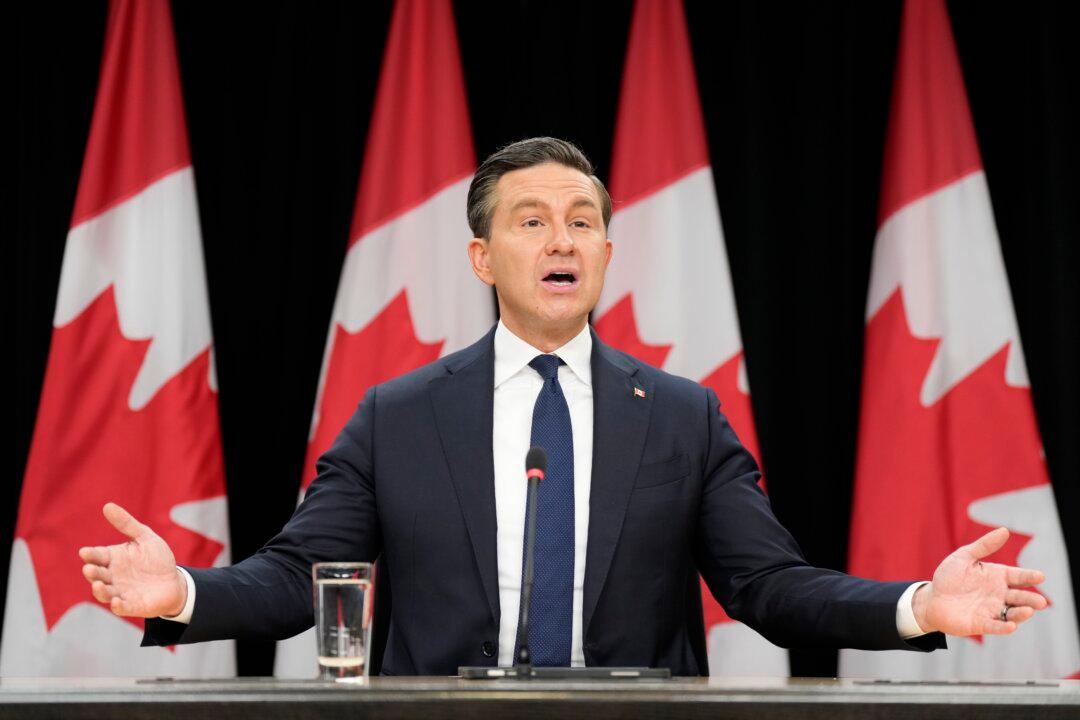
Conservative Leader Pierre Poilievre, by contrast, has criticized the broader Alberta–Ottawa arrangement tying the proposed West Coast pipeline to federal carbon pricing and emissions-reduction measures, which he says hamper Canada’s economy.
“Conservatives want a pipeline without a carbon tax, not a carbon tax without a pipeline,” Poilievre said in a May 15 statement, adding that in addition to the industrial carbon tax, federal policies including the oil tanker moratorium on B.C.’s north coast and federal impact assessment legislation are holding back resource development.
On Pathways specifically, Poilievre has previously stated that he would reserve his full opinion until after seeing the Pathways proposal, but said on July 2 that tying Pathways to the new pipeline is “unfair.”
“For the federal government to force Albertans to spend billions of dollars on this project as a condition of building a highly productive and profitable pipeline is unfair,” he told media July 2.
“What the federal government needs to do is get rid of all these conditions, get rid of the industrial carbon tax, the anti-development laws, the Pathways requirement, and let the private sector build this pipeline with private money.”
The NDP has also been critical of carbon capture being tied to the new pipeline, with former NDP environment critic Alexandre Boulerice previously characterizing the plan as “magical thinking.”