The federal NDP has officially launched the race to select its next leader.
Registered party members will cast their votes to elect former leader Jagmeet Singh’s permanent successor at a national convention next spring.
Members will fill out a ranked ballot, which allows delegates to list candidates in their preferred order, between March 27 and March 29, 2026. The results will be disclosed at the party’s convention in Winnipeg on March 29.
NDP Defeat Lessons
Singh announced on April 28 his intention to resign following the party’s poor performance in the federal election. The NDP was reduced to seven seats from 24, marking its lowest performance in decades, and Singh was defeated in his own constituency of Burnaby South in British Columbia.
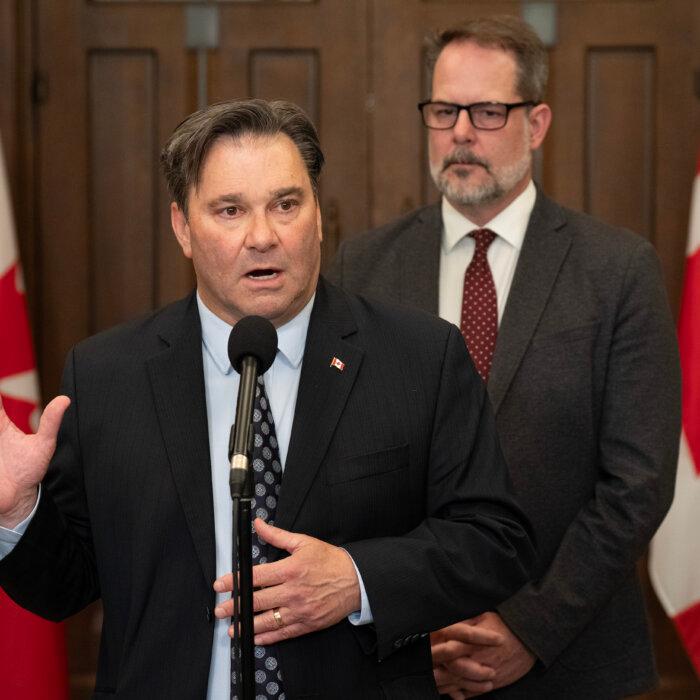
Vancouver Kingsway MP Don Davies assumed the role of interim leader on May 5.
Davies described Singh’s decision to continue supporting the Liberals in confidence votes after tearing up the party’s supply and confidence agreement with the Liberals last September as “the beginning of the end” for the NDP. Davies noted that the party appeared to contradict its stance after ending the agreement by voting confidence in the government on Sept. 25, Oct. 1, and Dec. 9, at a time when the NDP was polling at 21 percent.
He said that hurt the party’s credibility.
“I think you can make mistakes, you can be wrong, you can recover,” said Davies on the podcast released on Aug. 28. “But the problem we got into was this issue of, well, you ripped up the confidence agreement but you’re voting confidence. And your average Joe on the street who knows nothing about any of this can spot a contradiction like that a mile away.”
He said the party also made a fatal error when it chose to focus on “identity politics” rather than addressing “real issues” that the working class cares about.
“You know there’s no sugar-coating it. We had the worst result in the history of our party going back to the Co-operative Commonwealth Federation,” Davies said.
“One of the questions is, ‘have we veered too much from our class-based analysis to identity politics?’ My own view, this is just me speaking, is that we have.”
He said while trans-rights and gender ideology are important issues, they didn’t resonate with people who are struggling financially, noting that affordability issues such as housing and rent costs and escalating grocery prices is what most voters care about.
A minimum of 100 signatures must also be from members of “equity-seeking groups,” which the NDP says could include “racialized” members, members of the LGBT community, and people living with disabilities.
Candidates must also collect at least 50 signatures from each of five specified regions in Canada: the Atlantic, Quebec, Ontario, the Prairies, and B.C.and the North and 10 percent of all signatures must be from members who are aged 25 or younger.