The European Union has said there will be a slowdown in growth as a result of the “energy shock” triggered by the Iran conflict, according to the latest forecast.
In its May 21 executive summary to its spring forecast, the European Commission said that before the start of the Iran war, the world’s economy was gaining momentum, with the EU’s economy “likewise strengthening while inflationary pressures were further abating.”
However, it said that the Iran conflict “materially changed this picture, delivering one of the most significant global energy supply disruptions in recent history—coming less than five years after the energy shock triggered by Russia’s war of aggression against Ukraine.”
The European Commission said it now forecasts gross domestic product (GDP) across the eurozone to slow to 0.9 percent this year, from 1.4 percent in 2025, then rise to 1.2 percent in 2027.
The eurozone is the economic region within the EU that is made up of 21 of the 27 member states that use the euro.
Across the whole 27-member EU, GDP is predicted to fall in 2026 to 1.1 percent from 1.5 percent last year, then rise to 1.4 percent in 2027.
Inflation in the EU is predicted to hit 3.1 percent this year, up from 2.5 percent in 2025, but then fall to 2.4 percent in 2027.
“The conflict in the Middle East has triggered a major energy shock,” European Commissioner for Economy and Productivity Valdis Dombrovskis said in a statement.
Energy Supply Disruptions
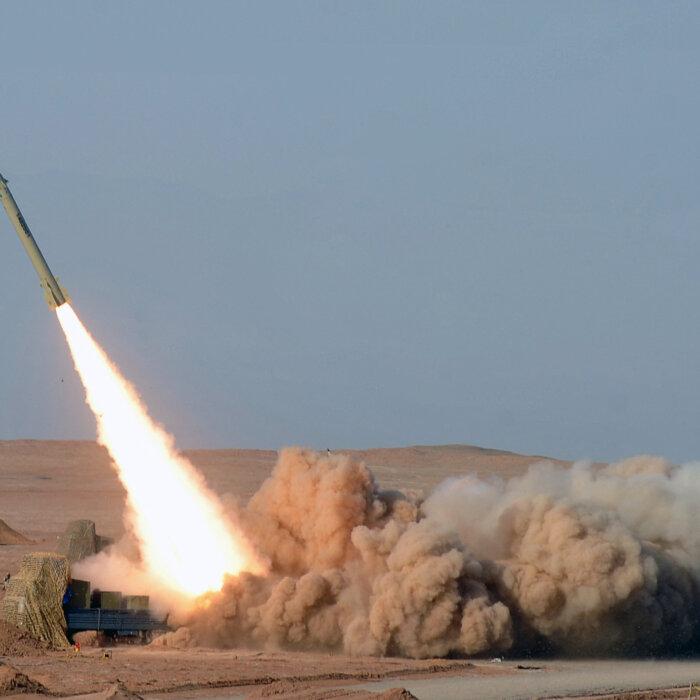
Movements of oil shipments through the Strait of Hormuz have been slowed since the United States and Israel launched a war on Iran in late February, and Tehran imposed an effective blockade on the strait, a vital route for global oil shipments that handles approximately one-fifth of the world’s oil traffic.The eurozone, which relies on energy imports and has been particularly affected by these disruptions.
Dombrovskis said during a press conference presenting the Spring 2026 Economic Forecast that there is “an exceptionally high degree of uncertainty” surrounding the evolution of the Iran war.
“The conflict in the Middle East has triggered an unprecedented disruption to energy supplies,” he said on May 20.
“This has, in turn, led to a sharp increase in energy prices.”
Germany Downgrades Growth
Germany—a major economy and eurozone member—has recently downgraded its own predictions.Concerns over the conflict’s impact on the European economy were raised in April by German Chancellor Friedrich Merz.
“This has a direct impact on our energy supply and a huge impact on our economic performance.”