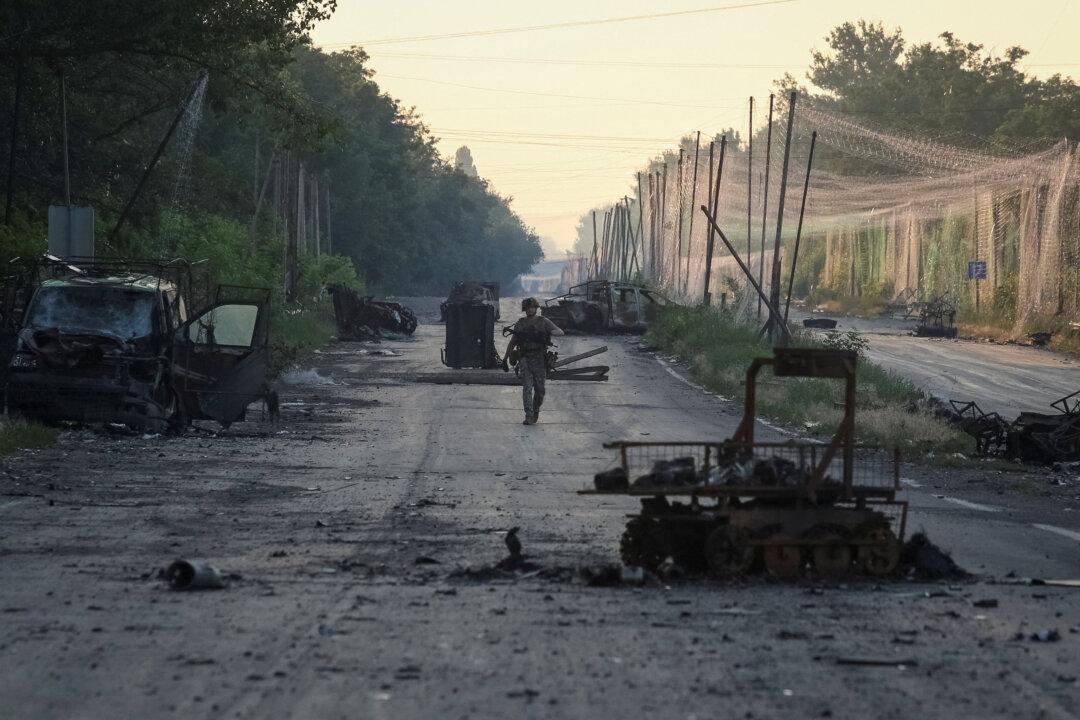
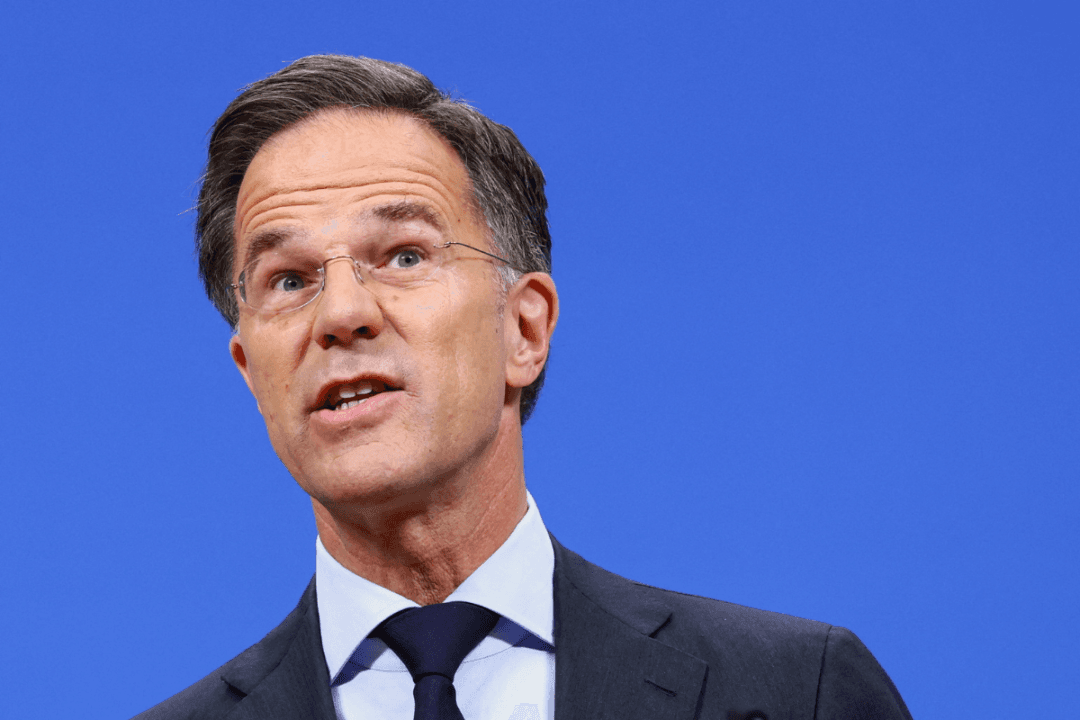
However, Schengen has come under mounting strain in recent years as national governments across the continent increasingly reimpose internal border checks, in response not only to the long-standing concerns of illegal immigration and security threats, but also to new and developing geopolitical pressures related to the Russia–Ukraine war.
This has raised questions about the durability of one of the bloc’s defining projects and whether it can withstand 21st-century problems.
‘A Completely Different World’
On June 14, 1985, Belgium, France, Germany, Luxembourg, and the Netherlands signed the Schengen Agreement—named after the Luxembourg village where it was concluded—laying the foundation for abolishing internal border checks and allowing the free movement of people, goods, and services.“Forty years ago, it was a completely different world,” Richard Schenk, research fellow at the MCC Brussels think tank, told The Epoch Times.
He said that when the Schengen Area was made up of only a handful of countries, there were no external borders to guard apart from the Iron Curtain—which was itself a very strongly defended border—and there were not the kind of flows of migrants and asylum seekers that the continent started to see in the past decade.
“You had a very strong defense on the outside, and then you could scrap border controls between the member states,” he said. “But obviously, with the expansion and the world changing, this is completely obsolete.”
‘New Norm’
Jolanta Szymanska, head of the EU Programme at the Polish Institute of International Affairs (PISM), said that 40 years ago, “the Schengen project was very idealistic and largely unprepared for the crises that were to come.”“This triggered ad hoc reforms of the system, which—in my opinion—still do not make the system resilient to future crises,” Szymanska said.
The commission can issue an opinion on the reintroduction, but it cannot veto it.
Despite the temporary nature of the provision, Szymanska said that these border controls “have already become the new norm in Schengen after the migration crisis of 2015.”
The PISM researcher said that many of the countries have been issuing these notifications “for many years.”
“Internal controls hinder the functioning of the area, but because member states prioritize security (which is somewhat understandable, especially in the era of rising hybrid threats), there are no indications that this trend will reverse,” Szymanska said.
Schenk said that even when some countries reinstate their national boundaries, they are a “pale shadow” of the former real border controls that existed before Schengen.
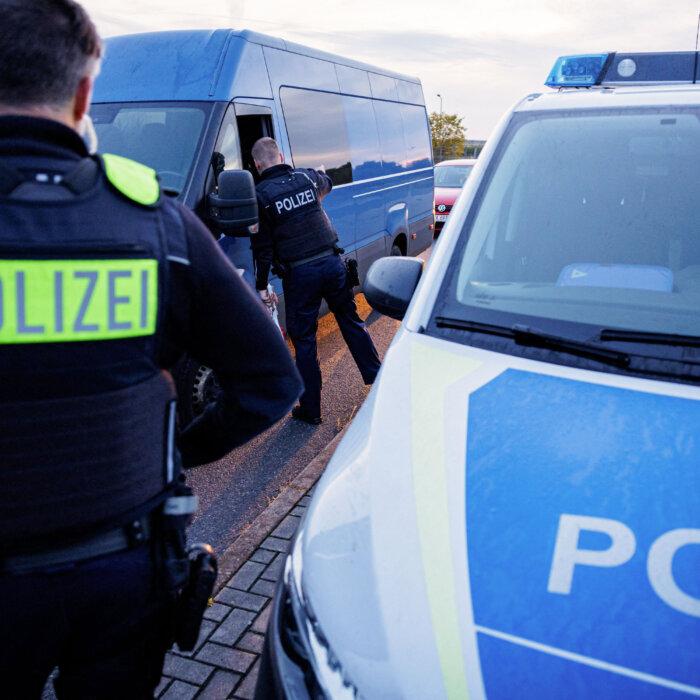
He noted that in his native Germany, border controls are only in areas such as major roads, which can be circumvented.
“They still catch a lot of migrants, which is just hinting at the scale of the problem of how many people are crossing the border without being caught by the police at all,” he said.
Poland’s Unique Challenges
Several countries, including Germany, that have reintroduced border checks cite persistent pressure from illegal immigration as a reason.Italy and Slovenia point to the risk that terrorists will infiltrate migrant flows, and Slovenia also warns of threats from organized crime, such as arms trafficking and people smuggling.
In recent years, however, a new challenge has emerged—not from the southern migration routes but from the east.
Poland, on Schengen’s eastern flank, has instituted restrictions with Lithuania, citing “migrant smuggling” from Belarus at the border.
European leaders call it a “hybrid attack,” while Minsk has denied the charge.
Bartosz Grodecki, a security and foreign policy expert at the Polish think tank the Sobieski Institute, told The Epoch Times that in recent years, Poland found itself dealing with two “totally different” crises at its border.
One, Grodecki said, was the “hybrid threat” coming from Belarus, and the second one was “this massive flow [of refugees] from Ukraine.”
Effect on Relations
Grodecki also touched on the effects internal controls were having on Europeans who, after years of free movement, now have to get used to border controls and the problems that come with it, including waiting at checkpoints.“These controls are pretty much permanent,” he said. “The widespread reintroduction of border checks pretty much undermines the very idea at the core of the Schengen system, because Schengen was created to strengthen free movement—and then, it’s interrupted.”
Poland has also enacted border controls with Germany, which has reinstituted borders with all nine of its neighbors with which it shares land borders.
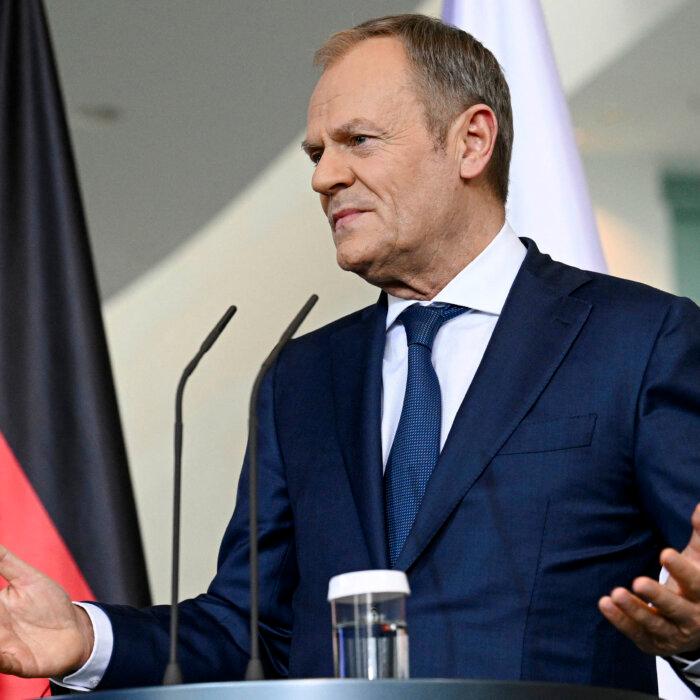
Polish Prime Minister Donald Tusk said at the time that Poland did not need tighter controls on its western border with Germany but more engagement from Berlin and other EU members in securing the eastern border.
Szymanska said that the introduction of internal controls within Schengen “certainly does not facilitate cooperation between states on migration issues.”
Schengen at 40
The European Commission called Schengen “the world’s largest area of freedom and security” and says it has fundamentally changed how Europeans live, work, and travel through the continent.It acknowledged illegal immigration as a problem for member states, including “tactics to weaponise migration for political purposes.”
The commission stated that through “intensified EU efforts,” there had been a significant reduction in illegal border crossings.
The report notes that the bloc had undertaken measures to secure its external border, including increasing funding for border countries to strengthen their surveillance infrastructure and capabilities.
It states that effective return measures “are among the most sustainable tools for safeguarding the area of freedom, security and justice without internal frontiers” and that the commission has proposed a new legal framework for returns.
The Epoch Times contacted the European Commission for comment and did not receive a response by the time of publication.