The European Union will suspend its two packages of countermeasures to U.S. tariffs for six months, a European Commission spokesman said on Aug. 4.
Olof Gill, a commission spokesman for trade, said in a statement emailed to The Epoch Times that the bloc “continues to work with the U.S. to finalise a Joint Statement, as agreed on 27 July.”
“With these objectives in mind, the Commission will take the necessary steps to suspend by 6 months the EU’s countermeasures against the U.S., which were due to enter into force on 7 August,” Gill said.
The 27-member bloc will spend $750 billion on energy from the United States, and tariffs on EU imports, including for automobiles, will be set at 15 percent.
Other preliminary details of the trade deal with Brussels include a $600 billion investment by the EU in the United States, on top of its current investments.
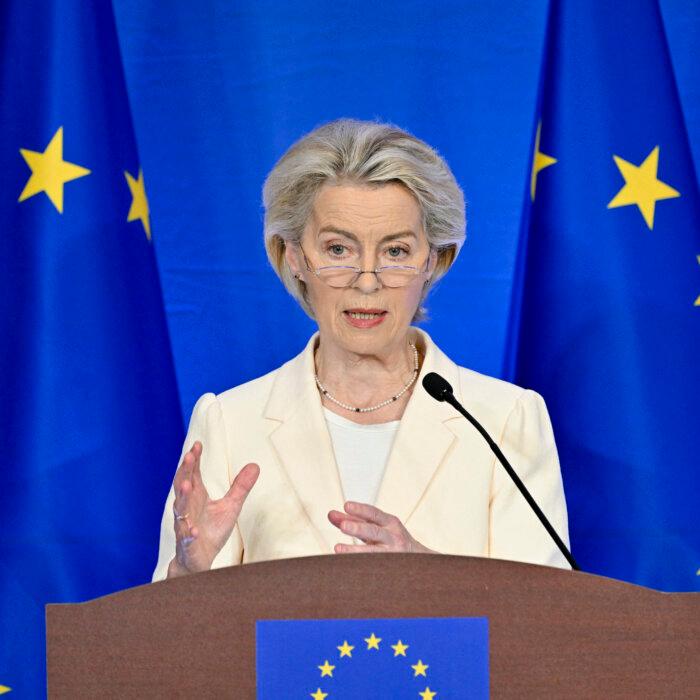
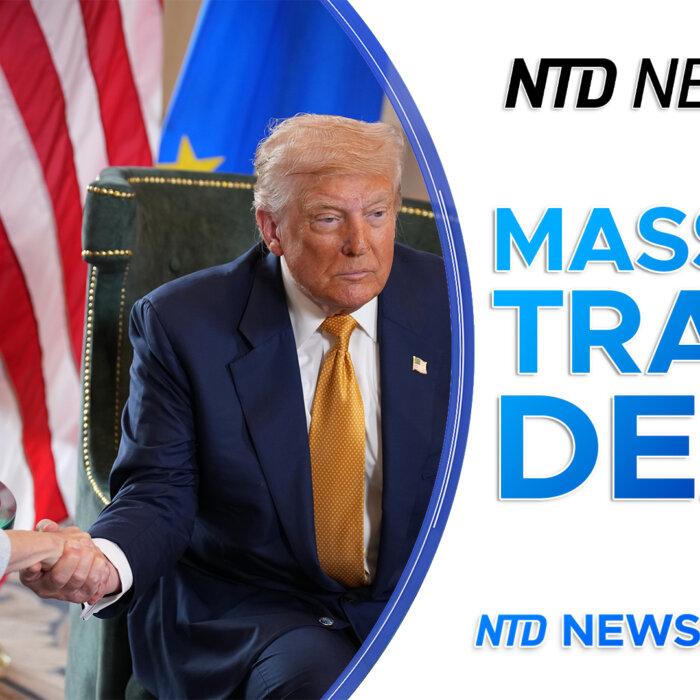
Gill said the agreement between Brussels and Washington “restores stability and predictability for citizens and businesses on both sides of the Atlantic.”
“It secures continued access for EU exports to the U.S. market, preserves deeply integrated transatlantic value chains, effectively safeguards millions of jobs, and provides the basis for continued strategic cooperation between the EU and U.S.,” he said.
Deal Made by Deadline
The tariffs were set to take effect by Aug. 7 if no deal had been reached with the United States. The EU countermeasures would have amounted to $109 billion in U.S. goods, including cars, pharmaceuticals, soybeans, and almonds.The U.S.–EU trade deal was struck days before the Aug. 1 deadline, after which nearly all EU imports would have faced 30 percent tariffs.
Trump and European Commission President Ursula von der Leyen met in Scotland on July 27 during the U.S. president’s trip to the UK.
Belgian Prime Minister Bart De Wever similarly expressed relief, but said it was not a moment for celebration. He said he hoped that the United States would “turn away again from the delusion of protectionism and once again embrace the value of free trade—a cornerstone of shared prosperity.”
The U.S.–EU trade deal is one of several tentative trade agreements that the Trump administration has struck in recent months.
The Epoch Times contacted the White House for comment but did not receive a response by publication time.