Senior figures in the European Union have reacted with a combination of relief and criticism to the new trade deal with the United States.
She thanked U.S. President Donald Trump and called him a “tough negotiator” but also a “dealmaker.”
The 27-member bloc will buy $750 billion worth of energy from the United States, and tariffs on EU imports, including for automobiles, will be set to 15 percent.
The deal was struck days before the Aug. 1 deadline, after which nearly all EU imports would have been hit with 30 percent levies.
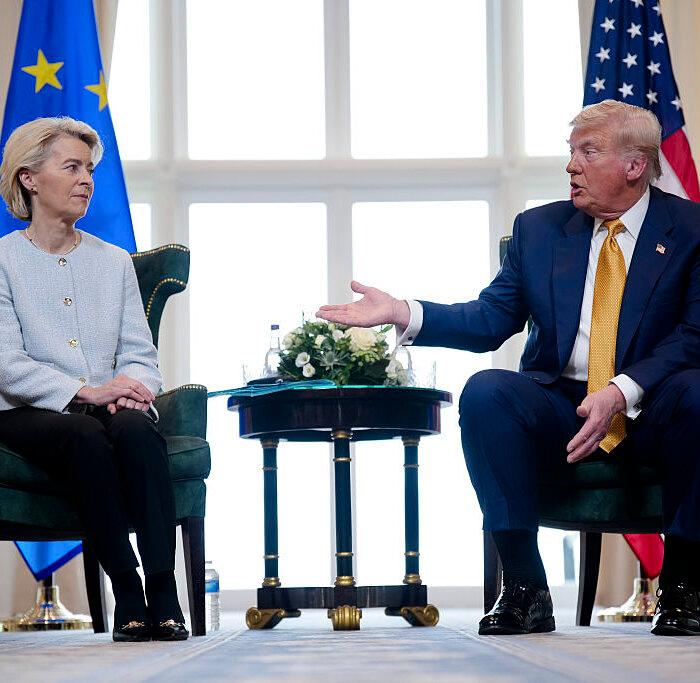
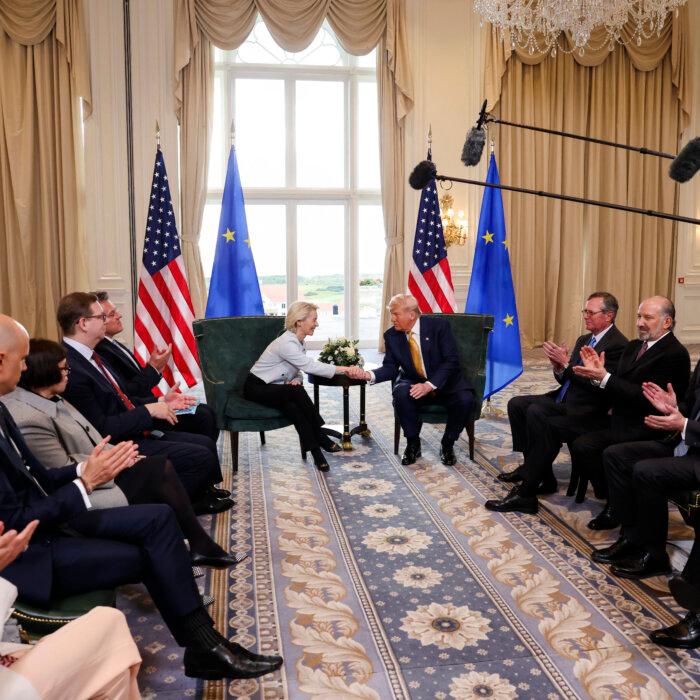
Trump and von der Leyen met in Scotland during the U.S. president’s trip to the UK.
When asked whether she considered 15 percent a good deal for European carmakers, von der Leyen told reporters, “15 percent is not to be underestimated, but it is the best we could get.”
German Chancellor Friedrich Merz said in a statement on July 27 that he welcomed the deal and that the two trading partners would now avoid an “unnecessary escalation in transatlantic trade relations.”
Merz said his country’s export-oriented economy, with its large automotive sector, would have been hit hard without this agreement.
Relief But Not Celebration
Not all responses coming out of Europe were as positive.“Tariffs will increase in several areas, and some key questions remain unresolved.”
De Wever said that he hoped the United States would “turn away again from the delusion of protectionism and once again embrace the value of free trade—a cornerstone of shared prosperity.”
French Minister for Industry Marc Ferracci similarly criticized the deal for being “unbalanced,” although he acknowledged that it brought stability to businesses and manufacturers.
Ferracci told RTL radio on July 28, “This agreement is unbalanced and should encourage us to continue working to rebalance trade between Europe and the United States.”
The minister said the deal brought the end of uncertainty, which was a relief, but he said “it is not the end of the story.”
French Prime Minister François Bayrou called the deal a “dark day for Europe,” criticizing it as “submission” to Trump in a post on X on July 28.
He told the podcast “Warrior’s Hour” on July 28 that this was what Hungary expected to happen, because Trump is “a heavyweight negotiator” while von der Leyen “is a featherweight.”
Trade Deficit
The Trump administration announced on April 2 that dozens of countries would be subject to reciprocal tariffs to correct what the president has described as the unfair treatment of U.S. exporters.Other preliminary details of the trade deal with Brussels include a $600 billion investment by the EU into the United States, on top of its current investments.