On Dec. 23, U.S. Secretary of State Marco Rubio announced the State Department had taken action against five individuals he described as “agents of the global censorship-industrial complex.”
The U.S. government action will prevent Breton and four other European nationals from being able to enter the United States.
The U.S. government action came, in part, as a response to the European Union’s Digital Services Act (DSA), which requires large tech platforms to account for their content moderation decisions, including the steps they take to remove content deemed to be hateful or deceptive.
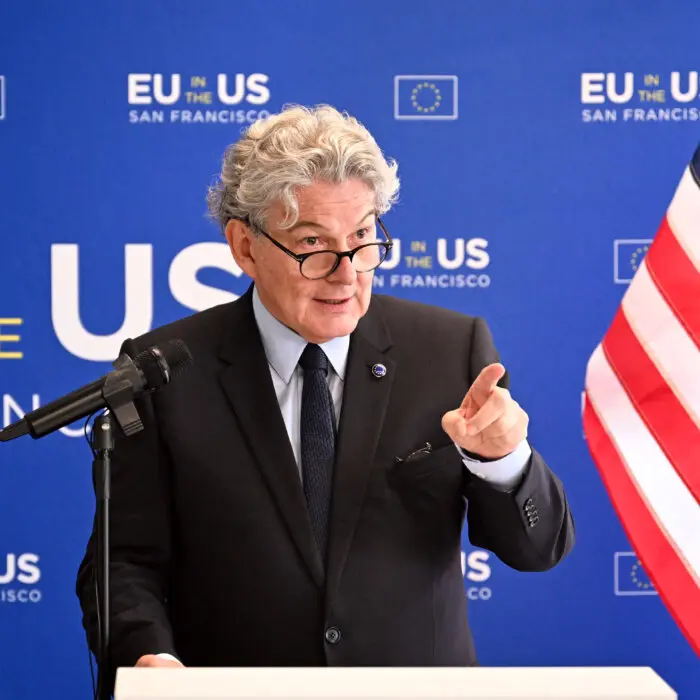
In their fine decision, the commission said X’s blue check account verification methodology was deceptive because users can pay for the checkmark without the platform actually verifying the identity of the user. The European Commission also faulted X for not providing enough information about its advertisements on its platform and for hindering access to data about the platform.
In his response on Tuesday, Breton asserted a connection between his U.S. entry ban and “McCarthyism,” referencing the late U.S. Sen. Joe McCarthy’s efforts to investigate and blacklist suspected communists in the United States in the late 1940s and 1950s.
“To our American friends: ‘Censorship is not where you think it is,’” Breton wrote.
Other Europeans Sanctioned
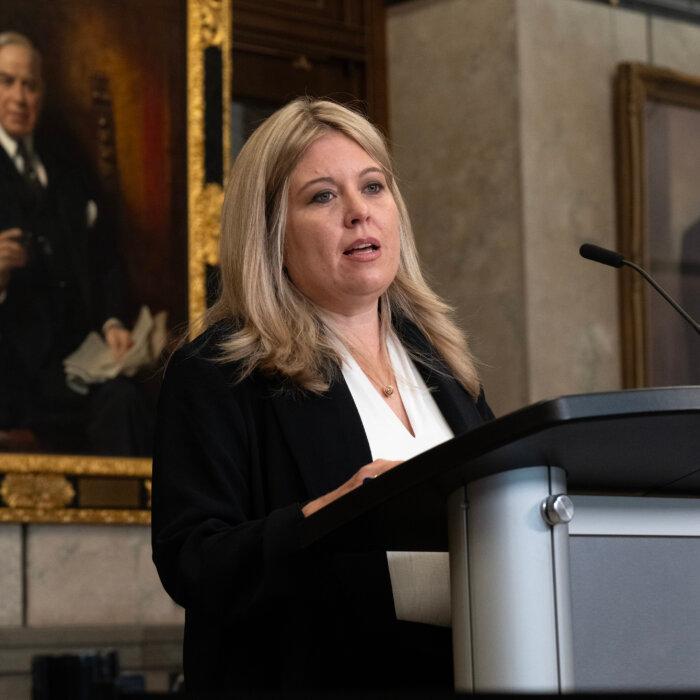
The other four individuals targeted with U.S. entry bans are Imran Ahmed, CEO of the Center for Countering Digital Hate; Clare Melford, who helps run an organization called the Global Disinformation Index; and Anna-Lena von Hodenberg and Josephine Ballon, who co-lead a German organization called HateAid.Addressing the entry ban decision against Melford, Rogers said her organization received U.S. taxpayer funding “to exhort censorship and blacklisting of American speech and press.”
Following the entry ban against Ahmed and Melford, who are both British nationals, a UK government spokesperson said, “While every country has the right to set its own visa rules, we support the laws and institutions which are working to keep the internet free from the most harmful content.”
In her social media posts, Rogers described Ballon and von Hodenberg’s organization, HateAid, as having been founded “to counter conservative groups.”
Rogers said HateAid also routinely presses social media platforms for proprietary information in a bid “to help it censor more.”
“Hodenberg cited threat of ‘disinformation’ from ‘right-wing extremists’ online in upcoming U.S. and EU elections when circulating a petition for the DSA to become more strongly enforced to allow data access for ‘researchers,’” Rogers wrote.