The European Union’s foreign chief has said that the EU is planning to significantly expand sanctions against Russia in the coming months, in the bloc’s latest bid to push Moscow to the negotiating table to end its war with Ukraine.
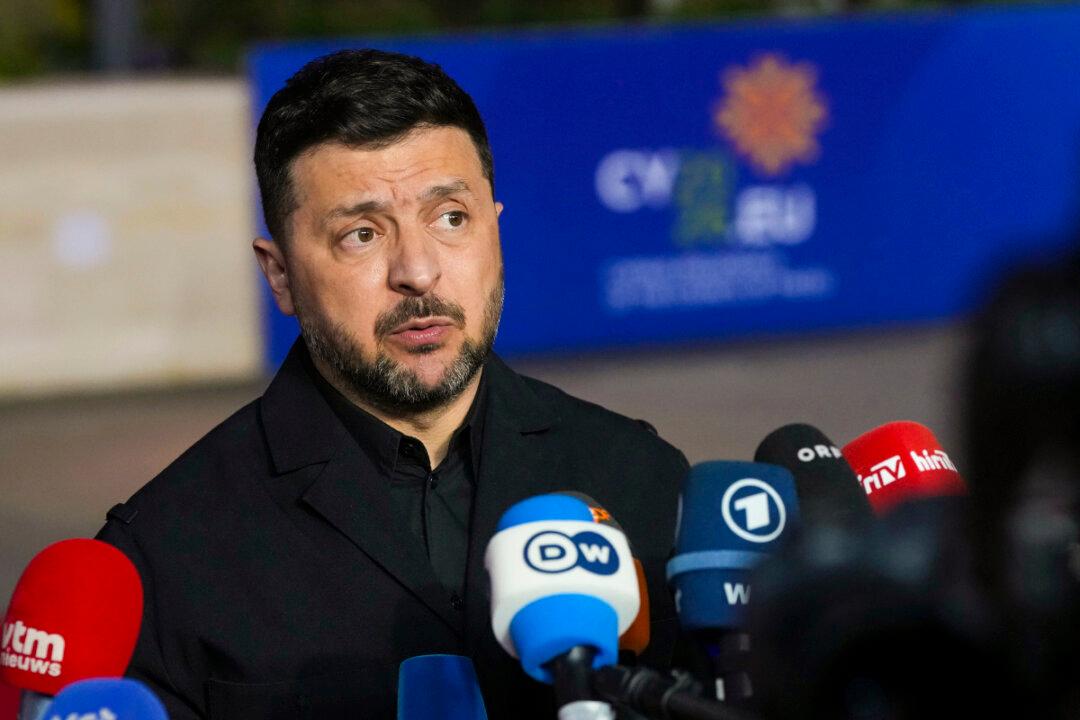
“This fall, I will present the most far-reaching sanctions list since the beginning of the war,” EU High Representative for Foreign Affairs and Security Policy Kaja Kallas told German daily newspaper Die Welt.
Kallas said in the interview published on Aug. 17 that should the sanctions be adopted, the number of sanctioned Russian companies, organizations, and individuals would increase by one-third.
She did not elaborate on the timing or details of the sanctions.
At the end of July, Brussels adopted its 21st sanctions package against Russia over its war with Ukraine.
European Commission President Ursula von der Leyen said at the time that the bloc was adding 32 Russian banks to its transaction-ban list, as well as oil trading platforms and cryptocurrency firms.
Russia’s Response
Moscow says the sanctions hurt European economies by denying them access to Russian energy.
In response to the 21st round of sanctions, the Russian Permanent Mission to the EU said last month that “European bureaucracy, disregarding the economic costs, continues to pursue its course of escalating confrontation with Russia.”
The mission said that the restrictions “will further aggravate the already acute social and economic problems in the European Union,” which the mission said were due to the bloc’s decision to drop Russian energy supplies and to continue to spend billions on aid to Ukraine, “all against the backdrop of instability in global energy markets due to the escalation of the conflict in the Middle East.”
“We reaffirm that the hostile unilateral coercive measures of the European Union against our country will be met with an effective and due response from Russia,” the mission said.
Additional Sanctions
The EU said in a fact sheet that since Russia invaded eastern Ukraine on Feb. 24, 2022, the EU has imposed “massive and unprecedented” penalties against Moscow, on top of the sanctions it had already imposed following Russia’s annexation of Crimea in 2014.
Measures include economic and individual sanctions, as well as diplomatic and visa restrictions.
Russian energy has been a major focus of sanctions in recent years, with the bloc banning imports of Russian crude oil, refined petroleum products, liquefied natural gas, and liquefied petroleum gas, as well as coal and other solid fossil fuels.
The EU restricts nearly 90 percent of Russian oil imports to the bloc, which Brussels says “is significant, considering that around half of Russia’s total oil exports go to the EU.”
“Losing this leading lucrative market has a significant structural impact on Russia, whose budget relies substantially on this oil revenue,” the EU says.
The commission says that since February 2022, it has banned 91.2 billion euros ($106 billion) in imports from Russia and more than 48 billion euros ($56 billion) in exports of goods and technologies to Russia.