The European Union and its partners have launched a 883.6 million euro ($1 billion) package of recovery projects for Gaza, expanding international efforts to restore basic services in the enclave after months of war.
The Team Gaza Initiative, announced on July 13 in Brussels, represents one of the largest European-led reconstruction commitments since a U.S.-brokered ceasefire between Israel and terrorist group Hamas took effect in October 2025.
The funding is meant to support projects aimed at restoring water and sanitation networks, clearing debris, improving solid-waste management, rebuilding damaged health facilities, restoring electricity infrastructure, and reviving agricultural and food production systems across Gaza.
Participating governments include Spain, Denmark, the UK, Germany, Norway, Finland, Italy, the Netherlands, France, Japan, Switzerland, Sweden, and Belgium, as well as the European Investment Bank and the World Bank.
The European Commission stated that Australia and Canada are also expected to join the initiative.
EU foreign policy chief Kaja Kallas said sustained international support would remain essential for both reconstruction and political stabilization.


“The many countries gathered in Brussels today show that this support is there,” she said.
The initiative complements broader reconstruction planning under the Board of Peace, which was established under the U.S.-backed Gaza peace plan to oversee longer-term rebuilding and governance initiatives.
The director-general of the Board of Peace, Nikolay Mladenov, and the head of the National Committee for the Administration of Gaza, Ali Shaath, both attended the July 13 meeting in Brussels.
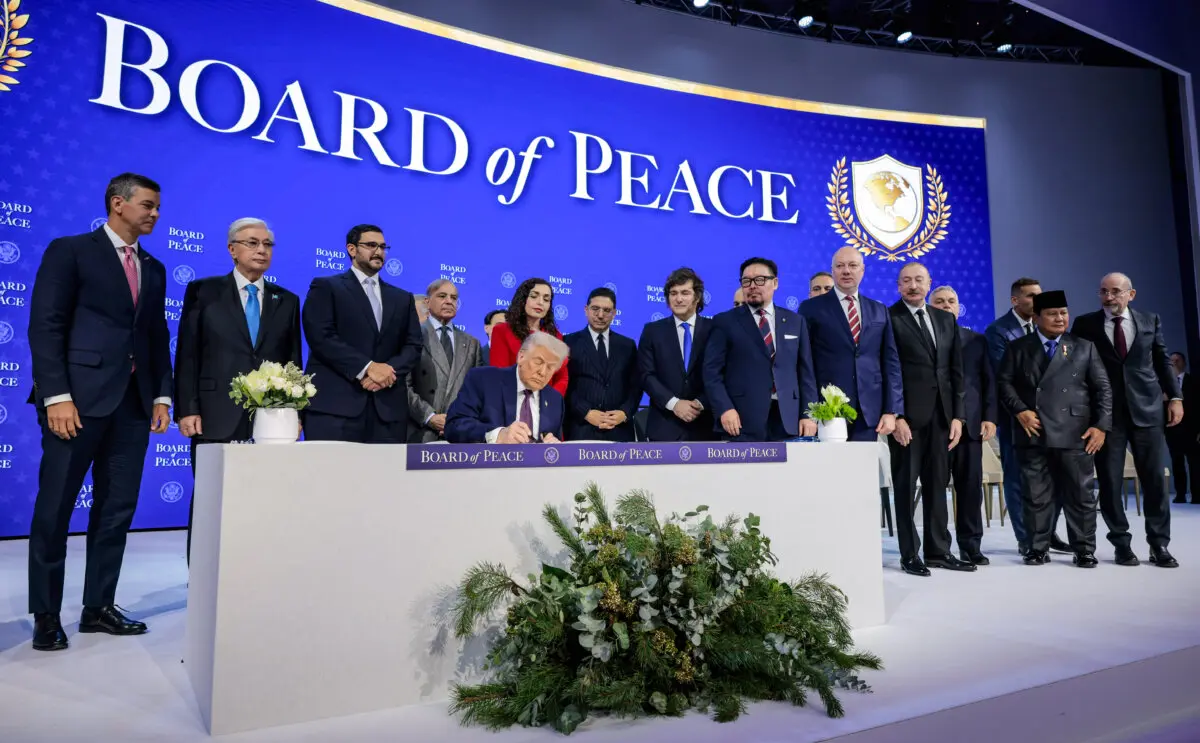
Together, those commitments amount to about $17 billion, a substantial increase in available reconstruction funding.
Political Transition, Humanitarian Needs
The EU’s reconstruction effort comes as Israel and Hamas continue working to implement the next stages of the Washington-backed Gaza peace plan. Under the deal, Hamas is expected to transfer civilian governing responsibilities to the National Committee for the Administration of Gaza, a body made up of U.S.-backed Palestinian technocrats.The Board of Peace stated on July 6 that it had taken note of Hamas’s announcement but would judge the move by actions rather than words. On that same day, Israeli Foreign Minister Gideon Sa'ar said Israel did not believe that Hamas intended to relinquish military control of Gaza.
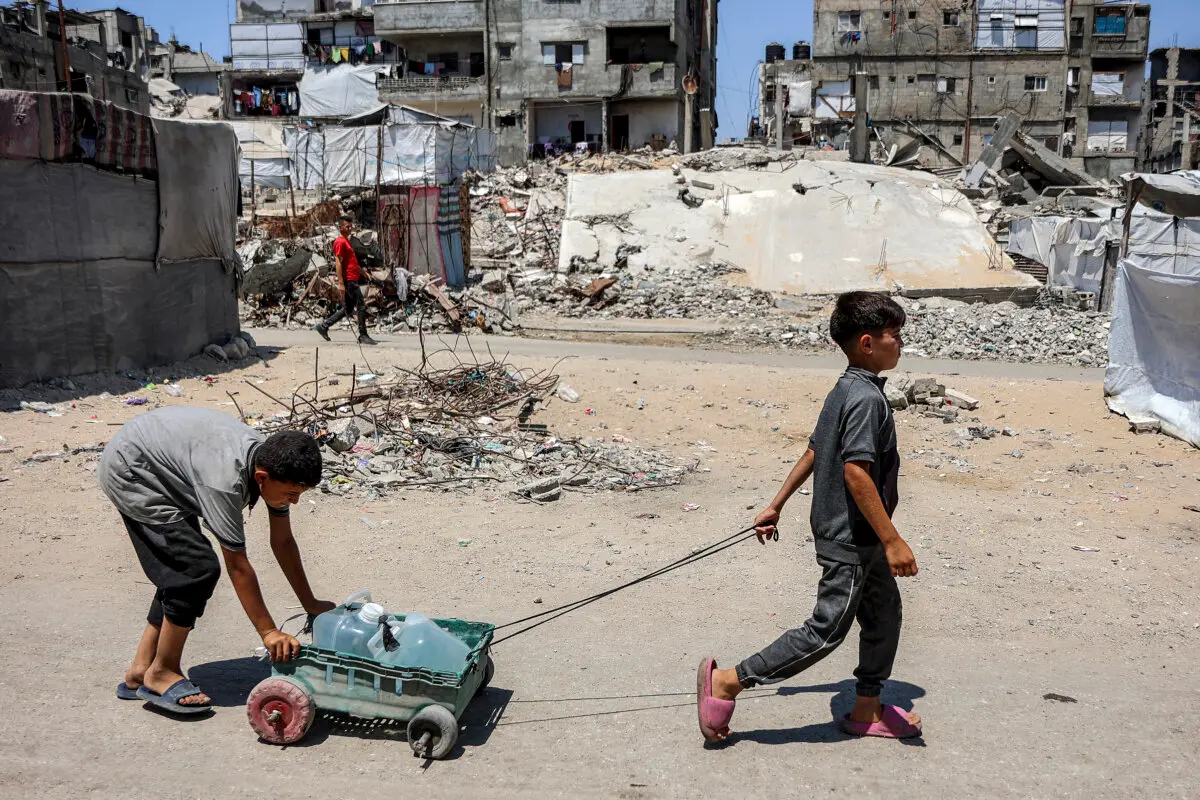
Despite growing international financial commitments, humanitarian conditions in Gaza remain severe.
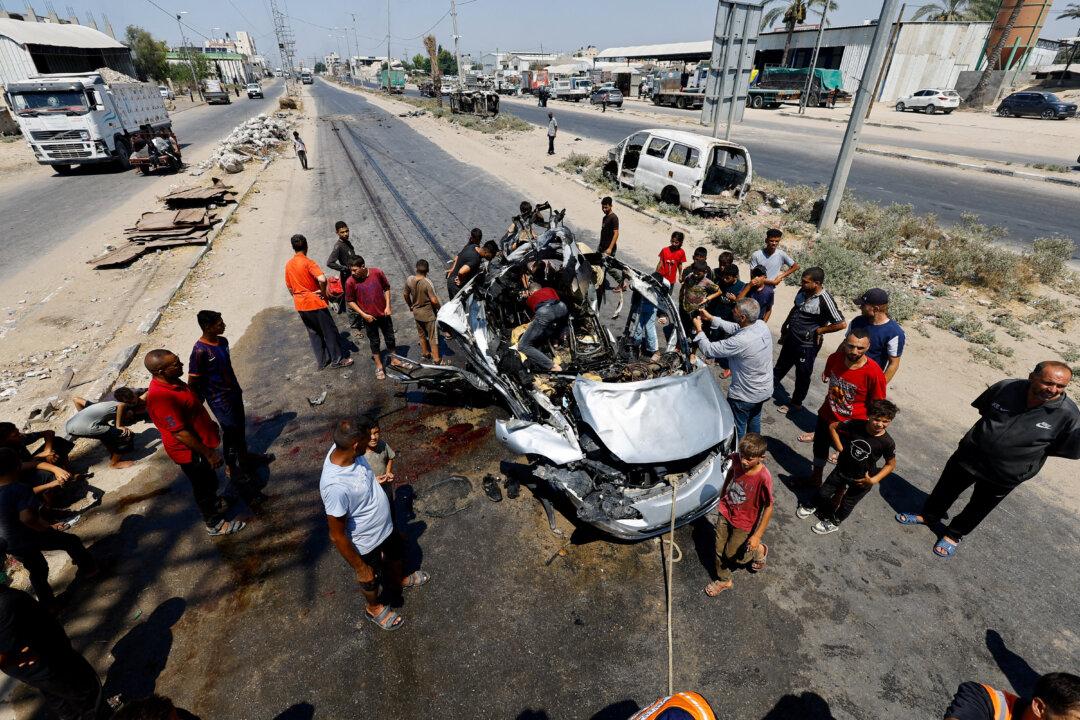
The Hamas-run Gaza Health Ministry stated on July 11 that about 70 percent of its ambulance and medical transport fleet was out of service because of direct damage, mechanical failures, and shortages of spare parts.
The ministry warned that continued restrictions on importing tires and replacement parts could bring medical transportation to a halt, making it increasingly difficult for patients and health workers to reach hospitals.
It also stated that buses contracted to transport medical personnel were operating under deteriorating mechanical conditions after routine maintenance was suspended due to the unavailability of replacement parts.
Two days later, on July 13, the ministry reported that 1,108 people had been killed and 3,578 injured since the October 2025 ceasefire.
It stated that, since the start of the war on Oct. 7, 2023, cumulative casualties had reached 73,231 dead and 173,686 wounded. The Epoch Times has not independently verified the ministry figures.

The war began after Hamas attacked southern Israel on Oct. 7, 2023, killing about 1,200 people and taking roughly 250 hostages, according to Israeli authorities.
Israel’s military campaign in Gaza has since caused widespread destruction across the enclave, displaced most of its population, and severely damaged housing, hospitals, schools, and public infrastructure.