The European Commission (EC) has unveiled a military mobility package aimed at making it easier to deploy troops, tanks, and equipment across the European Union’s 27 member states, in what it describes as a step toward a “Military Schengen.”
The EC aims to have the bloc-wide military mobility area in place by 2027.
Kaja Kallas, the EC high representative for foreign affairs and security policy, said in prepared comments accompanying the announcement that the fast movement of military forces “is essential for Europe’s defence.”
“Defence readiness fundamentally depends on whether you can get your tanks and troops to where you need them, when you need them,” Kallas said. “Today, we are proposing an emergency system for cross-border military transport and an initiative to pool member countries’ transport to make moving troops easier across the continent.”

She added that Europe was facing “unprecedented security threats,” in reference to the war on Europe’s doorstep between Russia and Ukraine, which is approaching its fifth year.
Cutting Paperwork, Improving Infrastructure
On June 25 at a NATO summit in The Hague, Netherlands, alliance members agreed on a defense spending target of 5 percent of gross domestic product (GDP) by 2035.This is broken down into targets of 3.5 percent of GDP to be spent on core defense—such as weapons, troops, and equipment—and 1.5 percent of GDP for defense and security-related infrastructure, such as protecting energy pipelines and undersea cables and adapting roads, bridges, and ports for use by large military vehicles.

Among the EC’s plans are proposals to harmonize rules across the bloc to make it easier to move militaries across national boundaries and to streamline processing time for notices of cross-border troop movements to three days.
Reinforcing transport infrastructure is also a priority under the plans.
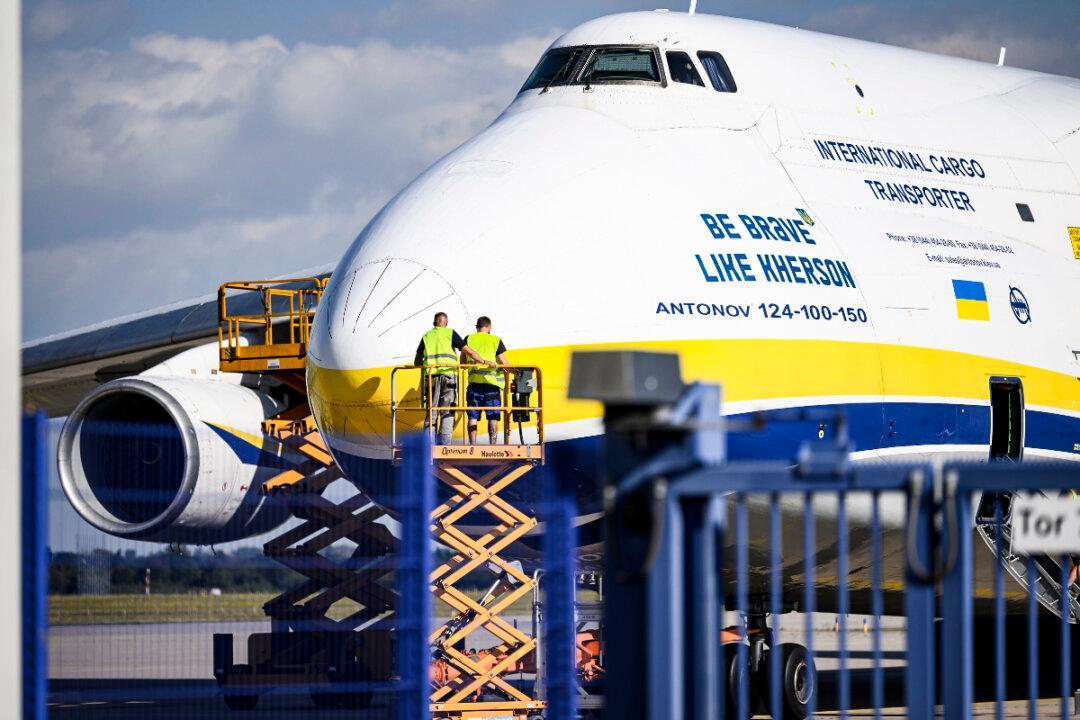
“Investing in infrastructure is crucial. If a bridge cannot carry a 60-ton tank, we have a problem. If a runway is too short for a cargo plane, we cannot resupply our troops,” Kallas said.
Military Mobility Hotspots
The EC said in a question-and-answer sheet that it had identified about 500 “hotspot” projects to remove “bottlenecks” in Europe’s critical military mobility corridors.Projects include increasing port and airport capacity, reinforcing bridges, and widening tunnels.
“Our aim is to achieve an EU-wide military mobility area by 2027—a ‘Military Schengen’, which would allow an effective movement of military transport, sharing of its assets by Member States, and helping each other in emergency situations.”
The EU’s executive branch said it will present these proposed measures to the European Council and the European Parliament for adoption.