



The CEO of Canada’s largest pipeline company is calling for the removal of the oil tanker ban off British Columbia’s northwest coast, saying it deters pipeline investment and holds back Canada’s economic potential.
Enbridge CEO Gregory Ebel made the comments on Oct. 2 while addressing the Empire Club of Canada, a Canadian speakers’ forum, in Toronto. He said Canada is at a decisive moment to capitalize on its natural resources and boost competitiveness through energy infrastructure, but that government regulations, such as the B.C. oil tanker ban, have created uncertainty and discouraged investment.
“There is a good reason the Alberta government has become the proponent of a pipeline to the north coast of BC,” Ebel said, referring to the province’s recent announcement that it will act as proponent and submit an application to the federal government’s Major Projects Office for a new bitumen pipeline to B.C.’s northwest coast.
“The previous government’s tanker ban effectively makes that export pipeline illegal. No company would build a pipeline to nowhere,” he added. “The tanker ban is a great example of how things will have to change to allow our country to maximize its economic potential.”
Ottawa in 2019 implemented a ban on the traffic of large oil tankers off British Columbia’s north coast, citing environmental concerns. The ban ended prospects for the previously proposed Northern Gateway pipeline, which would have transported oil from Alberta to Kitimat on B.C.’s north coast.
Alberta Premier Danielle Smith has long urged Ottawa to lift the tanker ban, saying it undermines Alberta’s resource development, along with other policies such as the Impact Assessment Act and the proposed oil and gas emissions cap.
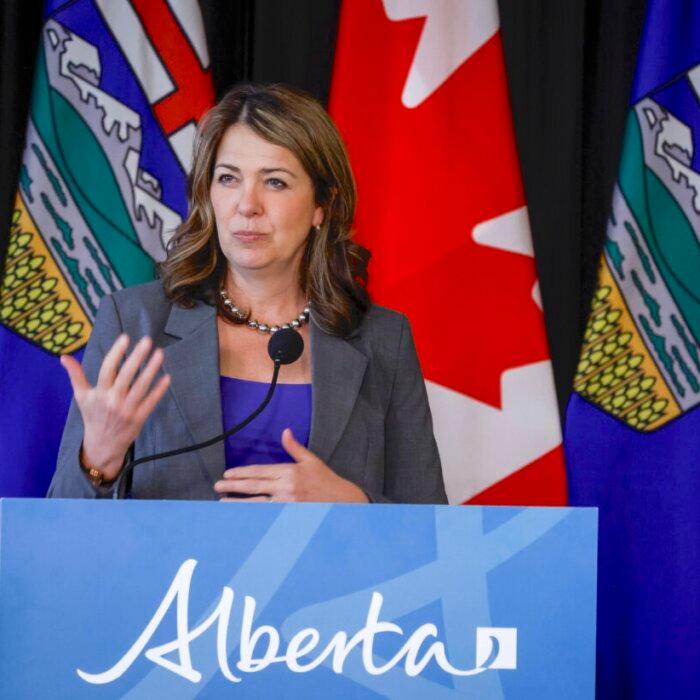
The province said on Oct. 1 it doesn’t ultimately want to own the new pipeline, but that it decided to act as proponent because private companies aren’t willing to take the risk of further rejections or losses in the current investment climate.
Smith said she is confident proponents will step up and build the pipeline with private-sector money once the project gets to the approval stage. She also said discussions are ongoing with Ottawa regarding current legislation, including on potentially removing the tanker ban and the oil and gas emissions cap.
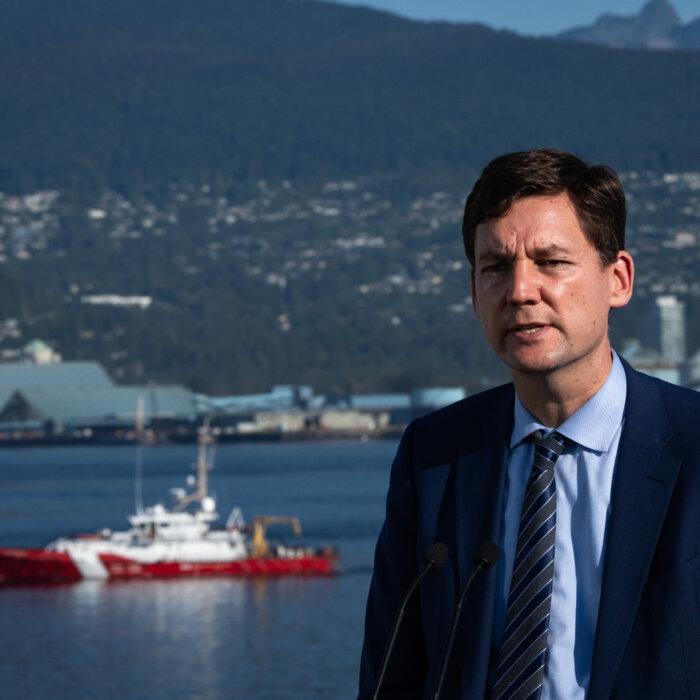
B.C. Premier David Eby has criticized Alberta’s proposal, saying that removing the tanker ban would be an economic “threat” to “the kind of economy that we’re trying to build in the country here.”
“As British Columbians we love our coast and will always protect it,” Eby said in an Oct. 1 social media post.
“The North Coast Tanker Ban also secures billions in shovel-ready projects,” he added. “We won’t let this proposal, with no backer and no money, threaten real jobs for BC’s families.”
During his Oct. 2 address, Ebel said regulations such as the tanker ban and the Impact Assessment Act have negatively affected approvals for Canadian projects.
“Together, they increase both costs and uncertainty and stifle investment,” he said.
“Canadian project approvals are so complex and unpredictable that even the most responsible, Indigenous-supported, and environmentally sound proposals can be delayed for years—sometimes indefinitely.”
Prime Minister Mark Carney’s government has committed to capping approval times for projects deemed to be of national interest to a maximum of two years. It recently passed legislation, known as the Building Canada Act, that allows projects to bypass some laws to speed up their construction.
Carney on Sept. 11 announced the first set of projects Ottawa is recommending to the recently opened Major Projects Office for approval. The list did not include a bitumen pipeline from Alberta to B.C.’s coast, but Smith said at the time she is hopeful the second tranche of major projects may include a pipeline.
Ebel said the industry doesn’t seek to put environmental concerns in the background, but rather wants regulations that allow it to prosper in a sustainable way.
“None of us is calling for weaker environmental oversight,” he said. “Instead, we are urging government to adopt smarter, clearer, and faster processes—so we can attract investment, take risks, and build for tomorrow.”


