Drones spotted flying near a military base used to house U.S. nuclear weapons could be part of a spying operation, Belgian Defense Minister Theo Francken said on Nov. 3.
He said the first day involved “small drones to test radio frequencies,” while “on Saturday and Sunday [it involved] large drones for observation and destabilization.” The minister added that he believes those piloting them sought to “create panic in Belgium.”
“It looks like an espionage operation. By whom, I don’t know. I have some ideas, but I’m going to be cautious,” he told the public broadcaster, according to a translation of his remarks.
Not the Work of Amateurs
The minister also ruled out the possibility that the incident was the work of amateurs or part of a prank, revealing that the operation showed a level of sophistication.

He told La Première that jamming equipment was used to attempt to disrupt the drones’ radio signals, but that it had proven ineffective.
“The jammer didn’t work because they tested our radio frequency and changed it. They have their own frequencies. An amateur wouldn’t know how to do that,” Francken said.
Asked why it was not possible to shoot down the drones, Francken said: “When they’re over a military base, we can shoot down the drones. When they’re right next to it, we have to be very careful because if they fall on a house, a car, or a person, that’s another story.”
4 Years Behind
Francken also addressed the state of Belgium’s defense strategies, saying its drone-repelling capabilities are four years behind where they should be.“We’re chasing the threat,” Francken told La Première.
“We should have bought anti-aircraft systems [to combat drones] five or 10 years ago. NATO has been saying this for years. I’ve been minister of defense for nine months. ... We’re four years behind. I’ve been trying to accomplish a great deal for the past nine months. ”
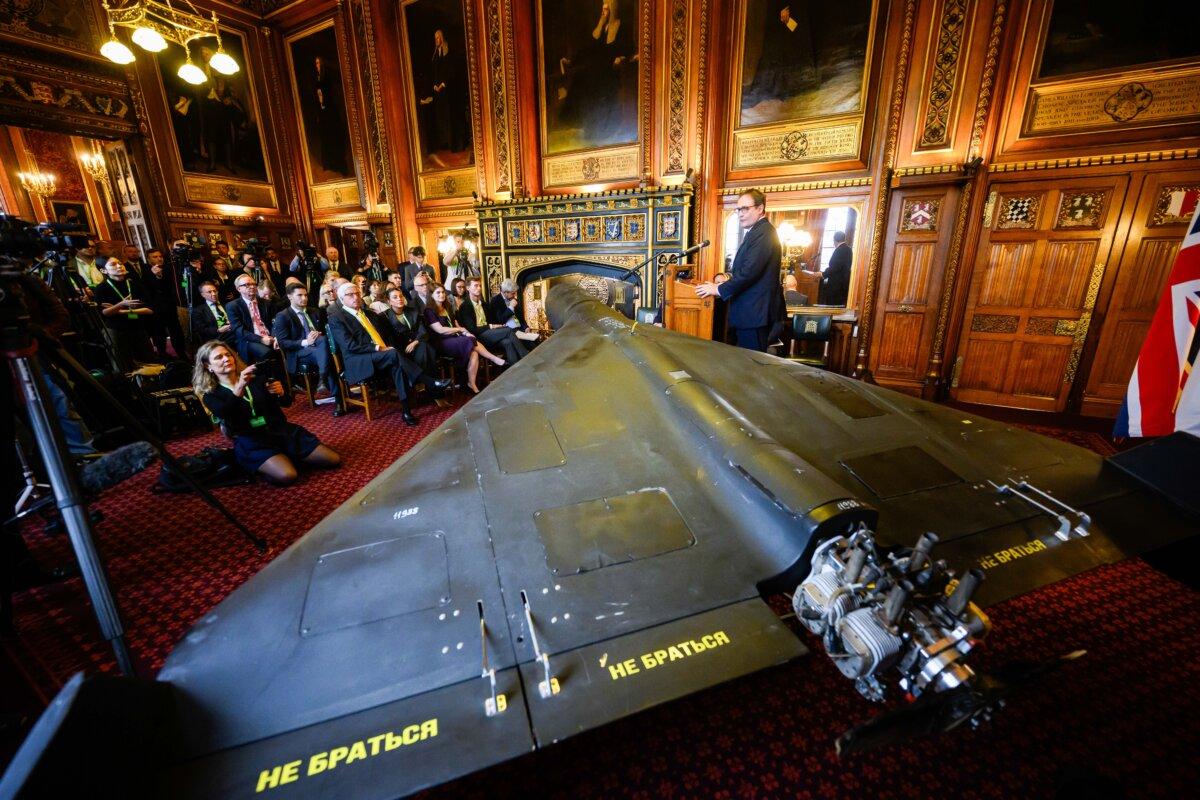
NATO describes hybrid warfare as a fusion of conventional and unconventional means, including subversion or destabilization of the adversary and attacks conducted in ways that make identifying those responsible difficult.
Hybrid warfare often occurs in the gray zone, the threshold below conventional war, which can include cyberattacks, attacks on critical infrastructure, and espionage.
European Self-Reliance
On Oct. 16, von der Leyen unveiled proposals for four flagship defense projects, including a drone wall and fortification of Europe’s eastern border, as part of measures to boost defense by 2030.Bartosz Grodecki and Maciej Romanow, experts from the security team at Polish think tank Sobieski Institute, recently told The Epoch Times that Brussels’s plans show “that Europe is not passively relying on the United States, but actively investing in its own defense.”
This shift “changes Europe’s position from being a security receiver to becoming a security provider,” Grodecki and Romanow stated.
“For the United States, this means a more balanced partnership in which European allies take on part of the financial and technological burden.”