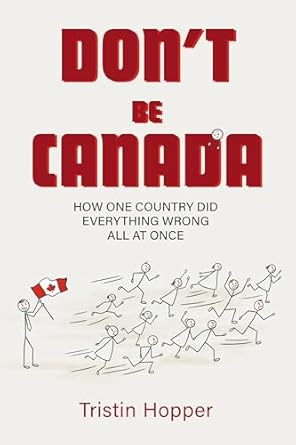
Once a thriving nation, Canada has seen a steep erosion in prosperity and security in just 10 years, a slide journalist Tristin Hopper blames on a string of self-inflicted policy failures detailed in his new book.
“We just sort of became wildly complacent and got into a headspace that we were special, we were Canadian, we had a functioning society, and ... we didn’t have to defend it,” Hopper said in an interview with The Epoch Times.
“We didn’t have to explain who comes in. We didn’t have to bring the hammer down on violent criminals. We just thought we had reached this sort of utopian state that was self-sustaining.”

Housing and Dangerous Streets
Hopper’s eight-chapter book says Canada has fallen in prosperity over the past decade and has become a country where home ownership is increasingly out of reach for many people, crime and drug addiction runs increasingly rampant, and the health-care system has become dysfunctional, sometimes even fatal, for Canadians in need of care.“Each one is something that Canada is uniquely extreme with,” Hopper said.


His book also argues that Canadians need to better understand the link between soft-on-crime policy and rampant crime, noting that the term “super chronic offender” is now being used by some Western Canadian police forces to refer to a person who commits more than one crime per month.
Death and Health Care
Hopper also tackled medical assistance in dying (MAID) in his book. He said Canada serves as a cautionary example even among countries that are implementing euthanasia programs.He cited the dramatic rise in MAID deaths, which was originally forecast to account for roughly 2.05 percent of Canada’s deaths (around 6,000) per year but reached 7,611 by 2020 and 10,064 by 2021. As of last year, numbers hit 16,499, or 5.1 percent of all deaths in the country.
On Canada’s struggling health-care system, Hopper writes that long waits at the emergency room have led to an increasing number of deaths and are symptoms of “free health care” that’s anything but free.
Censorship and Identity Politics
Hopper’s book argues that Canada is flirting with censorship and dystopia, including in expansions of hate speech law, mandated takedowns of content, and the proposed Online Harms Act, Bill C-63. The bill was introduced in February 2024 and died when Parliament was prorogued in January 2025. Subsequently, the Liberal government said in September 2025 that it planned to re-introduce the online harms legislation.Hopper noted that even progressive author Margaret Atwood warned in the spring of 2024 that the Justin Trudeau government’s Online Harms Act was “Orwellian” in nature.
“It wasn’t until Ottawa started threatening life sentences for speech crimes that its democratic peers began noticing that their Canadian cousin had developed a bit of a censorship problem,” Hopper writes.
On identity politics, Hopper writes that Canada went too far by embracing policies that are overly permissive, including allowing biological men into female spaces, mandating pronoun usage, and putting tampons in men’s bathrooms on military bases.
Economy
Hopper writes that Canada’s economy is in bad shape, linking this partly to real estate, which he said began a “feverish ascent” in 2003 and is still far too expensive for most Canadians to afford. Although much of the Western world has seen home prices balloon, Canada is an example of such a situation that has become dire, he said.‘Activist Judges’
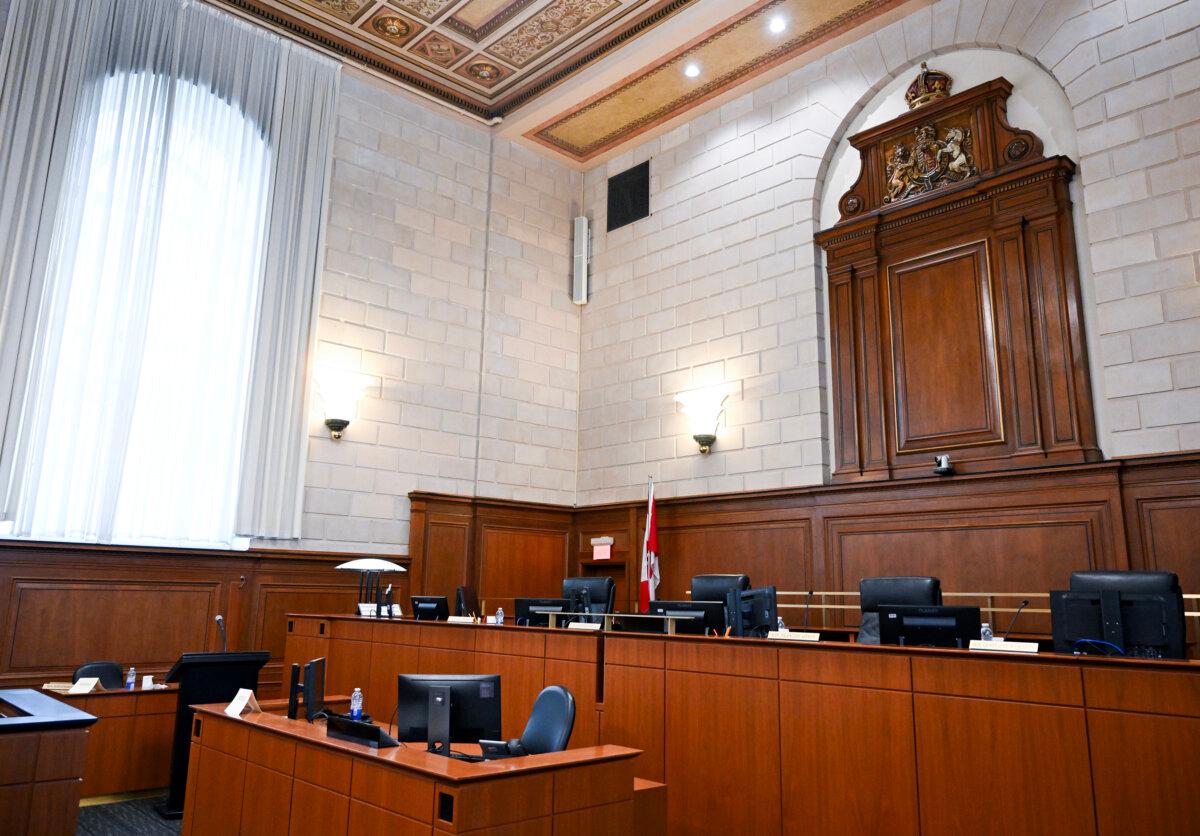
Hopper writes that many of the problems discussed in his book involve activist judges who he says are “unhinged from reality” and are leading the country down the wrong path.“At the heart of virtually every chapter in this book is an activist judge. A jurist who looked at the Charter of Rights and Freedoms [and] decided that a vague phrase such as ’security of the person' denoted an unquestioned constitutional right to do drugs in a playground or obtain suicide on demand,” Hopper writes.
He said that while “an increasing number of Canadians” are realizing that the courts have “lost their minds,” change will be slow, as “activist judges” continue to play a role.
What’s the Solution?
The light at the end of the tunnel for Canada, Hopper says, is that the majority of its problems are self-inflicted rather than at least partly due to external threats and pressures, such as in the case of Taiwan and some countries in the European Union.Hopper said the first step to a solution is realizing how broken Canada is so it can be rebuilt. He pointed to nations like Poland, which went from economic stagnation and rampant dysfunction to becoming one of the world’s fastest-growing, safest societies.
“Poland really sucked for most of the 20th century. And as such, you have an entire country of people saying, we really have to be careful about what we do or we can go back into the abyss. Canada is the reverse of that,” Hopper said. He added that Canada could become like a “giant Switzerland” if concerted and consistent policy changes and public pressure are applied.
Hopper cautions Canadians not to expect any political party or leader to come along and fix things, saying it is up to Canadians themselves to get the country out of its current situation.
“[I don’t agree with] the idea that we can just sort of sit on our hands as all these problems happen and just wait for some philosopher king to become prime minister and fix everything,” Hopper said.
“You have to ready the ground for a lot of the sort of necessary fights to fix Canada that would need to take place.”