Corporate subsidies in Canada extend far beyond the headline-grabbing debates, with federal, provincial, and municipal governments collectively directing tens of billions of dollars to businesses annually.
While some measures—such as support for media organizations or tax provisions for the oil and gas sector—draw high-profile ideological debate, much of the assistance takes less visible forms, including loans, loan guarantees, grants, tax credits, bailouts, and specialized financing arrangements that are harder to track.
Economists and policy experts argue that these high-profile examples represent only a small portion of a much bigger system of corporate support—one that raises larger questions about transparency, fairness, and whether such subsidies ultimately strengthen Canada’s economy or distort it.


More broadly, corporate subsidies can take the form of direct grants, repayable loans, loan guarantees, tax credits, equity investments, tariff relief, and other targeted measures. Some are publicly announced as major funding packages, while others are embedded in tax policy or delivered through regional development programs.
More recent examples include the billions in subsidies to electric vehicle (EV) battery plants.
Franco Terrazzano, federal director of the Canadian Taxpayers Federation (CTF), said the true scale of business subsidies is difficult for the public to track because support is spread across so many programs and levels of government.
“It’s hard for any Canadian to figure out just how much money governments are throwing out the door,” Terrazzano said in an interview.
Critics say subsidies distort markets by allowing governments to pick winners and losers, often rewarding politically connected industries rather than the most productive businesses. They say taxpayer-funded support can prop up inefficient firms, discourage competition, and shift financial risk from companies to the public.
From Bailouts to Battery Plants
More recently, the government has said special tariff-relief measures are necessary to offset the effect of U.S. tariffs and trade uncertainty on businesses.Ottawa unveiled a $1 billion loan program in May for industries that have been negatively impacted by the tariffs, focused on companies that make or export products containing steel, aluminum, or copper.
At the same time, the federal government announced $500 million for regional development agencies via its Regional Tariff Response Initiative, coming on top of previous tariff-relief measures. This included a $5 billion Trade Impact Program announced in March last year via Export Development Canada aimed at aiding exporters in accessing financing, offsetting losses, and expanding into new markets.
Beyond tariff relief, the scale of subsidies can be seen in various sectors, including EV battery manufacturing.
The Parliamentary Budget Officer has said that total federal and provincial support for Northvolt, Volkswagen, and Stellantis EV is projected to reach $43.6 billion between 2022 and 2033 alone.
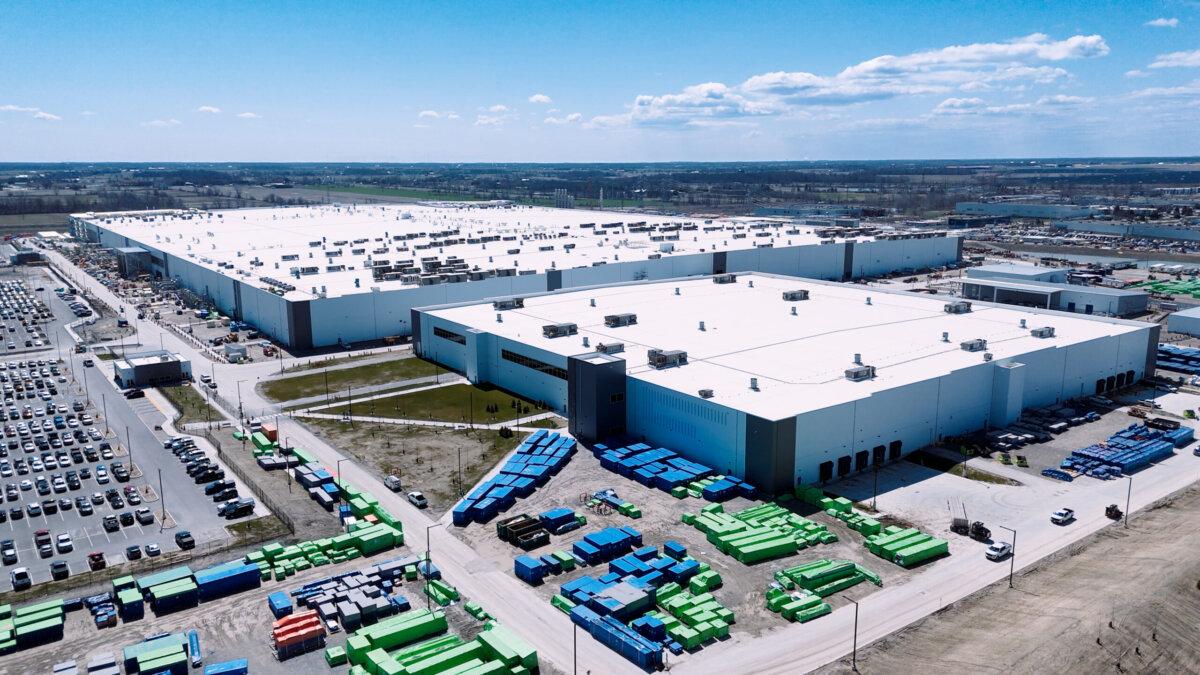
At the same time, several subsidized EV projects have faced setbacks. Northvolt sought creditor protection in 2024, while various other government-backed EV manufacturers have delayed investments amid slower-than-expected EV demand. Some of the federal and provincial aid for EVs and EV battery plants has been conditional on facilities being built before disbursing funds, while others have not had such provisions, leading to taxpayer money loss once the plants are cancelled.
Investment Tool or Taxpayer Burden?
Supporters argue that subsidies can act as a magnet for investment, protect jobs, and boost Canada’s ability to compete with the United States and other countries.Public-private economic development organization Montreal International says tax credits covering up to 37.5 percent of labour costs have helped draw game developers to the city.
Supporters also say subsidies can play a decidedly positive role in helping industries come back from the brink of obsolescence.
In one example, after a string of auto investments from the federal and provincial government in preceding years, Volkswagen said it would build its first North American battery cell plant, in St. Thomas, Ont., in 2023.
Unifor union chief Lana Payne credited government funding for the comeback of the auto industry and job creation.
Critics such as the Canadian Taxpayers Federation argue that subsidies are inherently unfair and place an undue burden on taxpayers.
University of Calgary’s Lester’s 2024 analysis echoed concerns about the difficulty in tracking subsidies, arguing that governments should improve reporting by creating machine-readable datasets showing current and planned subsidy spending and identifying which businesses ultimately benefit.
For Terrazzano, the bottom line is that subsidies are a political approach that masks real solutions.
“Cut the red tape, cut the regulations, cut taxes, and make Canada an attractive environment for all businesses and all industries to compete and succeed,” he said.
“Public policy often favours supposedly high value-added industries at the expense of others through subsidies or other supports,” Tombe wrote in a 2015 analysis.
“Instead of creating value, when governments favour one sector over another they invariably hurt the economy by distorting the allocation of labour and capital, which lowers Canada’s overall GDP,” he wrote.
Lester has argued that subsidies should be limited to cases where they address genuine market failures and produce benefits that outweigh their costs.
“Measures accounting for about two-thirds of this spending fail a benefit-cost test—they are not successful in raising Canadians’ real income,” he added.