This copy is for your personal, non-commercial use only. Distribution and use of this material are governed by our Subscriber Agreement and by copyright law. For non-personal use or to order multiple copies, please contact The Epoch Times Reprints.
The COP30 climate conference taking place this week near the Amazon rainforest in Brazil has been a hot, crowded, and occasionally chaotic event that, though well attended, comes at a time when many are doubting the narrative that the earth is facing a climate emergency.
The summit is the 30th annual Conference of the Parties (COP) that signed a 1992 United Nations climate treaty pledging, among other things, that rich countries take responsibility for planet-warming emissions and support poor countries in their struggle to cope with a changing climate.
While the leaders of China, India, and the United States—the three largest emitters of greenhouse gasses, according to Worldometer—were notably absent from the event, attendance was otherwise strong, with more than 50,000 people registered, including delegates from 195 governments, making this one of the largest COP summits to date.
Speaking at the summit, former Vice President Al Gore listed a number of extreme weather events and asked, “How long are we going to stand by and keep turning the thermostat up so that these kinds of events get even worse?”
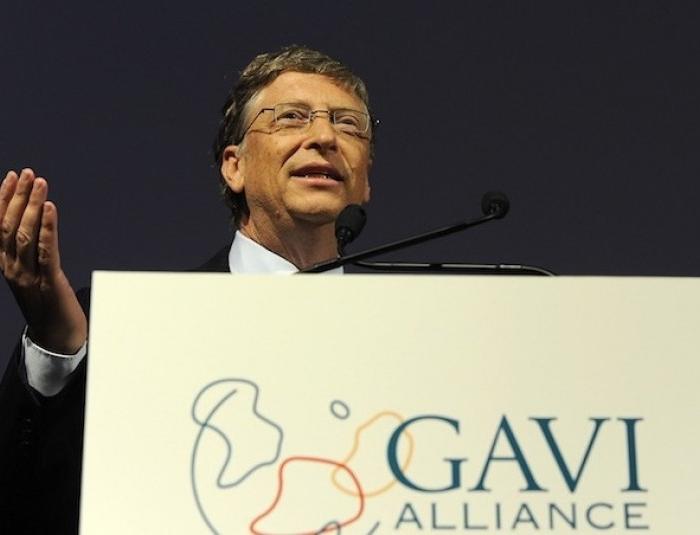
But other major backers of the cause are breaking ranks. Bill Gates, who had once predicted more deaths from climate change than from COVID-19, stated in an October message to COP30 delegates that the “doomsday view” of climate change was wrong and that “people will be able to live and thrive in most places on Earth for the foreseeable future” despite rising temperatures.
And climate activist Ted Nordhaus, who wrote in 2007 that “the heating of the earth will cause the sea levels to rise and the Amazon to collapse, stated in an August blog, “I no longer believe this hyperbole.”
The flow of funds to support the climate agenda appears, likewise, to be drying up. while the amount of money that rich countries must pay to poor countries to compensate them for climate change would reach between $310 billion and $365 billion per year by 2035, the funds flowing from rich to poor countries fell from $28 billion in 2022 to $26 billion in 2023, according to a UN report released earlier this year.
Inger Andersen, UN Environment Programme executive director, stated in the report’s foreword that “while the numbers for 2024 and 2025 are not yet available, one thing is clear: unless trends in adaptation financing turn around, which currently seems unlikely, the Glasgow Climate Pact goal will not be achieved, the [New Collective Quantified Goal] will not be achieved, and many more people will suffer needlessly.”
Climate ‘Consensus is Gone’
The United States is currently taking the lead in withdrawing from various global climate pacts, but other nations appear to also be wavering in their climate commitments.
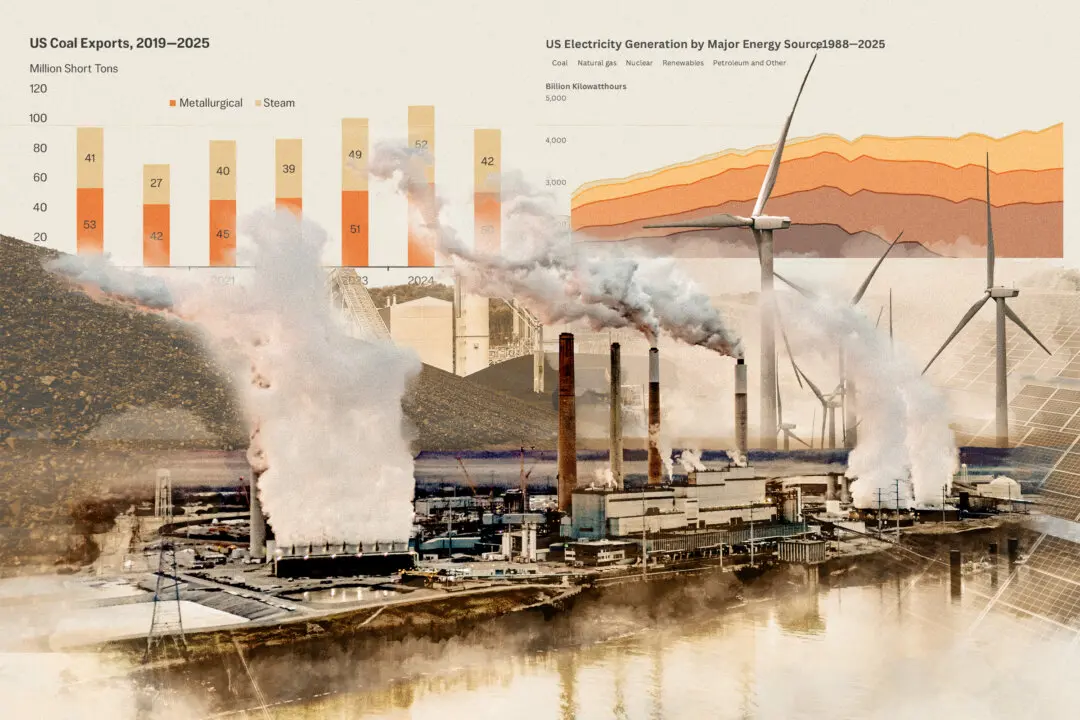
A report published in July by the U.S. Department of Energy, authored by a working group of five independent experts in physical science, economics, climate science, and academic research, stated that warming caused by human activity “appears to be less damaging economically than commonly believed.”
In January, President Donald Trump ordered the U.S. withdrawal from the Paris Agreement and all other UN climate accords, while also canceling any prior U.S. commitments. He has since pushed to increase America’s production of oil, gas, and coal, as well as nuclear energy.
In July, the European Union struck a deal with the Trump administration to buy approximately $750 billion in liquefied natural gas, oil, and nuclear fuels and technologies from the United States over the next three years.
Earlier this month, British Prime Minister Keir Starmer stated that, while the UK was still “all in” on cutting CO2 emissions, the “consensus is gone” on fighting climate change.
Starmer announced at the leaders’ summit prior to the start of COP30 that the UK would not be contributing to the Tropical Forests Forever Facility, which was to be a key initiative of COP30 that seeks to raise $125 billion to protect tropical rainforests in the Amazon and Congo river basins.
In October, Brazil, host of COP30, approved exploratory drilling by state-run oil-giant Petrobras just north of the summit, near the mouth of the Amazon River.
To ease traffic in Belem, the port city that is hosting the event, an 8-mile, four-lane highway was cut through the rainforest, taking out thousands of acres of protected trees and displacing wildlife. Regardless, attendees reported that the deluge of people was proving overwhelming for the remote locale.
“It’s way too small a venue to host that many people, and so we’re experiencing enormously long lines,” Craig Rucker, president of the Committee for a Constructive Tomorrow (CFACT) and a skeptic regarding the United Nations’ net-zero agenda, told The Epoch Times. Rucker has attended 27 of the 30 COP summits and said COP30 was “the most disorganized one yet, that I’ve seen.”
“They brought [attendees] here to look at the rainforest, but they had to actually clear cut a 14-kilometer road right through the heart of the Amazon in order to bring the delegates here in their private limos or whatever they’re taking,” Rucker said. “They’re trying to draw attention to the plight of the rainforest, and here, for an environmental summit, they’re hacking it down.”