The Chinese Communist Party is threatening Canadian democracy by influencing politicians, business leaders, and community influencers, and suppressing those who speak out against China, says a former national director of the RCMP’s proceeds-of-crime program.

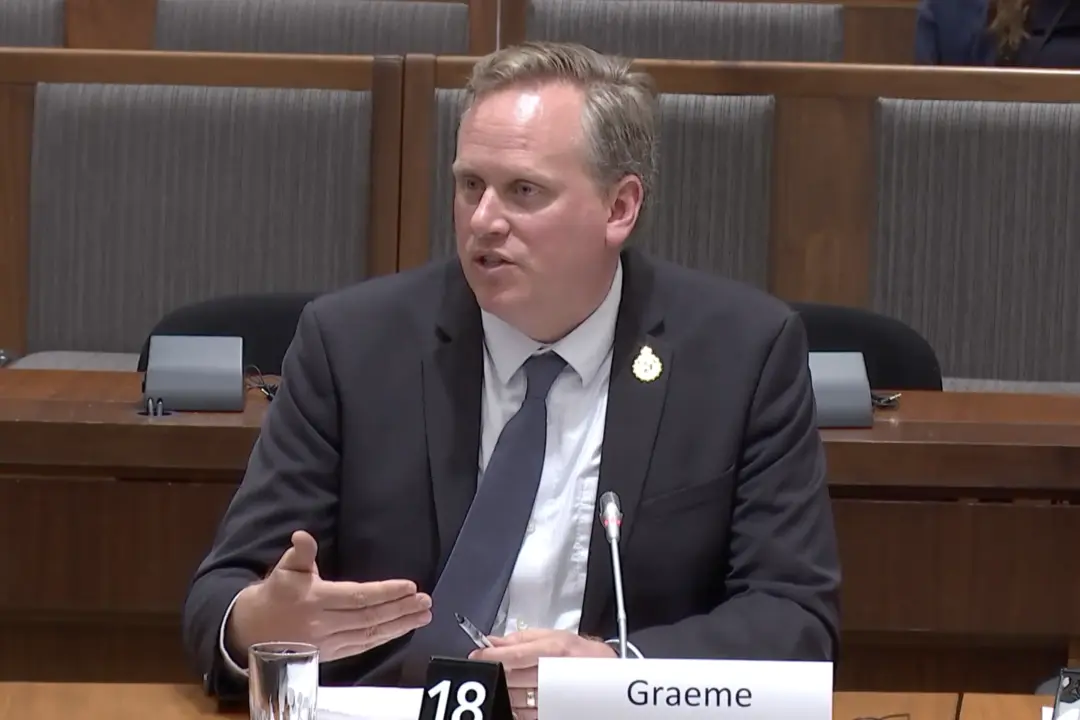
Clement told the audience that the CCP directs diaspora communities, cultural groups, and business chambers abroad, while monitoring, suppressing, and intimidating dissidents who speak out against China. This is going on in Canada “on a daily basis,” he noted.
The CCP’s United Front Work Department works to shape narratives in Canadian society and overseas Chinese communities by co-opting elites, business leaders, community influencers, language schools, and media outlets, Clement said.
When it comes to influencing Canada’s politicians and elites, Clement said that the fact that several high-ranking Canadian politicians have worked at the Canada China Business Council—which he said is involved in suppressing Chinese dissidents in Canada—at the end of their careers indicates they have been influenced by elite capture.
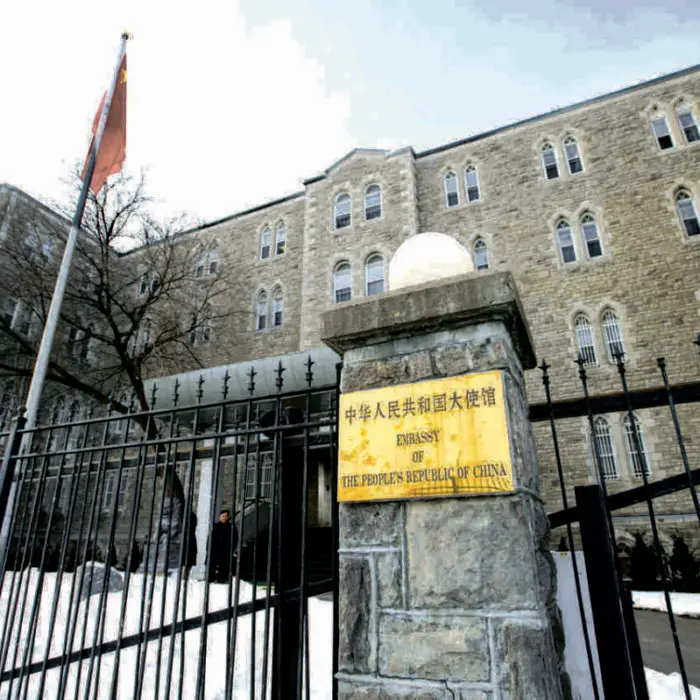
Clement also said there are Chinese criminal groups operating in Canada that are involved in fentanyl trafficking and money laundering. These groups “operate in parallel” with the CCP’s United Front to engage in diaspora influence and elite capture, he said.
The CCP is also impacting Canadian society through its role in the “fentanyl wars against North America,” Clement said, noting that the regime could shut down the flow of fentanyl precursors into Canada “if they really wanted to.”
“In my view, by allowing the precursors to flow in, they’re creating disruptive warfare, just like what happened during the Opium Wars,” he said. “That’s the price we’re paying for it.”
‘Warfare Without Combat’

Dean Baxendale, CEO of the China Democracy Fund and Optimum Publishing International, also spoke at the forum, calling China’s influence on Canada “warfare without combat.”
The CCP is involved in a number of statecraft operations in Canada, including hybrid warfare, cyber espionage, illicit trade, organized crime, and transnational repression, Baxendale said.
He said the CCP engages in information and media warfare in Canada by retelling history, controlling the narrative about China, and manipulating public opinion, including through the use of advertising.
“This messaging helps to control, direct, and set a set of values which they’re aspiring to,” Baxendale said, adding that these are tactics the CCP uses to “slow down negative perspectives” that expose its operations. “These are all things that manipulate the psyche, the mind,” he said.
China also engages in financial warfare in Canada by targeting the economy through “debt traps” and using tariffs as an economic coercion strategy, Baxendale said. He added that China has significant influence operations targeting Canada’s major ports to facilitate illicit trade practices.
Transnational Repression

Canadian intelligence agencies have identified the CCP as “the most sophisticated, clandestine, and persistent among all state actors,” said Maria Cheung, professor emeritus and researcher at the University of Manitoba, who also spoke the forum.
Cheung said the CCP uses a combination of public opinion warfare, legal warfare, and psychological warfare “to silence dissidents and control narratives beyond its borders in a very sophisticated and clandestine manner,” shaping the world’s “security landscape.”
She also noted that the CCP uses transnational repression against groups like Shen Yun Performing Arts, a New York-based classical Chinese dance and music company that aims to revive China’s pre-communist heritage and expose the ongoing human rights abuses in China.
Public opinion warfare involves using both traditional and social media to shape perceptions and control narratives, and in the context of transnational repression, exploit “cognitive biases in the West to amplify divisive content and discredit target groups,” Cheung said.
Legal warfare involves creating financial strain and damaging reputations by merely levelling accusations, not necessarily winning legal cases, Cheung explained. Meanwhile, she said, the CCP also weaponizes Western media through disinformation, which “demoralizes, sows fear, erodes trust, [and] disrupts decision-making.”
Cheung said China’s tactics aim to “undermine democratic sovereignty, rule of law, and civil liberties—values that we uphold” in Canada.

International human rights lawyer David Matas told the forum audience he has encountered a number of different situations involving transnational repression in his work as a human rights lawyer.
He noted a case in Canada where a Falun Gong practitioner was evicted from an Ottawa Chinese Seniors Association due to her faith. After the Ontario Human Rights Tribunal told the association to invite her back, the association dissolved instead of complying with the order, Matas said.
Matas also mentioned a case in 2004 where officials from the Chinese Consulate in Calgary were distributing anti-Falun Gong hate literature at a University of Alberta conference. He said the police had recommended the consular officials be prosecuted for wilful promotion of hatred—an offence in the Criminal Code. However, the attorney general would not provide the consent required to carry out the prosecution and the court would not override the attorney general’s decision.
He said he has also witnessed Beijing’s suppression of media overseas, including certain U.S. media outlets shutting down any reporting on forced organ harvesting in China involving Falun Gong practitioners, Uyghurs, Tibetans, and Christians.
Matas said he has experienced Beijing’s transnational repression himself when visiting other countries such as Australia and Israel, including having events cancelled where he was expected to speak about China.
What Canadians Can Do
Matas said Canadians can raise awareness about the issue of Chinese interference and transnational repression in Canada by educating people in their communities about the problem. He noted that it’s important for people outside of China to do something about the problem, such as educating others and bringing awareness to the issue, “because people in China cannot.”Cheung raised concern about the “normalization” of the CCP using its tactics in Canada, and said Canadians need to engage in resistance by speaking out, forming alliances, telling their MPs about the issue, and signing petitions “so that politicians can act according to our conscience to protect our society.”
Clement said Canadians need to stand up and “try to force the issue a little bit” so that legislative changes can happen, noting there are gaps in legislation and law enforcement in Canada that need to be addressed to successfully combat the issue. He also said that Canadian society needs to improve its digital literacy, protect diaspora communities from coercion, and support transparent and secure democratic processes.
Matas said those who engage in transnational repression can be prosecuted in Canada, as it is harassment and intimidation. If those who engage in transnational repression are not Canadians, they can be deported and banned entry into Canada, he added.