Cabinet ministers defended the government’s position on the Iran war during a debate in the House of Commons, as opposition parties called for clarity as the war in the Middle East continues.
Prime Minister Mark Carney was absent from the debate as he was scheduled to attend a community event the same evening.
The Liberals said during the debate that the government’s primary focus is on helping Canadians leave the Middle East amid the ongoing war, and on “rapid de-escalation.”
Foreign Affairs Minister Anita Anand said Canada “condemns attacks on civilians and civilian infrastructure,” noting that Canada has long considered the Islamic Republic “one of the main sources of instability and terrorism in the Middle East.”
“Canada has always condemned [the regime’s] actions and will continue to support the people of Iran in their fight for human rights and freedom,” Anand said.
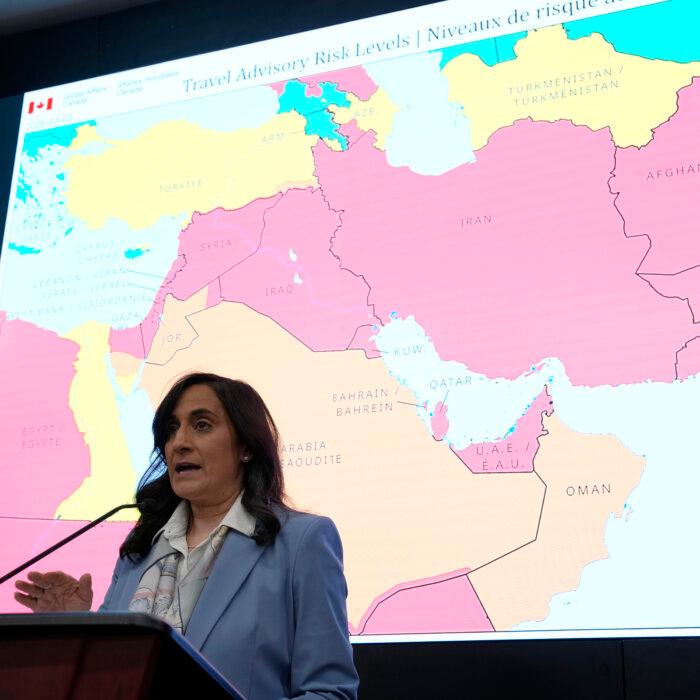
Meanwhile, she reaffirmed that Ottawa was not consulted in advance about the military strikes carried out by the United States and Israel against Iran, adding that Canada has “no intention of joining them.”
“At the same time, Iran must never obtain nuclear weapons and grow its arsenal of missiles that represent a serious threat to international peace and security,” Anand said.
Anand reiterated Ottawa’s focus on helping Canadians depart from the Middle East, noting that consular officials have been deployed across the region and near Iranian borders to assist Canadians.
She said the government is offering chartered flights, block-booked seats on commercial airlines, and buses for Canadians seeking to leave the region.
‘Contradictory’ Messaging
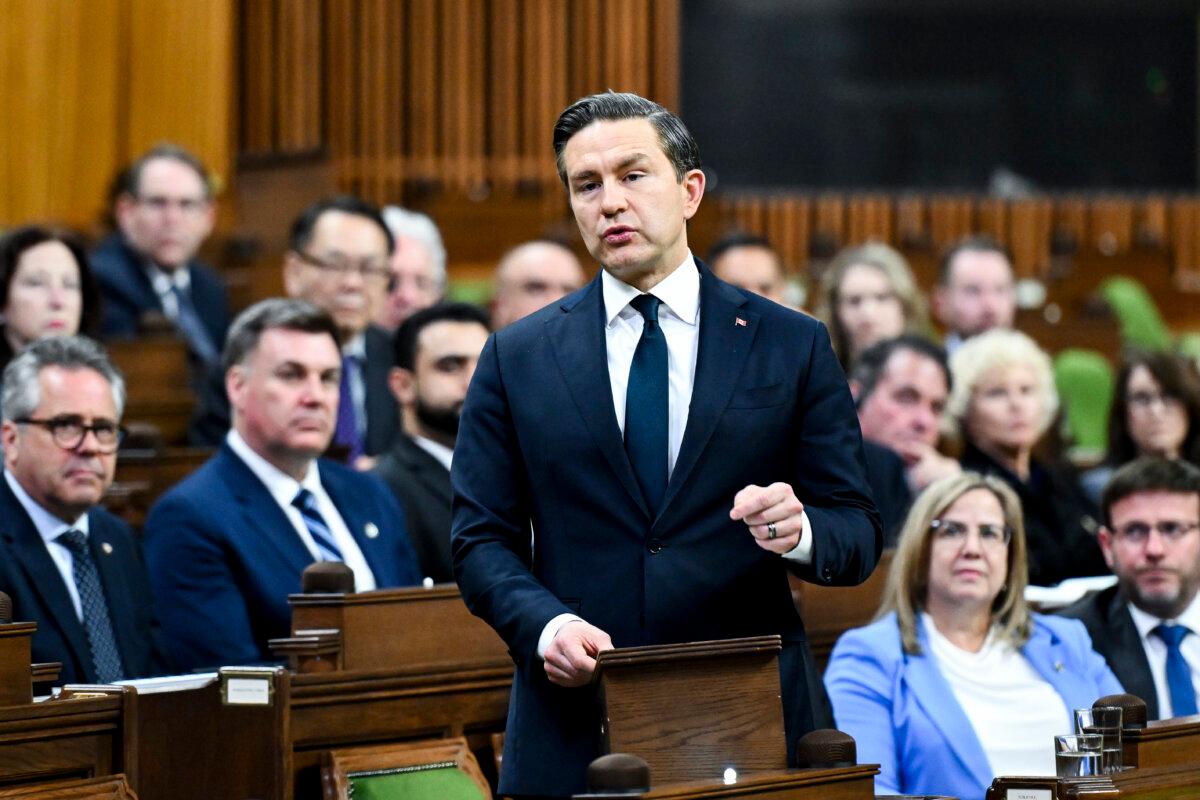
Meanwhile, opposition parties demanded that the Liberal government clarify its position on the war, with some MPs calling the messaging “contradictory.”Conservative Leader Pierre Poilievre said it is in Canada’s national interest for the Iranian regime to be “defeated and replaced by the Iranian people with a peaceful democracy,” noting the regime has engaged in foreign interference and espionage in Canada.
“We need strong leadership that takes a stand, maintains that stand, stays consistent at home and abroad, and shows up in this House of Commons to do what is right and speak for the Canadian people,” he said.
Poilievre said he supported Carney’s initial support of the Israeli and U.S. airstrikes, but said that since then, Carney has “flipped and flopped more than four times, having four contradictory positions in as many days.”
“His party says one thing to one group, and the opposite to another, confusing our allies and dividing Canadians,” he added. He also accused Carney of going into “hiding” during the debate.
He said that the United States and Israel acted without consulting allies, including Canada, and added that he didn’t agree with how the two countries have conducted the operation.
He also said at a press conference, when asked if Canada would rule out military involvement in the conflict, that Canada will “stand by our allies” and would “never categorically rule out participation” in the military operation.
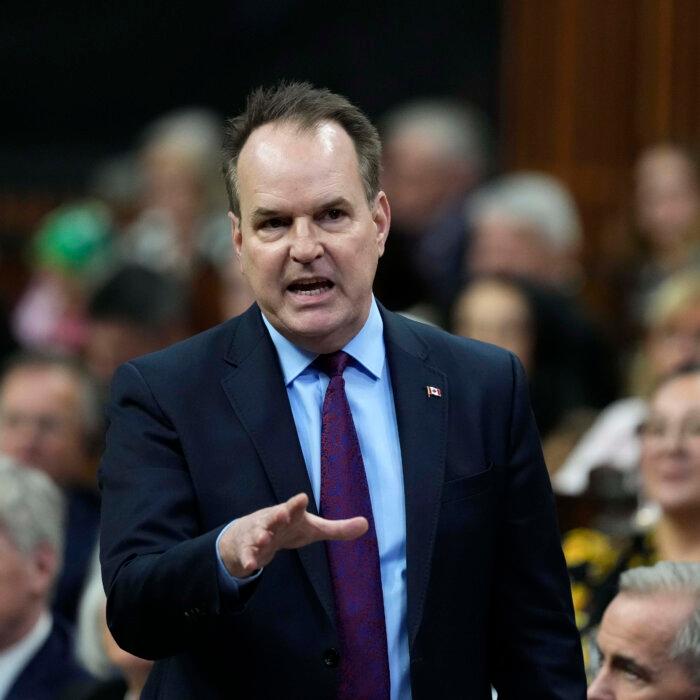
During the debate, Bloc Québécois MP Alexis Brunelle-Duceppe also questioned how the prime minister can say international law has to be defended at all costs, while supporting an action that goes against international law.
Anand said that while Canada supports the efforts to stop Iran from obtaining nuclear weapons, “our support isn’t a blank check.”
“Everyone must respect international law. International mechanisms exist to determine whether international law has been respected or not,” she said.
Opposition Focus
Poilievre said Canada needs a plan to deport all Iranian regime officials from Canada. The Conservatives released a statement earlier on March 9, saying the government confirmed Iranian regime officials are living in Canada, and calling on the Liberal government to “urgently enforce deportation orders for non-citizen regime officials.”Poilievre also said during the debate that Canada needs to focus on what it can control, adding that as oil prices are climbing due to the blockage of the Strait of Hormuz, Canada needs to unlock affordable energy and repeal “anti-energy laws.”
Bloc Québécois Leader Yves-François Blanchet called on Carney to “have a clear plan to take care of the people,” adding that Canada is waiting to hear what the prime minister has to say.
“The prime minister has to do three things: restart the negotiations on the tariffs and the trade relationship [with the United States], deploy short term measures to meet the needs of people in our economy, and stay steadfast and collaborate with other middle powers to save a maximum number of human lives,” Blanchet said during the debate.
NDP Interim Leader Don Davies has said the government’s communications on the war so far have been “unprincipled, contradictory, and incoherent” and said Carney’s decision to skip the debate was unacceptable.
Iran War
The war began on Feb. 28 as the United States and Israel launched strikes on Iran after negotiations over the Iranian regime’s nuclear program broke down. Iran responded with retaliatory missile and drone strikes against Israeli and neighbouring countries hosing U.S. military bases.The initial airstrikes launched by the United States and Israel killed Iranian leader Ayatollah Ali Khamenei as well as several leaders of the Islamic Revolutionary Guard Corps.
GAC said nearly 110,000 Canadians in the Middle East had registered with the department as of March 8, including 5,267 Canadians who have requested assistance in leaving the region.
The department also said Ottawa is looking at additional options for ground support for Canadians seeking to leave other locations in the region, noting that ground transportation is risky due to missiles flying overhead and falling debris.