This copy is for your personal, non-commercial use only. Distribution and use of this material are governed by our Subscriber Agreement and by copyright law. For non-personal use or to order multiple copies, please contact The Epoch Times Reprints.
Prime Minister Mark Carney has signed a “comprehensive strategic partnership” agreement with Japan that aims to strengthen cooperation in defence, energy, critical minerals, and other areas.
On his trip to Japan on March 6, Carney and Japanese Prime Minister Sanae Takaichi committed to “intensify cooperation” on defence, critical minerals, trade, energy, climate, and “people-to-people ties,” according to the Prime Minister’s Office (PMO).
While the agreement represents a pledge for closer coordination, it does not include specific details or dollar amounts.
On defence, the PMO said the leaders focused on opportunities to collaborate on defence procurement and work together on emerging technologies like artificial intelligence, autonomous systems, aerospace, and space communications.
Carney and Takaichi also discussed three bilateral memorandums of cooperation on helping and evacuating nationals during international emergencies, joint patrol coordination and enforcement against illegal fishing in the North Pacific, and joint exercises between the Canadian Coast Guard and the Japan Coast Guard.
The two countries also pledged to identify investment opportunities and deploy trade delegations to their respective countries sometime this year to increase business.
Ottawa agreed to support Japanese automakers’ efforts to decarbonize their operations in Canada and expand battery supply chains, among other projects. Canada and Japan also agreed to continue partnering on liquefied natural gas (LNG) to deliver more fuel to Japan, which imports a large portion of its energy.
During a joint press conference with Takaichi, Carney congratulated her on a “decisive electoral victory” that delivered a sweeping majority to her Liberal Democratic Party. Carney said the two countries are close economic partners with two-way trade valued at over $40 billion, and Japan imports over 10 percent of its food from Canada.
Carney said the agreement signed with Japan is a “strong foundation on which we can build something even better.” Carney also cited a Japanese proverb—“after the rain, the ground grows firmer”—that he said “articulates the opportunity ahead of us in these difficult times globally.”
Carney is wrapping up a week-long trip to India, Australia, and Japan, which the PMO described as an opportunity to help diversify trade relationships and attract new investment.
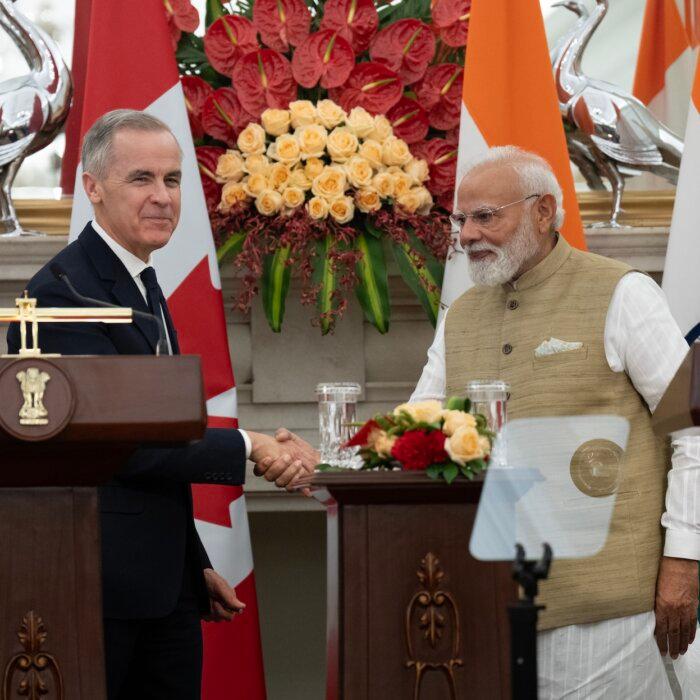
In New Delhi, Carney told reporters he was looking to sign a comprehensive trade agreement with India by the end of 2026 and double trade between the countries by 2030. Carney also said he expected Ottawa and New Delhi would sign other agreements expanding cooperation on defence, artificial intelligence, and critical minerals.
Carney also signed a $2.6 billion deal with India, in which the Canadian company Cameco would supply nearly 22 million pounds of uranium to India for use in the country’s fleet of nuclear reactors.
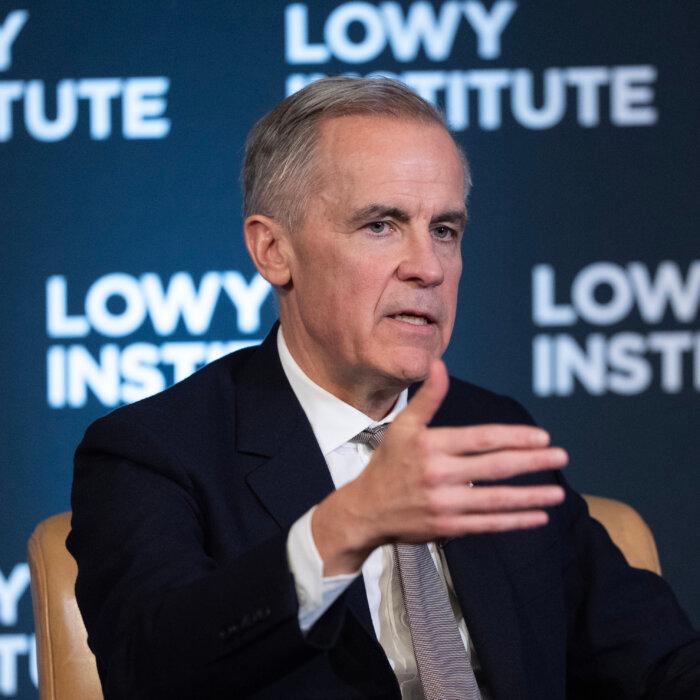
In Australia, he said in a speech that the world’s middle powers should work together more closely. The speech marked the first time in nearly two decades that a Canadian prime minister has addressed both Houses of Australia’s Parliament.
Olivia Gomm and Jennifer Cowan contributed to this report.