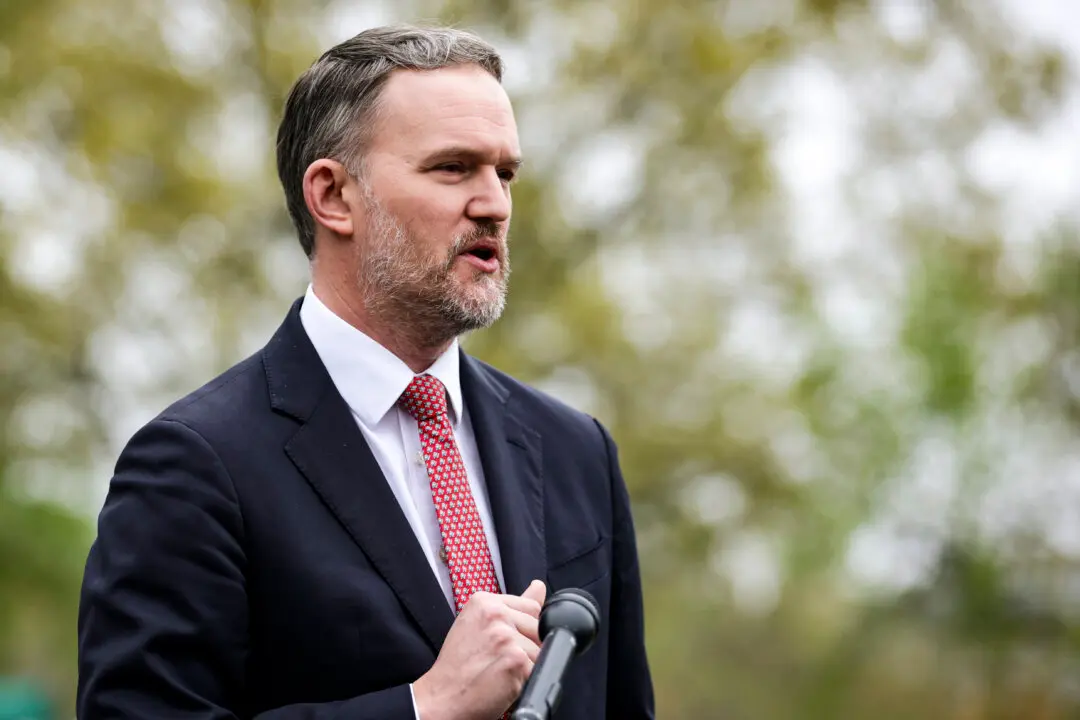
Prime Minister Mark Carney says he has plans to speak with U.S. President Donald Trump before Aug. 19—the day that 50 percent U.S. tariffs on numerous Canadian products are set to kick in.
Carney made the comment while speaking to reporters on Aug. 17 at a press conference in St. John’s, Nfld., concerning a new energy agreement centred on Churchill Falls and the development of Gull Island.
Carney was asked by reporters whether he had plans to speak with Trump before the deadline. He responded by saying, “the short answer is yes.”
Carney said he wanted to focus on his announcement made that day regarding an agreement to upgrade the Churchill Falls generating station and develop the Gull Island hydroelectric project.
Carney added that he might translate “maîtres chez nous” for Trump during their talks as a “lesson.” The phrase, which translates to “masters in our own home,” is a message Carney has repeatedly used in response to U.S. tariffs and Trump’s comments about Canada becoming the 51st state.
When Carney was asked by reporters if his government would provide assistance for businesses or impose reciprocal tariffs if the U.S. tariffs are implemented, he said, “I have a plan that will cover all eventualities.”
“Negotiations are very intense and delicate. This is not the time to talk about negotiations in public … We have options in Canada, here in Newfoundland, in Quebec, across Canada,” he said.
Trump issued three proclamations in July to impose 50 percent tariffs on certain Canadian goods beginning on Aug. 19. The new tariffs would apply to certain Canadian alcohol, dairy products, cement, and other goods, including hockey sticks, and would affect about five percent of Canada’s total exports to the United States by 2025 estimates.

Washington has said the new measures are a response to “discriminatory” Canadian trade practices against U.S. exports, especially American automobiles, alcohol, and dairy products. The U.S. government has also noted that Canada and China are the only countries that responded to Trump’s initial tariffs with counter-tariffs.
Greer told reporters on Aug. 14 that Canada would need to end its retaliatory measures to avoid additional tariffs. While Canada lifted most of its retaliatory tariffs in September 2025, it retained counter-tariffs on certain U.S. goods in response to Washington’s sectoral tariffs on automobiles, steel, and aluminum, arguing that the measures violated the terms of the Canada-United States-Mexico Agreement (CUSMA).
Canadian officials who were briefed by LeBlanc after his meeting with Greer on Aug. 14 said it appeared Ottawa and Washington were not close to reaching a deal.