Prime Minister Mark Carney praised former Prime Minister Stephen Harper for his policy and legislative accomplishments, such as his financial policies during the recession, investments in Arctic infrastructure, and his motion acknowledging Quebec as a nation within Canada, while speaking at Harper’s official portrait ceremony in Ottawa.
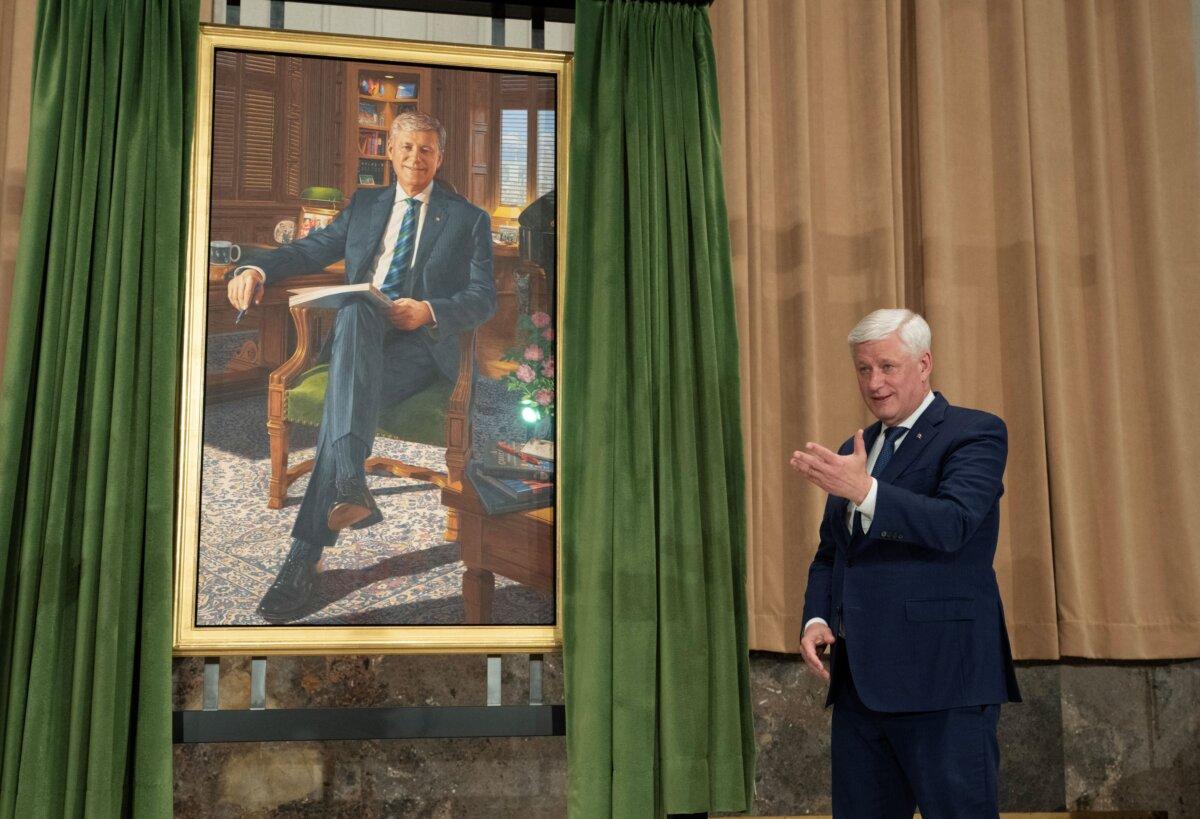
Harper’s portrait was unveiled in a ceremony at the Sir John A. Macdonald Building in downtown Ottawa on Feb. 3. The portrait was painted by Canadian artist Phil Richards, who is known for the Diamond Jubilee Portrait of Queen Elizabeth II.
The portrait depicts Harper in the 1920 office of the prime minister, which Richards noted is undergoing renovations but was recreated based on original architectural drawings. He said the painting contains elements of Harper’s personal and professional past.
Harper served as Canada’s 22nd prime minister from 2006 to 2015, when he stepped down after his Conservative Party lost the election to Justin Trudeau’s Liberals. He was the longest-serving Conservative prime minister since Canada’s first prime minister in 1891.
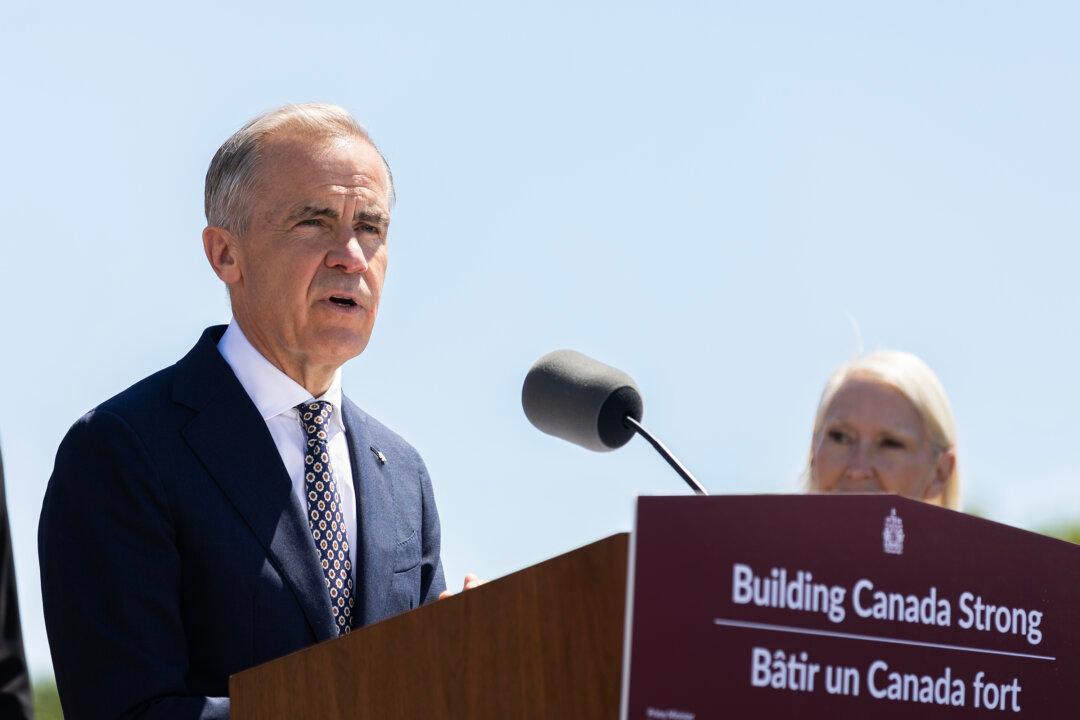
Speaking at the ceremony, Carney said Harper’s portrait pays tribute to his service to others, his leadership, and his love for Canada, noting that Harper “brought composure, intellect, and decisiveness to public life.”
Carney, who was appointed as governor of the Bank of Canada under Harper, said Harper has “an extensive record of policy and legislative accomplishments.” He praised Harper’s financial decisions during the 2008 financial crisis, noting that the former prime minister ran deficits at the time “to support the Canadian economy,” despite his belief in keeping a balanced budget.

Carney also praised Harper for introducing a motion in 2006 that was adopted by Parliament and acknowledged the Quebec people as “a nation within a united Canada.” He also noted Harper’s emphasis on Canadian citizenship being “an immense privilege ... not merely gifts to be received and enjoyed, but also trusts to be honoured and protected.”
“On behalf of all Canadians, I thank you for your remarkable service to our country and for the legacy upon which we are now called to build,” Carney said.
Conservative Leader Pierre Poilievre told the House of Commons on Feb. 3 before the portrait’s unveiling that Harper “reminds us of better days.” He noted the former prime minister led the country through a recession and two wars, passed laws that “kept our streets safe,” and expanded opportunities for Canadians.
“The cost of a home was an almost laughable $450,000, and rent was only $900,” Poilievre said. “We look back on his many successes, not just with nostalgia, but with hope because it’s been done before—it can be done again.”
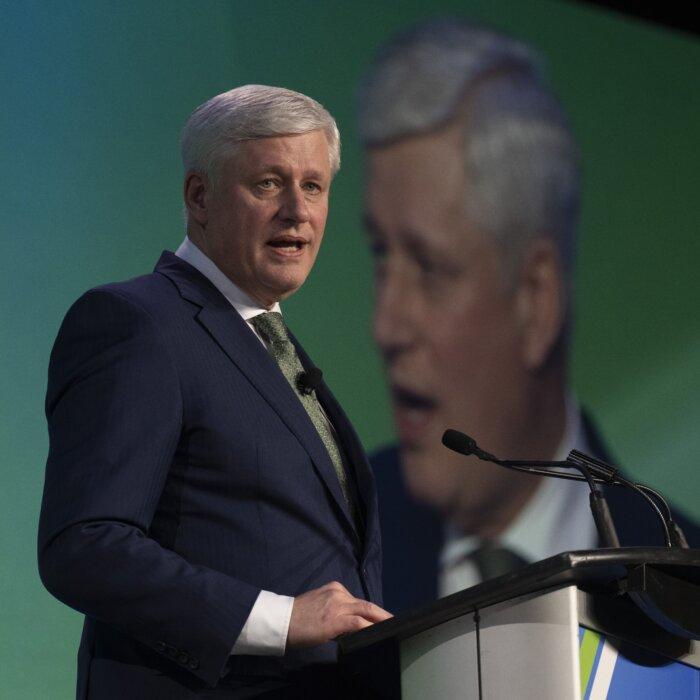
Harper spoke at the ceremony after his portrait was unveiled and said that political parties must work together to preserve Canada’s national unity and independence.
“I sincerely hope that mine is just one of many portraits of prime ministers from both parties that will continue to be hung here for decades and centuries to come,” Harper said.
“But that will require that in these perilous times, both parties, whatever their other differences, come together against external forces that threaten our independence and against domestic policies that threaten our unity.”