Former Prime Minister Stephen Harper says he recently advised the Liberal government to diversify its trade away from the United States amid the ongoing tariff disputes, which he said was “the opposite” advice that he would have given just a year ago.
The former Conservative leader made the comments at a July 28 Canada-U.S. relations conference in Saskatoon. Harper said he would’ve told Prime Minister Mark Carney a year ago that Ottawa had a “significant opportunity” to strengthen its economic and security ties with the United States. Now, however, his advice is very different.
“When this government did actually ask me a few weeks ago, my advice was the opposite,” Harper said. “My advice was … on the economy, we’ve got to kind of get something short-term worked out with the Trump administration. But this really is a wake-up call for this country to truly diversify its trade export markets.”
Canada’s business investment in the United States has been “grossly overweight,” Harper said. He said that Canada’s geographical proximity to the United States “does not justify the degree of dependence that we have on a single market,” particularly when Canada has signed trade deals with Europe and Asia.
The former prime minister added that while he believes U.S. protectionism and tariffs will ultimately weaken the country, “that is the reality of the situation that we have to deal with.”
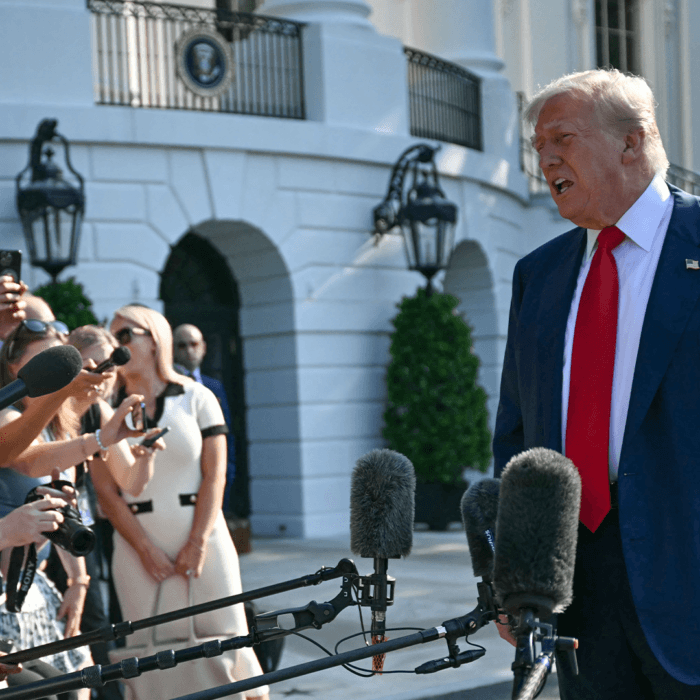
Trump has placed a series of tariffs on Canada since the beginning of the year, including 50 percent tariffs on Canadian steel and aluminum, 25 percent tariffs on cars and auto parts, and 10 percent tariffs on oil and potash. The U.S. has also put 25 percent tariffs on goods not covered under the United States-Mexico-Canada Agreement (USMCA), which Trump has said will rise to 35 percent on Aug. 1.
Ottawa has responded to the tariffs with measures aimed at boosting Canada’s economy, by passing legislation to remove interprovincial trade barriers and support the development of major projects by allowing some projects to bypass provisions of certain laws, with the aim of reducing approval times.
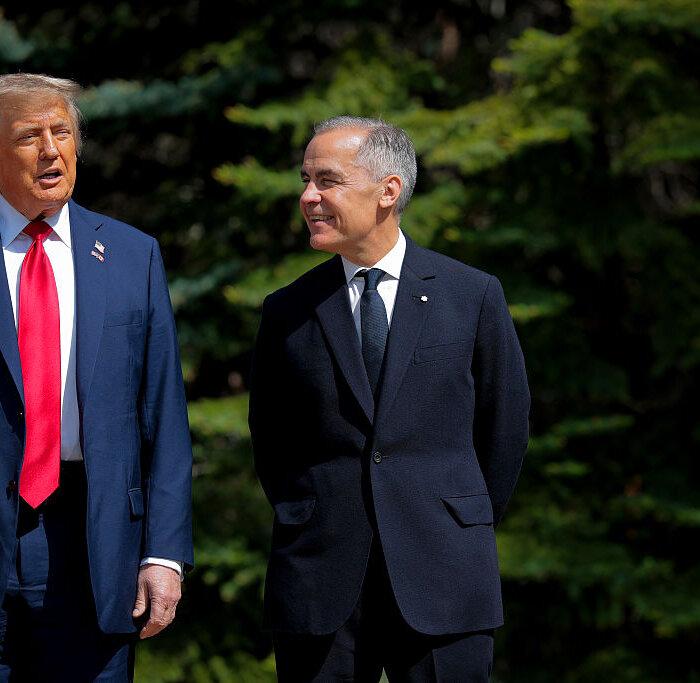
Carney and Trump agreed on June 16 to reach a trade deal within 30 days, but Carney pushed back the deadline to Aug. 1 following Trump’s July 10 letter threatening 35 percent tariffs. The U.S. president recently said on June 25 that his country may not be able to reach a deal with Canada at all.
Carney told reporters on July 28 that businesses and workers want the “right kind of resolution” for trade, and that negotiations with the United States are “at an intense phase.” Carney said Ottawa had been “clear” about its stance on supply management and language rights, which are “fundamental to our structure.”
“They’re tough negotiations, as they should be,” Carney said. “There is a landing zone that’s possible, but we have to get there, and we'll see what happens.”