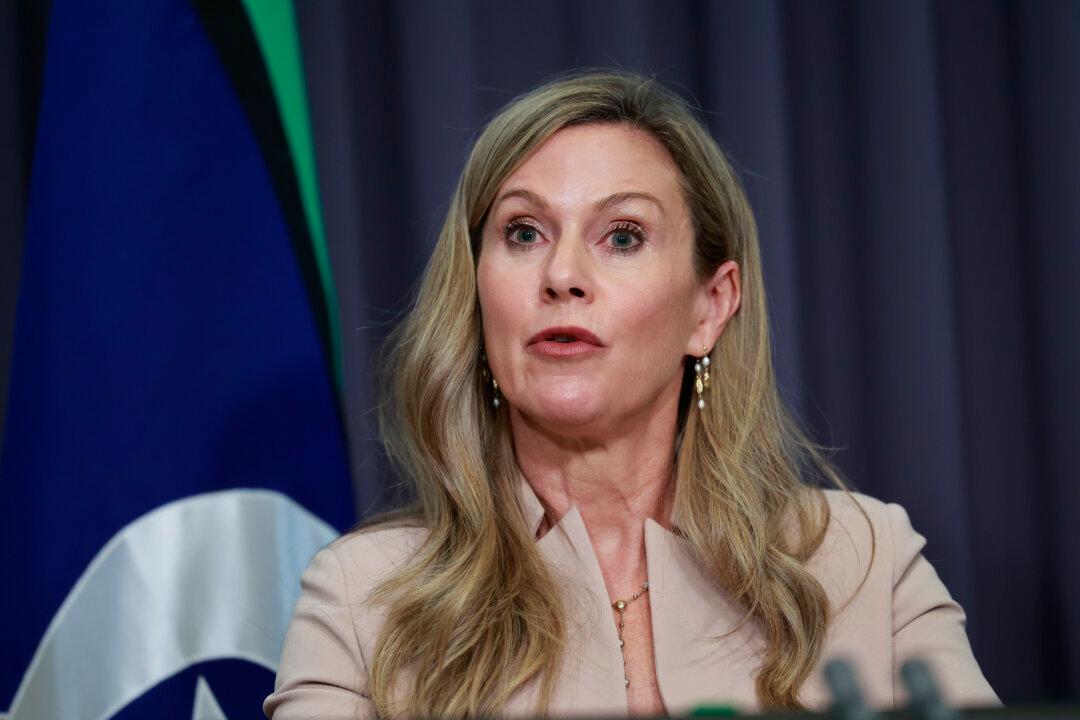
The big four banks have, in the words of Roy Morgan CEO Michele Levine, “dramatically leapt up the net trust ladder” in the biggest movement since trust hit its low point following the Financial Services Royal Commission report in early 2019.
NAB also regained a significant level of trust, up 29 places to 19th, which the market research firm Roy Morgan attributes to the bank’s former CEO Ross McEwen, saying that it shows “dramatic proof that sustained, visible change can move public sentiment.”
Westpac also lifted its trust ranking by 53 places, coming close to being among the top 20 trusted brands overall.
All of the major banks are reaching new highs, and for the first time, they’re now more trusted than distrusted, Levine said. “At this rate, we expect NAB and Westpac to overtake Bendigo Bank later this year.”

On the other side of the ledger, the ABC has fallen out of the top 20 most trusted brands for the first time since the risk monitor began surveying Australians in 2017.
It was in seventh position in 2021, dropping to 15th in June of last year. This year, it fell to 24th among the most trusted brands.
“Interestingly, this is not a typical story of rising distrust, but one of continually falling trust,” Levine said.
‘The ABC’s trust decline is highly concentrated among Labor voters—arguably it’s traditional heartland. Labor voter trust [in the ABC] steps down sharply from 2020, while Coalition voter trust remains comparatively steady.
“Among Labor voters, trust has ratcheted down over time. Distrust is almost non-existent, but net trust keeps sliding. So why? The ALP audience has shifted. Only about half now identify as socially progressive, and a third say they are middle of the road.”
Across the nation’s most trusted brands, there have been no changes in the top five rankings since the last quarter, with Bunnings, followed by Aldi, Kmart, Apple, and Toyota, all holding their ranking in the top five.

Falling Short of Trust
On the other hand, Woolworths remains Australia’s most distrusted brand, followed by Coles in second place.Improvements by Optus have promoted Facebook to the third most distrusted, and Qantas remains the fifth.
Jetstar has now moved into the top 20 most distrusted brand list, while Virgin Australia was a big winner, climbing 19 positions to become Australia’s 45th most trusted brand and also the most trusted brand in the travel and tourism sector.
Vodafone also improved 27 places to 18th position.
BHP improved 32 positions to become the 34th most trusted brand in Australia, making it the only company in the mining and petroleum industry to register a positive trust score.
Roy Morgan attributes this to Australians perceiving BHP to be more reliable in the last quarter, “while fewer ... believed the brand to be environmentally irresponsible.”
The reputations of major online retailers Shein and Temu have deteriorated dramatically.
“As more Australians buy from the Chinese brands, they become more concerned about the quality of the products and the ethics surrounding their business practices,” Levine said.
Rising Levels of Distrust
Levine pointed out that trust wins businesses more than just bragging rights when comparing themselves to rivals.“Trust is not just someone liking a brand. It’s the earned expectation that a brand will do the right thing even when no one’s watching,” she said.
“Distrust, on the other hand, is not simply no trust. It’s an active suspicion that a brand will put itself first when it matters most.”
Levine said distrust towards a brand was far more damaging than a lack of trust because of the added feeling of betrayal and disappointment involved.
“It’s the sense that we were wrong to have trusted in the first place. We feel foolish that we trusted too much, and that’s why distrust rises so quickly and cuts so deep,” she said.
“Eventually, people move to self-protection, switching providers, withdrawing support, or even becoming active opponents,” Levine added, noting that “Australians are far more likely to distrust than they are to trust.”
She attributed that to the fact that, during the pandemic, Australians experienced “new and often shocking controls over our personal freedom [which] accelerated a shift from trust towards distrust.”
“Since 2020, far more Australians have nominated distrusted brands than trusted ones,” Levine said. “In fact, in the 12 months to June 2025, almost 69 percent of Australians nominated at least one distrusted brand, compared with only 44 percent who nominated a trusted one.”
The current cost-of-living crisis has led people to “notice and dislike profit triumphalism” so much so that now the top reason for distrusting brands is that they’re too focused on profits.
“Coles, Woolworths, and Qantas all experienced significant increases in distrust for appearing overly motivated by profit. This illustrates just how quickly public sentiment can shift direction and deteriorate when broader economic anxiety stains the social fabric,” Levine said.
And once people reach just the first stage of distrust, the self-protection phase, “it’s almost impossible to win them back,” Levine warned.