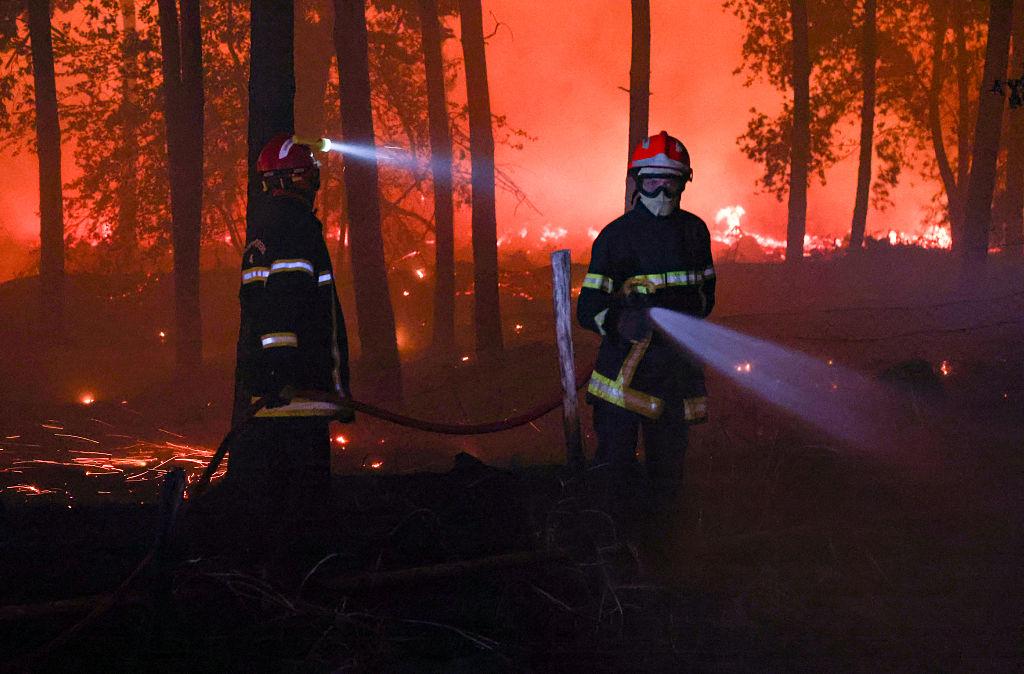
Rain and cooler air on Aug. 17 brought the first measure of relief to the roughly 500 responders battling the largest wildfire in Belgium’s recent history, but officials warned that the blaze, which has burned deep into the protected peat bogs of the High Fens plateau near the German border, could keep flaring up for weeks or even months.
“We are dealing with peat soils. Because fire does not need oxygen when it is burning within the peat, it can flare up again at any moment, anywhere,” Nicolas Yernaux, spokesman for the Walloon regional administration, told The Epoch Times on Monday evening.
The fire broke out on Aug. 14 near Baelen, in the eastern province of Liege, and has since swept across some 3,000 hectares (about 11 square miles) of moorland and pine forest in and around the High Fens, Belgium’s largest nature reserve, according to the Walloon regional government.
King Philippe interrupted his summer vacation on Monday to visit the provincial crisis center and a coordination post set up near the blaze, in the village of Sourbrodt, to express his support to the crews and take stock of the damage, the Royal Palace said.
‘The Fire Is Rekindling Everywhere’
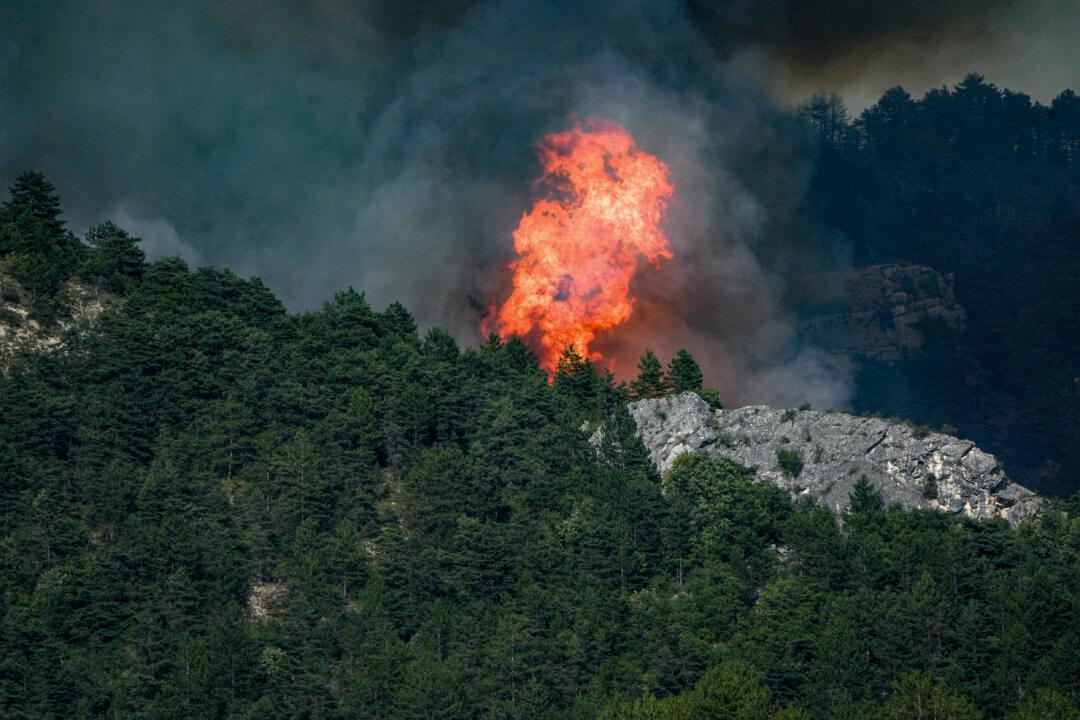
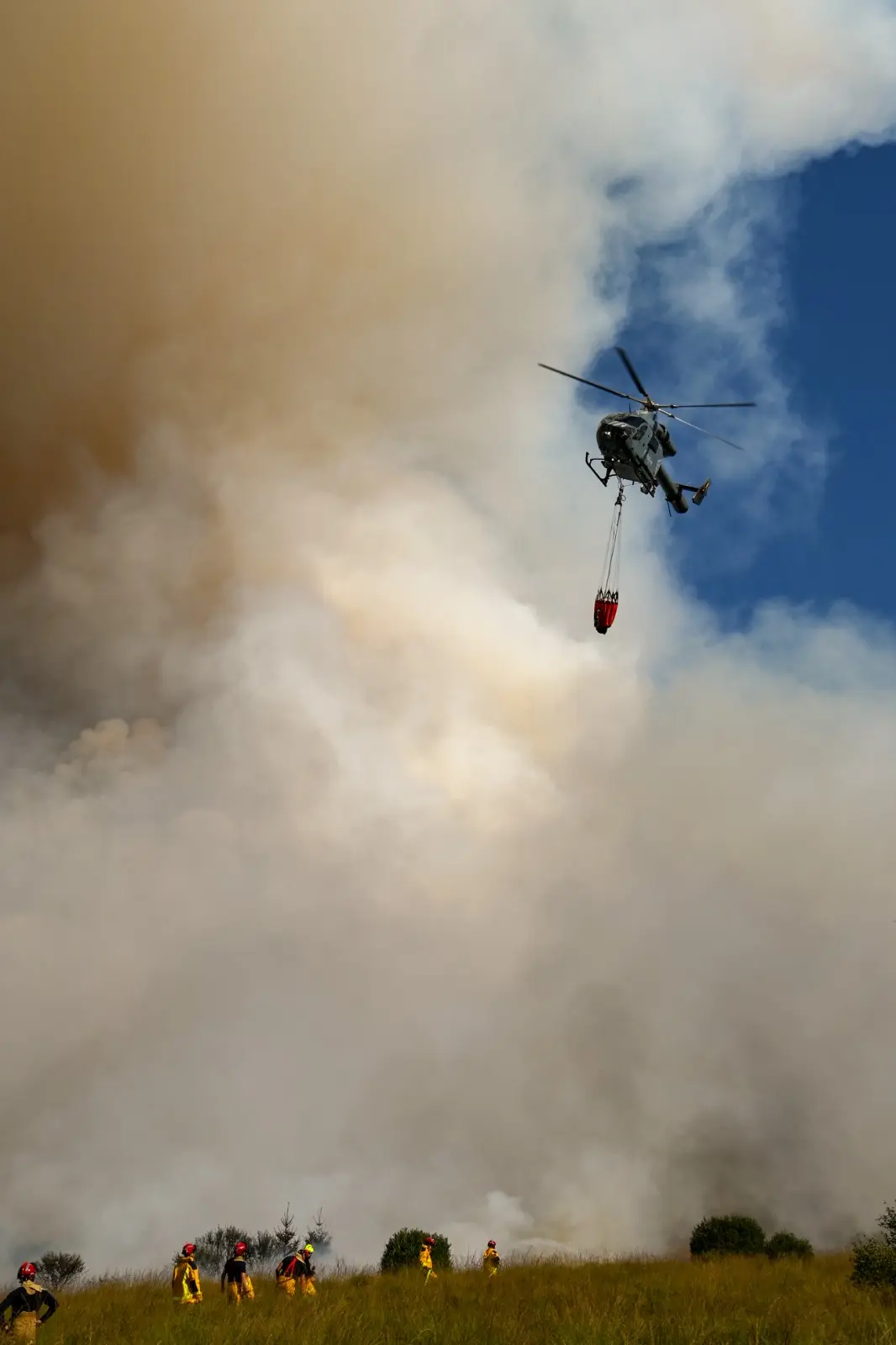
“If you could see what I have in front of me: There is an enormous amount of smoke,” Yernaux told The Epoch Times from the scene on Monday.
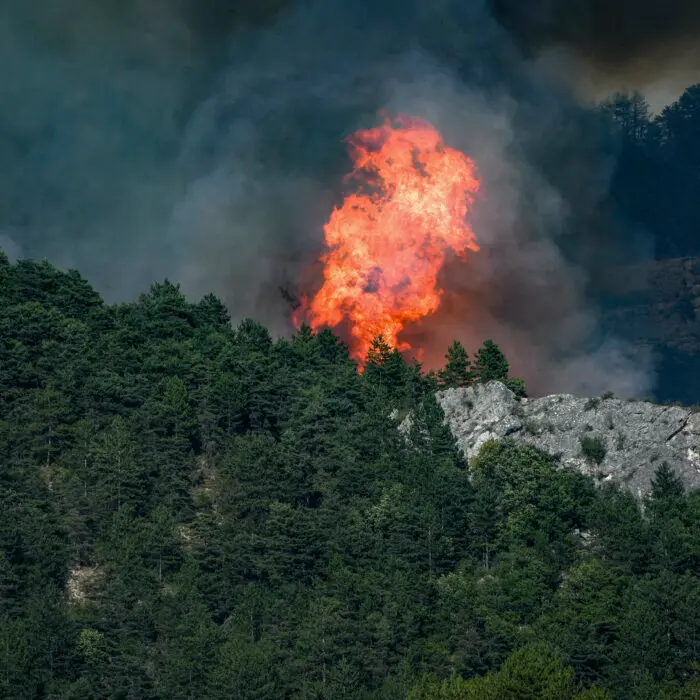
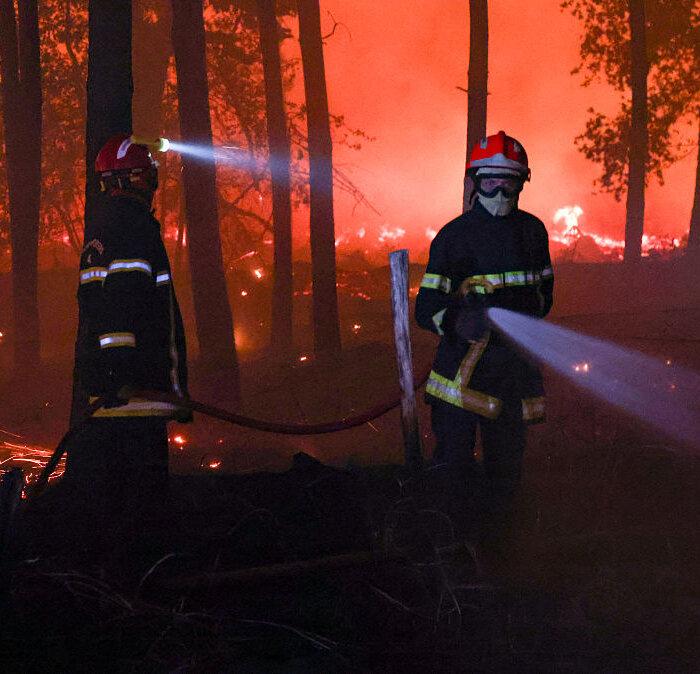
German helicopters and a Dutch Chinook had just joined Belgian aircraft over the northeastern flank, he said, the only sector where the fire was still advancing and one “totally inaccessible” to ground crews. Elsewhere, responders had managed to hold the perimeter and keep the burned area at around 3,000 hectares.
Contained, he said, does not mean under control.
“The fire is rekindling everywhere, all the time. That is why we say it is absolutely not fixed,” he said. “This is still going to take us weeks, if not months.”
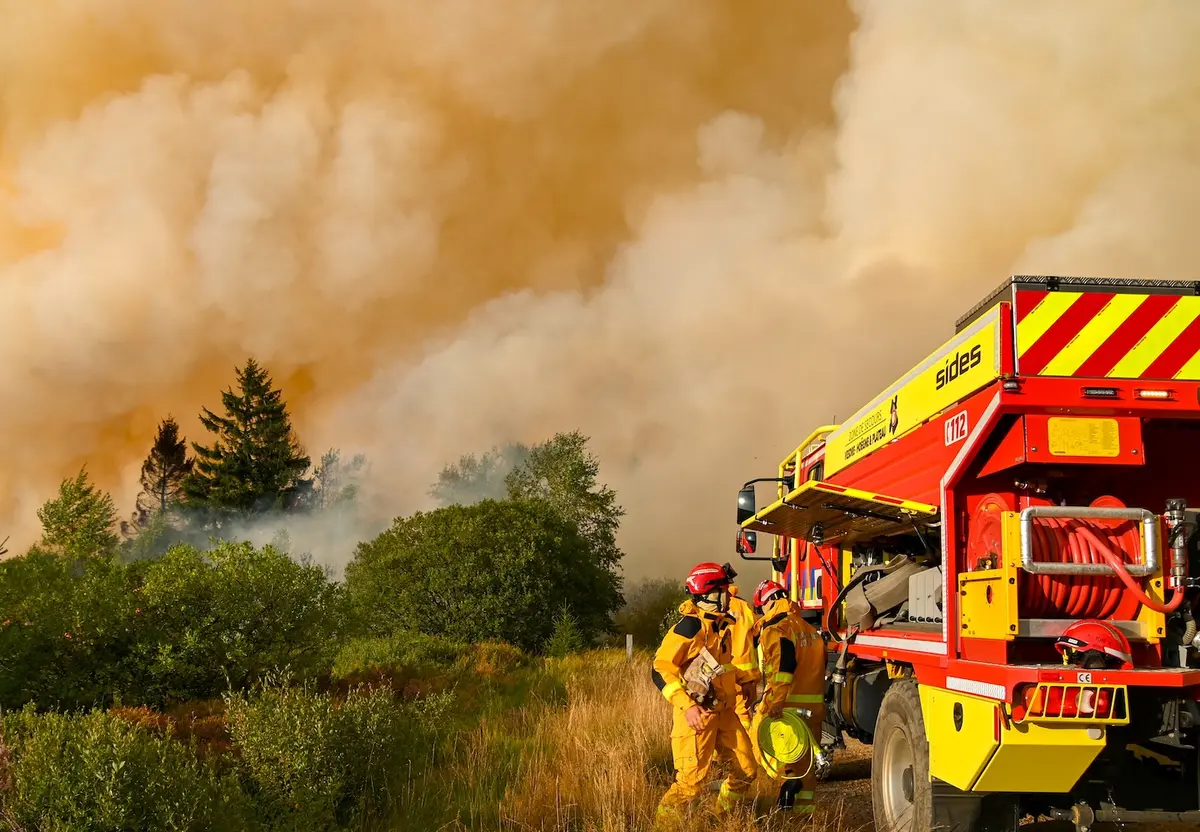
Around 500 people, from firefighters and soldiers to police and forestry agents, are rotating on the ground, backed by farmers ferrying water tankers, the kind of help Yernaux called “immense.”
Because the high moor is sparsely inhabited, few residents have been evacuated, and a return home was under consideration for one village where winds had turned favorable, he said.
Flames Halted Short of Germany
Provincial authorities said Monday that the fire’s push toward Germany had been stopped after flames came within about 300 meters (1,000 feet) of the border.
Overnight, authorities in Monschau, a German town of 12,000 just across the frontier, ordered the evacuation of two streets in the border district of Kalterherberg, affecting about 30 residents, before conditions eased.
Belgium activated the European Union’s civil protection mechanism on Aug. 15.
Two responders have suffered minor injuries since operations began, according to the governor’s office. The Liege public prosecutor’s office has opened an investigation into the origin of the fire, which has not been determined.
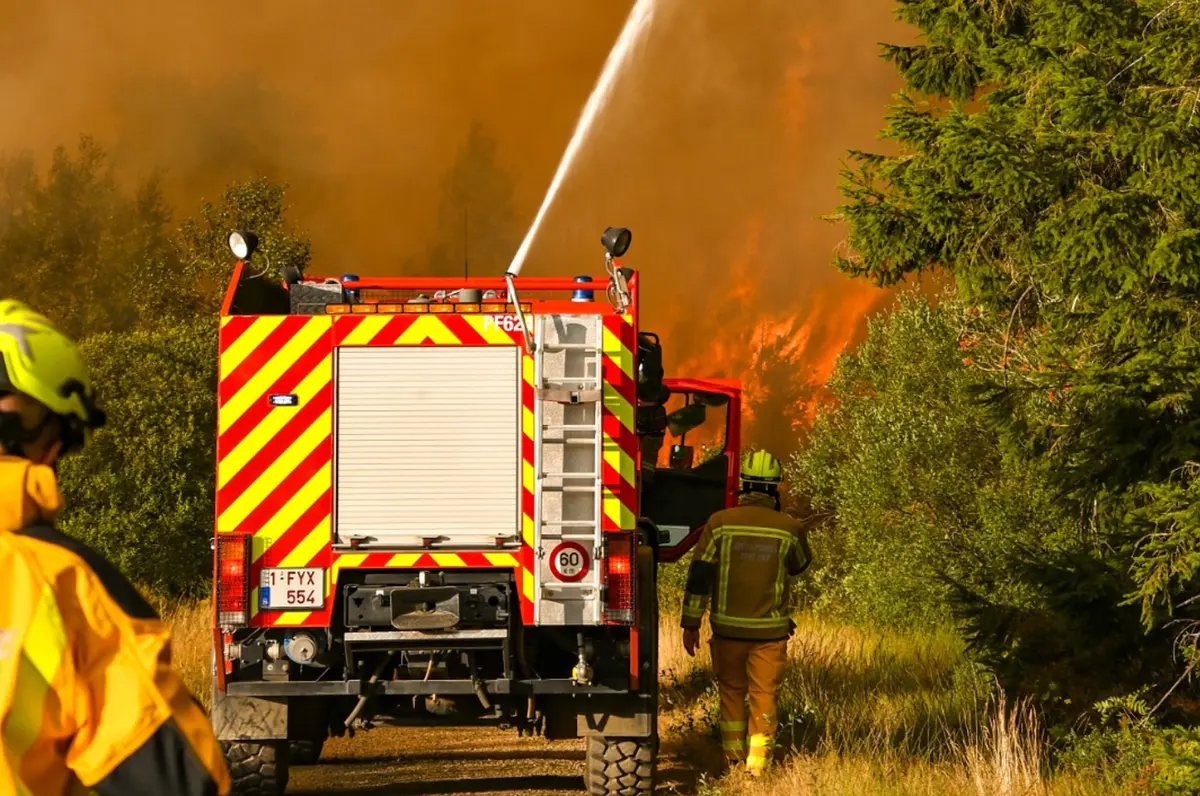
“Fatigue is setting in; it’s not easy. But everyone remains determined,” Yernaux said, adding: “The farmers have been an enormous help. The fact that they keep arriving with water tankers means firefighters don’t have to go and fetch water themselves, which saves us a tremendous amount of time. The solidarity that has emerged is extremely important, truly invaluable.”
‘For August, Summer Is Over’
“Belgium has been experiencing a rain shortage for two months, almost everywhere in the country,” with temperatures above 30 degrees Celsius (86 degrees Fahrenheit) recorded in the High Fens, David Dehenauw, head of forecasting at Belgium’s Royal Meteorological Institute, told The Epoch Times.
The rain has “improved the situation a little, but the fire is not yet under control,” said Dehenauw, whose institute measured 4 millimeters at the Mont Rigi station.
Wind gusts of 50 to 55 kilometers per hour (30 to 35 mph) will partly counteract further showers on Tuesday, he cautioned, before more sustained rain on Wednesday ends the drought.
“From a meteorological point of view, this will help smother the fire, but the task remains difficult. It will still take several days, perhaps weeks, to extinguish it completely.”
Dehenauw ruled out a major fire risk elsewhere in Belgium in the coming weeks, with the next seven to 15 days markedly cooler and wetter. “For the month of August, and I am not speaking about September, summer in my view is over.”
A Country Unaccustomed to Wildfires
The scale is unprecedented in recent Belgian history: the previous modern record, also in the High Fens, dates to April 2011, when about 1,300 hectares (about 5 square miles) burned, while a 1911 fire estimated at some 3,900 hectares took nearly two months to subdue.
“Belgium has already recorded 234 vegetation fires in 2026. That figure is twice the total recorded over the whole of 2025 and nearly four times the long-term annual average,” Jan Baetens, a professor at Ghent University’s Faculty of Bioscience Engineering who works on fire data modeling, told The Epoch Times.
“Belgium is not a country traditionally associated with forest fires, but our natural areas too are becoming increasingly vulnerable.” The country, he said, “must prepare not only for spring fires, but also for periods of heightened risk during the summer.”
The blaze has also revived a political debate over Belgium’s lack of firefighting aircraft.
Defense Minister Theo Francken said he wants to buy American-made Chinook helicopters of the type the Netherlands deployed over the High Fens to improve the country’s capabilities.
On social media, however, he noted that “for all the left-wing opposition parties that are speaking so loudly today, everything American is wrong and bad.”
France: Fire Near Bordeaux Contained, Aid Announced
In southwestern France, the Landes prefecture declared on Monday that the fire burning since last week south of Bordeaux had been contained after scorching about 1,700 hectares (6.5 square miles), and roughly half of the more than 600 evacuated residents began returning home.
In Gironde on Monday, French Prime Minister Sebastien Lecornu announced 12 million euros ($13.9 million) in immediate aid for the Gironde and Landes departments, the first installment of a package he said could exceed 100 million euros.
Lecornu was booed by residents on his arrival in Le Porge, where 183 homes were destroyed by the fire that burned some 42,000 hectares (160 square miles) near Bordeaux in late July.
“There is anger and emotion, and that is perfectly understandable. People have lost everything—and more than that. But I still want us to bring a little truth and rationality back into the discussion about what happened,” the prime minister said, criticizing “some conspiracy-driven claims.”
Edwige Diaz, a National Rally lawmaker representing Gironde who was present during Sébastien Lecornu’s visit, told Franceinfo earlier in the day: “He did not handle the crisis well; otherwise, there would not be so many dissatisfied people.”
By allocating additional funds, the government is merely “patching things up” and “managing the consequences” rather than “anticipating” them, the lawmaker said, pointing to what she called unfulfilled promises since the major wildfires of 2022 regarding the renewal and expansion of the aerial firefighting fleet and the construction of a civil protection base.
Greece: Deadly Weekend on Salamina
In Greece, investigators on Monday surveyed the aftermath of a wildfire on the island of Salamina, west of Athens, that swept through the area a day earlier, leaving two people dead, nine injured, and several homes destroyed.
The victims, believed by authorities to be an elderly couple, were found near where the fire started; hundreds of people were evacuated, some by boat, during the mid-August holiday weekend. The cause has not been established.
New fires broke out on Monday, including one in Spata, near Athens’s main airport, contained within 30 minutes, the fire service said.
Authorities also said an 80-year-old man had been detained in the northern town of Kavala on suspicion of intentionally igniting dry vegetation.
His arrest brings the number of people detained in connection with fires in Greece since the start of the year to 302, with 31 cases involving suspected arson and 271 linked to alleged negligence.
One of Europe’s Worst Fire Seasons
Europe is living through one of its hottest and driest summers on record, with more than half a million hectares burned across the European Union since January, according to the bloc’s European Forest Fire Information System.
In the Fens, crews expect to stand guard over the smoldering peat long after the flames vanish.
What burned will not return quickly. The plateau shelters Belgium’s only active raised bogs, beds of peat up to six or seven meters (20 to 23 feet) thick that grow by just one millimeter a year. “It is above all an environmental disaster,” Yernaux said.