B.C. Premier David Eby says his government will amend the province’s adoption of the U.N. Declaration on the Rights of Indigenous Peoples (UNDRIP), after the B.C. Court of Appeal ruled the legislation must be the “interpretive lens” for laws in the province affecting indigenous people.
The case brought by Gitxaała and Ehattesaht First Nations said that an online system allowing miners to stake mineral claims on Crown land without first consulting any impacted First Nations was a violation of the Crown’s duty to consult. The B.C. Supreme Court ruled in 2023 that there was a failure of duty to consult the First Nations but disagreed that DRIPA should have been applied.
Eby said his government plans to amend DRIPA.
“It will take some time for us to come up with the appropriate amendments, but clearly amendments are needed. When we set up [DRIPA], we made it very clear that this wasn’t the territory of courts,” Eby said Dec. 9 in comments to reporters. “This is the territory of the government, negotiating with First Nations, setting the pace, and choosing the laws to bring into alignment.”

B.C. Conservative interim leader Trevor Halford urged Eby to reconvene the legislature to repeal DRIPA, saying the “urgent” legal consequences stemming from the Dec. 5 B.C. Court of Appeal ruling means the legislature can’t afford to wait until February when it is scheduled to reconvene.
“Reconvening the [legislature] is appropriate, when a court decision creates urgent legal, or constitutional consequences requiring immediate legislative action,” Halford said in the legislature on Dec. 8.
BC Court of Appeal Ruling
Dickson said in her Dec. 5 ruling that DRIPA does not create “new substantive legal rights or obligations arising from UNDRIP,” but “affirms the interpretive lens through which British Columbia laws must be viewed and the minimum standards against which they are to be measured.”Writing for the dissent, Justice Paul Riley said that applying DRIPA to the case falls outside the scope of the court’s mandate.
“Nowhere in the Declaration Act is the judicial branch invited or called upon to adjudicate claims of inconsistency,” Riley wrote. “Oversight and accountability for this law reform exercise is assigned to the legislative branch.”
Gitxaala Chief Councillor Linda Innes said the Dec. 5 ruling was a victory against outdated “colonial” mineral laws.
In addition to Halford, other members of B.C.’s official Opposition also commented on the Dec. 5 ruling.
Conservative MLA for Columbia River-Revelstoke Scott McInnis said the ability for DRIPA to be legally enforceable in B.C. will make the province “an investment wasteland.” McInnis, who serves as the B.C. Conservative Party’s critic for indigenous relations and reconciliation, also called on Eby to “immediately” repeal DRIPA.
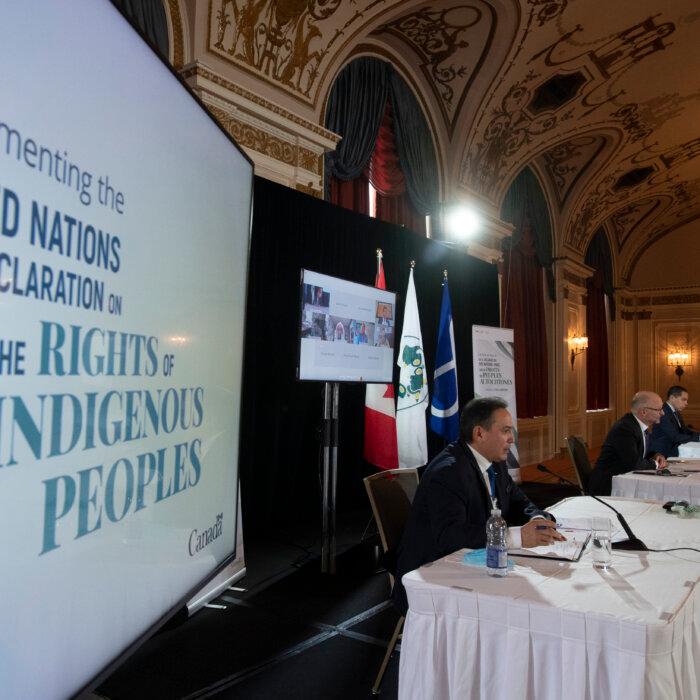
UNDRIP is a non-binding international declaration that says indigenous peoples have the right to self-determination, self-government, the protection and recognition of their traditional lands and resources, and the right to informed consent before states take actions that affect those lands or resources.The declaration was adopted by the U.N. in 2007 and passed into law by B.C. in 2019 as DRIPA. The law asserts that the provincial government must use “all necessary measures” to implement DRIPA. Canada enacted a domestic law incorporating UNDRIP in 2021.
Indigenous rights law professor Dwight Newman of the University of Saskatchewan weighed in on the subject, saying that the B.C. Court of Appeals decision was an unsurprising result of B.C.’s decision to adopt DRIPA in 2019.
The Canadian Press contributed to this report.