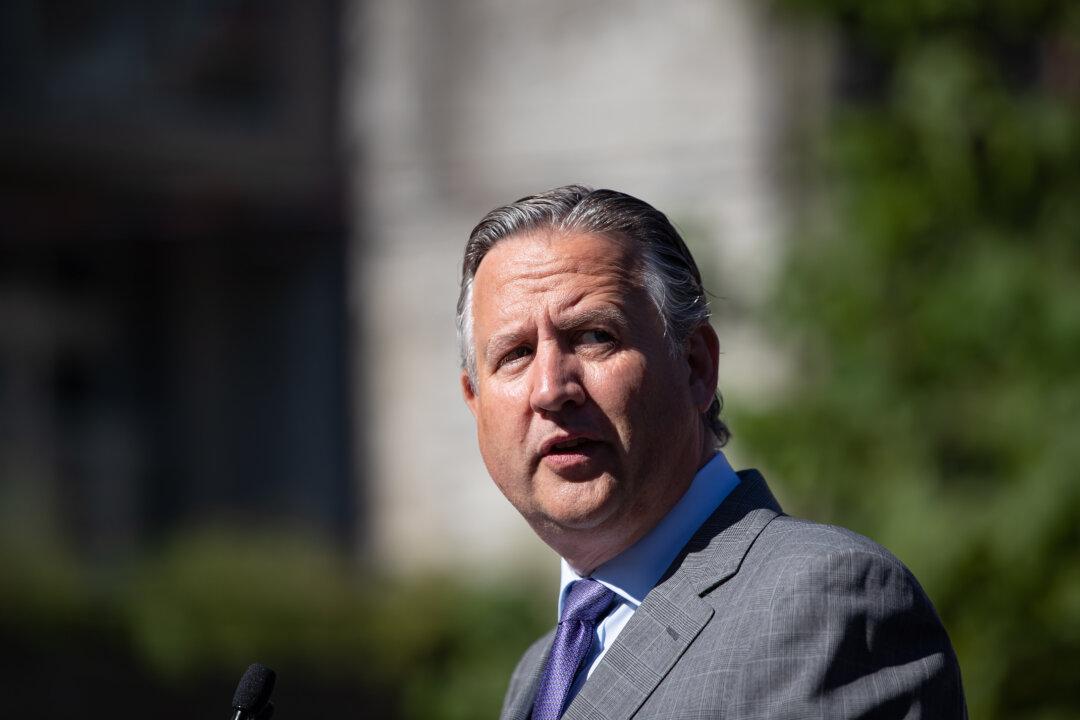
B.C. Premier David Eby says Alberta’s proposed new pipeline to B.C.’s north coast is “not a real project” as it has no private backing, saying he wants to focus on shovel-ready projects benefiting his province.
Eby criticized the proposal later the same day, saying it clashes with B.C.’s economic goals and is concerning to coastal First Nations.
“This proposal… comes at the expense of real private sector projects that are going to lift our economy and lift the national economy.”
Slett, who is also Chief of the Heiltsuk Nation, said Smith’s proposal would expose the coast to “the potential for a devastating oil spill” and has “no support from Coastal First Nations.”
Smith told reporters she called Eby earlier in the week to let him know about the pipeline proposal and said consultation is ongoing with all levels of B.C.’s government. She said she believes Eby will eventually be persuaded the pipeline is in Canada’s best interests.
Eby has said he is more interested in seeing liquefied natural gas (LNG) projects come to fruition in his province. Once an LNG critic, he has become more supportive of it in recent years, calling the recent opening of the LNG Canada export facility in Kitimat, B.C., an important part of the province’s economic growth.
‘Test’ for Canada
Smith said she’s “confident” private sector backers will come forward once the project is approved by Ottawa. She also said she’s “very optimistic” that federal laws impacting pipeline feasibility could be renegotiated with Ottawa.“This is a test of whether Canada works as a country, because if we can’t build with collaboration with the federal government, and between provinces if it’s everybody gets to get their products going to market except Alberta, that’s not a country,” Smith said.
She said Canada is missing out on substantial investment opportunities each year due to the lack of pipeline construction, saying the country has lost out on approximately $55 billion annually due to the failure to implement proposed Energy East, Northern Gateway, and Keystone XL pipeline projects.
“We cannot let billions in investment future revenues continue to flee our nation,” Smith said.
Eby argues that Alberta’s aim to send the proposal to the MPO is a misuse of the office’s purpose in fast-tracking major nation-building projects.
“We need a major projects office at the federal level; not a major distractions office, not a major politics office, but an office that advances real shovel-ready projects that will move this economy forward in British Columbia and nationally,” Eby said. “What I am seeing from Alberta directly threatens that.”
Eby also warned that lifting the oil tanker ban would be a “threat” to “the kind of economy we’re trying to build here.” He added that unless Alberta and Ottawa commit billions to fully finance the proposal, “there is no project.”
On the federal side, Energy and Natural Resources Minister Tim Hodgson said Alberta has a “right” to submit a project to the MPO, but said it should be paired with a decarbonization plan.
“If Alberta wishes to be the initial proponent and funder of a pipeline to the West Coast and put it forward to the MPO (Major Projects Office), that is within their right to do so,” Hodgson’s office wrote in an Oct. 2 email to The Epoch Times. “We have an active and constructive dialogue with Alberta and will always look for ways to advance shared priorities.”