This copy is for your personal, non-commercial use only. Distribution and use of this material are governed by our Subscriber Agreement and by copyright law. For non-personal use or to order multiple copies, please contact The Epoch Times Reprints.
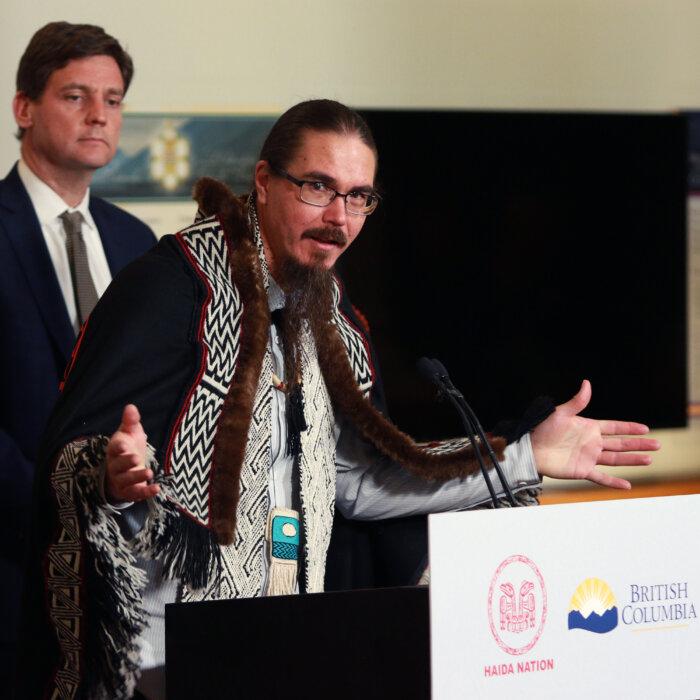
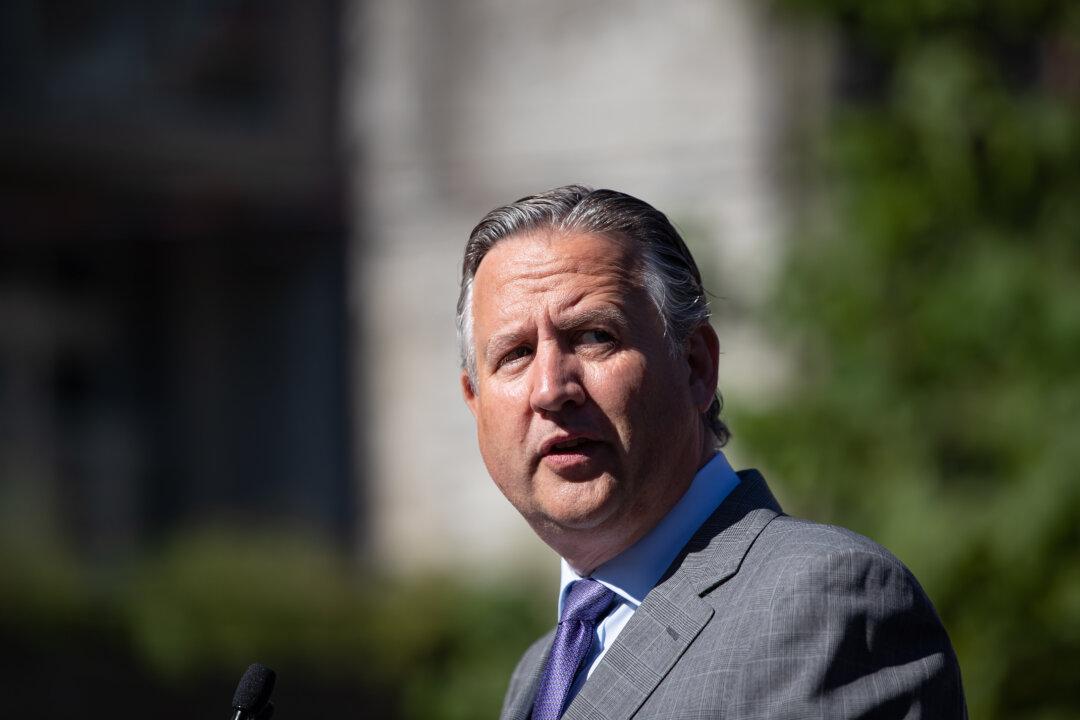
B.C. Premier David Eby is smudged with tobacco by Mitchell Tourangeau during a gathering to mark the National Day for Truth and Reconciliation at the University of British Columbia in Vancouver on Sept. 30, 2025. The Canadian Press/Darryl Dyck
B.C. is proposing new rules that would make it easier to meet and negotiate confidentially with First Nations, saying it is putting in changes long-sought by municipalities.
The proposed amendments to existing legislation were put forward by B.C.’s New Democratic Party government in the provincial legislature Oct. 9 and will take effect if and when the bill passes and gets royal assent.
“Local governments have sought a legislative amendment that would allow for in-camera meetings when confidential information relating to negotiations with First Nations or another local government are under discussion,” Cori Ramsay, president of the Union of B.C. Municipalities, said in an Oct. 9 press release from the B.C. government.
“I am pleased to see this change brought into law to provide measures to safeguard confidentiality when it is needed.”
The proposed changes would amend parts of B.C.’s Community Charter and Vancouver Charter if approved. Currently, councils only meet confidentially in exceptional circumstances, but the proposed changes would permit, and sometimes require, confidential meetings when matters are shared between First Nations and municipalities or local governments.
“For example, if a local government is considering a land-use decision that could affect a First Nation’s traditional bathing site along a river, the First Nation may not want to share the exact location in a public meeting, to protect the site from vandalism, increased public use or unauthorized removal of culturally significant items,” the B.C. government wrote. “The new rules would allow the local government to close the meeting for this purpose.”
The government noted that even though the content of confidential meetings will not be disclosed under the changes, all final decisions and bylaws would still require final approval in open municipal meetings. The province said it will offer additional consultation to local governments to decide how to proceed under the new rules.
The province said that in addition to being motivated by requests from municipalities, the proposed amendments have been asked for by First Nations and more fully align the province with the Declaration on the Rights of Indigenous Peoples Act, a B.C. law putting in various measures in accord with the U.N. Declaration on the Rights of Indigenous Peoples (UNDRIP). UNDRIP is a declaration affirming indigenous consultation and land rights.
Several recent landmark First Nations decisions have occurred in B.C., most recently when B.C.’s Supreme Court recognized the Haida Nation’s aboriginal title to the Haida Gwaii islands, sealing the legality of the April 2024 “Rising Tide” Haida Title Lands Agreement between the Haida Nation and the B.C. and federal governments. The agreement was approved by 95 percent of Haida Gwaii residents and gives the First Nation rights over all their ancestral land excluding public infrastructure and private property, as well as the legal right to exercise jurisdiction and enforce Haida law on their territory.
Another significant occurrence in B.C.-indigenous relations occurred with the Aug. 7 decision by the B.C. Supreme Court granting Aboriginal land title to the Cowichan Tribes over approximately 750 acres of land in Richmond, B.C. The decision held that previous land grants by the federal and provincial government were “invalid” and infringed on land title held due to historical ownership by Cowichan Tribes, who did not seek to challenge private land title in their case.
B.C. Attorney General Niki Sharma said Aug. 11 the government plans to appeal and seek a stay, while B.C. Conservative Party Leader John Rustad said the decision undermines private property rights in B.C.