The five candidates competing to lead British Columbia’s official Opposition Conservative party faced off for their final leadership debate this weekend, agreeing on the party’s core priorities while exchanging jabs over who was best to lead the party.
The debate took place in a Global TV studio in Burnaby, B.C., and was moderated by Global BC’s legislative reporter, Ben O’Hara Byrne.
The B.C. Conservatives started sending out ballots to more than 42,000 party members the same day as the debate, with the winner expected to be announced at a convention in Vancouver on May 30.
The first two debates last month revealed sharp disagreements about issues such as land acknowledgements, diversity policies, education, and what it means to be conservative. However, the candidates broadly agreed on plans to revive the provincial economy through tax cuts, faster permitting, and efficiencies.
Unification, Defeating NDP
The candidates also agreed on the need to unify the party and to bring in new voters.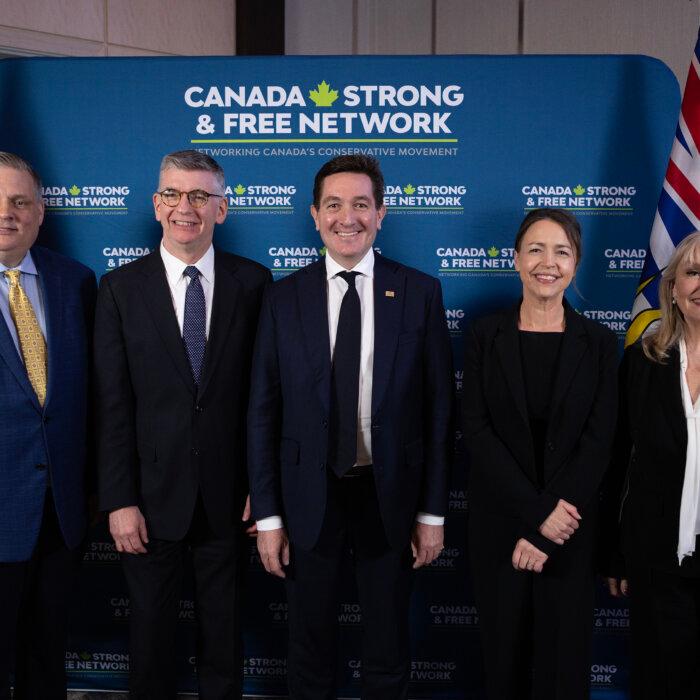
“We’re all on the same mission right now and that is to defeat the NDP. It’s the number one task at hand, and a divided party is the biggest gift we can give the NDP,” said Elliot, who is a lawyer and political commentator.
Fulmer, an entrepreneur, reiterated his approach to “uniting the right,” saying Conservatives in the province splitting the vote has led to the Tories losing elections. “My highest priority in running is to defeat the NDP,” he said.
Meanwhile, Findlay, a former MP and federal cabinet member, said it isn’t just about unifying the right, but rather “it’s about unifying overall” and attracting voters from any party in an effort to “get away from this NDP government and support a thriving, prosperous province.”
Milobar, the MLA for Kamloops Centre, also said he doesn’t worry about how voters vote federally, adding that the party needs to rebuild trust and “move forward in a way that everyone’s on the same page.”
DRIPA
Although all five candidates voiced support for repealing DRIPA, including Milobar and Black who supported the passage of the legislation in 2019, debate broke out over who was best suited to lead the party in the ambition based on their differing backgrounds.Elliot challenged her rivals on their commitment to repealing the legislation, arguing that, unlike her, some of her opponents had not spoken out against the legislation when doing so was “politically hard,” and are only saying it now that they’re in a leadership race.
Findlay argued that she had been fighting indigenous land rights issues “when it was very unpopular” to do so.
Black criticized Caroline’s statement that she is the only one who may have the fortitude to repeal DRIPA, calling it “a theoretical statement” because she has never had a position in her career “where that type of fortitude has been called upon.”
Milobar touted that he is the only candidate who has been a mayor and has worked with municipal leaders and First Nations communities around Kamloops, making him well suited to “build consensus” on the matter.
Pipelines
All candidates expressed approval for developing the province’s natural resource sector. Milobar said he supports building new pipelines and lifting the oil tanker ban, which prohibits tankers transporting more than 12,500 metric tons of oil from docking in the waters located off the northeastern coast of British Columbia.“I fully support all of our natural resources being expanded and it’s a better way to work with Alberta,” said Milobar, who pointed to his history of supporting resource development in the province during his time as mayor of Kamloops.
Black called the tanker ban “performative politics at best,” given U.S. tankers use the same waterway, while Fulmer was quick to state his position on pipelines, saying: “Yes to pipelines. Yes to repealing the tanker ban. Next question.”
Findlay said she is “absolutely in favour” of a northern pipeline and called Eby “disingenuous” for saying a pipeline could be built but tankers could not pick up the goods.
Similarly, Elliot said British Columbia needs to “stop roadblocking Canada’s success,” noting a pipeline can be “built responsibly” and in a way that benefits British Columbians.”
Contention
In a combative exchange, Findlay accused Milobar of being in a conflict of interest when it comes to how to best attract investors in the natural resource sector. Milobar took offence to Findlay’s comment, taking it to mean it was about his wife being indigenous.“Just say it. My wife’s indigenous so you think I’m in conflict of interest. I’ve never heard of something so ridiculous in my life,” Milobar said, adding that he has voted against indigenous issues.
Surrey-White Rock MLA Trevor Halford became interim leader following a caucus vote.