The B.C. Court of Appeal says the U.N. Declaration on the Rights of Indigenous Peoples (UNDRIP) adopted into provincial law must be the “interpretive lens” through which legal matters are viewed in the province.
“The [B.C. Supreme Court] judge erred in adopting an unduly narrow approach to the legal effect of the Declaration Act and UNDRIP. Properly interpreted, the Declaration Act incorporates UNDRIP into the positive law of British Columbia with immediate legal effect,” Justice Gail Dickson wrote for the majority, with Justice Nitya Iyer concurring.
Positive law means legislation that has been officially enacted by a government and has legal force within the governed jurisdiction.
Dickson added that this does not mean DRIPA “creates or confers new substantive legal rights or obligations arising from UNDRIP,” but instead “affirms the interpretive lens through which British Columbia laws must be viewed and the minimum standards against which they are to be measured.”
In his dissent to Iyer and Dickson’s ruling, Justice Paul Riley said that ruling on potential “inconsistency” between B.C. laws and UNDRIP is outside the scope of the court.
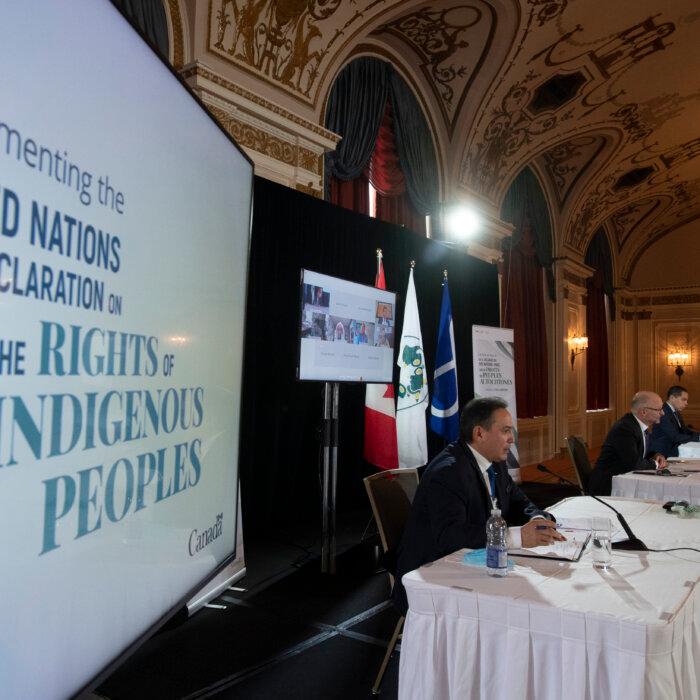

“Nowhere in the Declaration Act is the judicial branch invited or called upon to adjudicate claims of inconsistency between UNDRIP and British Columbia’s laws, and doing so would take the court outside of its proper role in our constitutional democracy,“ Riley wrote. ”Oversight and accountability for this law reform exercise is assigned to the legislative branch of government.”
Reactions
The case brought forth by the First Nations argued that an automated online system letting miners register claims for mineral rights on Crown land without first consulting affected First Nations violated the Crown’s duty to consult. The B.C. Supreme Court held in 2023 that the case did involve a failure of a duty to consult First Nations but did not agree DRIPA applied.Gitxaala Chief Councillor Linda Innes issued a statement Dec. 5 saying the decision from the B.C. Court of Appeals is a victory against outdated “colonial” mineral laws.
“We have said all along that B.C.’s out-of-date, colonial mineral tenure regime violates Canada’s own laws, the UN Declaration on the Rights of Indigenous Peoples and our Gitxaała laws. Now B.C.’s highest court has agreed,” she said. “It’s time for B.C. to roll up the sleeves and cooperate with Gitxaala in a government-to-government relationship.”
B.C. Premier David Eby said the provincial government is assessing the decision by the Court of Appeals and may appeal to the Supreme Court of Canada to ensure such issues are decided by elected representatives rather than by the courts. He said it is more probable that his government would be putting forth amendments to DRIPA instead of appealing the decision.
UNDRIP and DRIPA
UNDRIP was adopted in 2007 by the U.N. General Assembly and is a non-binding international declaration that says indigenous peoples have the right to self-government, self-determination, and full ownership their ancestral lands, territory, and resources.It also spells out a duty to states to consult and cooperate with indigenous peoples to obtain their voluntary consent before undertaking any projects or actions impacting indigenous territory.
B.C. unanimously passed DRIPA into law in 2019, affirming UNDRIP applies to provincial laws and necessitating that the government use “all necessary measures” to ensure legal compliance with UNDRIP, along with an action plan to implement UNDRIP in the province.
Canada passed legislation federally to implement UNDRIP in 2021.