Australia’s Electric Vehicle (EV) Council is calling on the federal government to set a clear timeframe to phase out petrol and diesel cars.
The push comes as the Australian Labor government commits to cutting national emissions by between 62 to 70 percent by 2035.
EV Council CEO Julie Delvecchio said Australia need stronger policies to accelerate the shift to electric transport.
“We’re also calling for more incentives to get Australians behind the wheel of electric cars and trucks including GST exemptions and energy bill credits.”
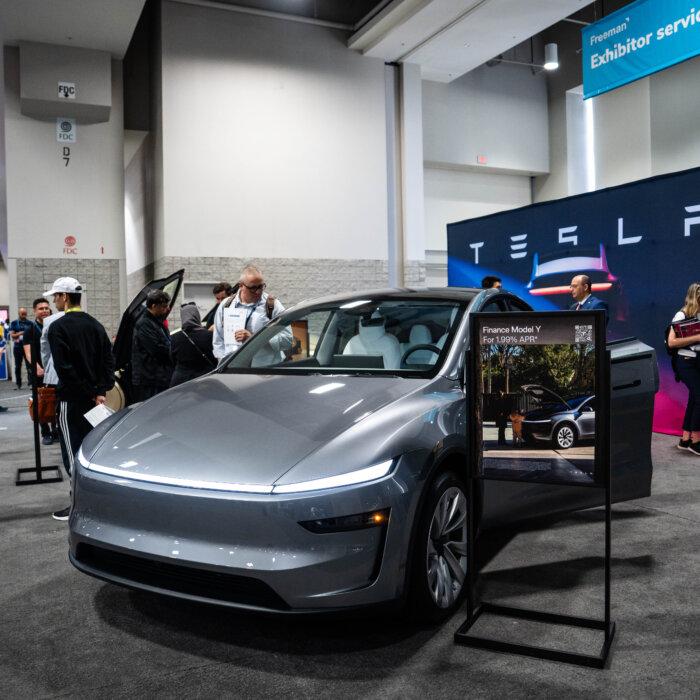
Delvecchio says more than 410,000 Australians are now driving EVs, while nearly 4,200 high power charging plugs are available.
“The federal government’s New Vehicle Efficiency Standard is bringing more EV choice, and the Electric Car Discount is helping more Australians afford the upfront cost,” she said.
Australia Not on Track to Meet Climate Targets
Despite recent growth, the council’s State of EVs 2025 report found Australia is not on target to achieve the level of EV adoption needed to meet Labor’s climate goals.The report stated Australia would need over 50 percent of new car sales to be EVs by 2030 to reach the government’s emissions reduction targets.
“Currently, only 2 percent of the cars on Australian roads have a plug, and EV sales are at 12 percent,” the report said.
To close the gap, the report recommends increasing EV sales to 16 percent in 2026 and 26 percent in 2027, with a national target of 1 million by 2027.
It also calls for policies that bring EVs into the mass market rather than relying on early adopters.
As for 2025, EVs make up 12.1 percent of new car sales, rising from 9.61 percent in 2024.
The Australian Capital Territory leads the nation, with EVs accounting for 26.3 percent of new sales.
During the first half of 2025, Australians purchased 72,758 EVs, a 24.4 percent increase on the previous corresponding period in 2024.
States Accused of Slowing the Transition
In addition, the EV report criticised stateand territory governments for holding back Australia’s transition to EVs.“Since the last State of EVs report in 2024, every state and territory has withdrawn demand-side support for EVs that have already proven successful in helping more Australians into cleaner, more affordable vehicles,” it said.
The report noted the Queensland government had stepped back EV targets for its government fleet while there was no target for South Australia’s government fleet.
In June, the Queensland Liberal National Party scrapped the former Labor government’s mandate to replace all government cars with zero emission vehicles by the end of 2026.
Public Works Minister Sam O'Connor said this move would provide more choice.
Industry and Political Reactions
Meanwhile, the Federal Chamber of Automotive Industries (FCAI) recently highlighted that EV sales were not high enough to meet the government’s emission reduction targets.“Consumers are not yet purchasing EVs at the rate that was expected, nor at the rate required to meet the emissions targets,” he said on Sept. 18.
The Coalition has opposed the Labor government’s climate targets, calling them unrealistic and costly.
However, Prime Minister Anthony Albanese defended the target as both achievable and responsible.