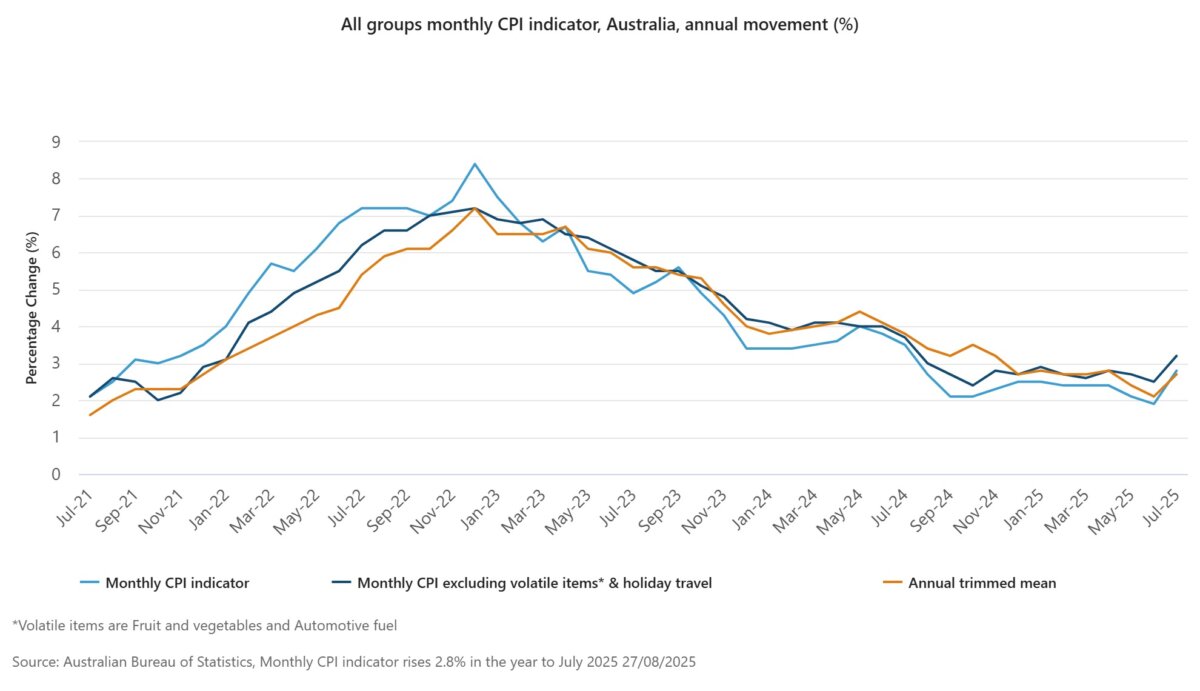
The Consumer Price Index (CPI) rose by 2.8 percent in the 12 months to July 2025, according to the latest data from the Australian Bureau of Statistics (ABS).
But some of the items measured had increases above the average, and, in the main, they were things that most people have no choice but to buy: housing went up by 3.6 percent, while food and non-alcoholic beverages rose by 3.0 percent, placing them second and third in terms of price increases.
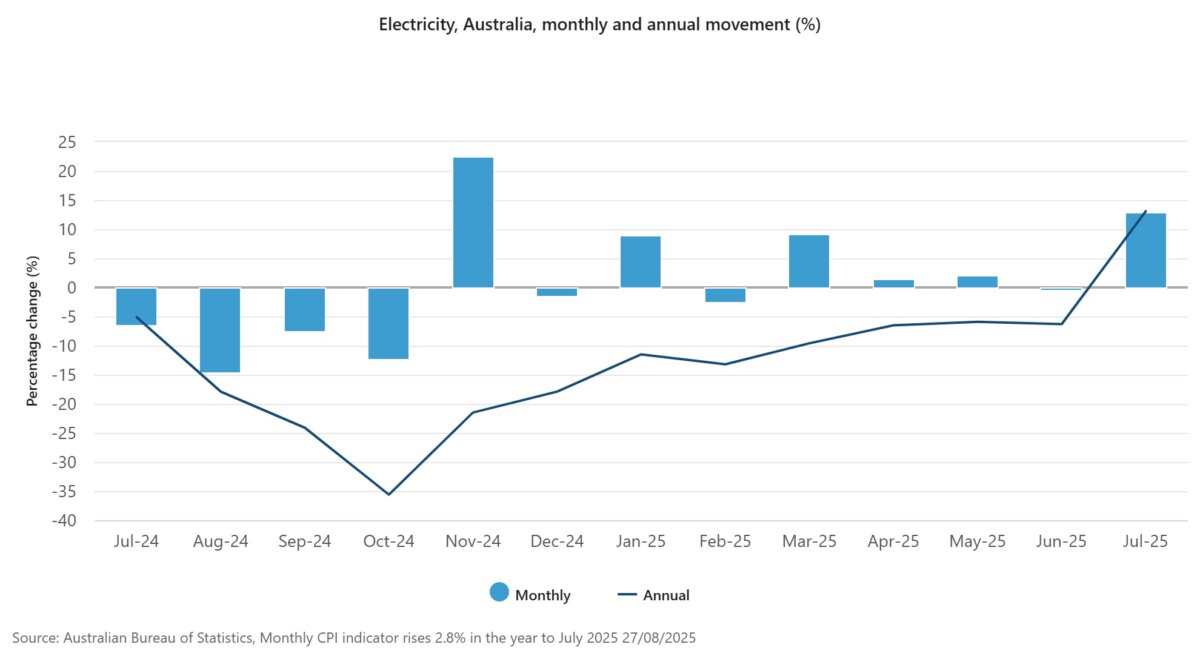
The steepest rises were in alcohol and tobacco, which cost 6.5 percent more by the year’s end, and electricity, which went up by over 13 percent.
The 2.8 percent figure was up from 1.9 percent in the year to June and is the highest annual inflation rate since July 2024, confirming continued upward price pressure and the rising cost of living.
CPI excluding volatile items (fruit, vegetables, and petrol) and holiday travel rose to 3.2 percent in the 12 months to July, compared to a 2.5 percent rise across the 12 months to June.
Annual housing inflation was 3.6 percent to July, up from 1.6 percent to June, reflecting increases in electricity prices, which rose 13.1 percent in the 12 months to July, compared to a 6.3 percent fall in the 12 months to June.
In monthly terms, electricity costs rose 13.0 percent in July, mainly because households in New South Wales and the Australian Capital Territory did not receive payments from the extended Commonwealth Energy Bill Relief Fund (EBRF), meaning they incurred higher out-of-pocket costs in that month.
Payment of the rebates for those households commenced in August instead. Additionally, prices increased due to the annual electricity price reviews taking effect.
Rents rose 3.9 percent in the 12 months to July, following a 4.2 percent rise in the 12 months to June.
This is the lowest annual growth in rental prices since November 2022, consistent with stable vacancy rates across most capital cities. New dwelling prices rose 0.4 percent in the same period, unchanged from the 0.4 percent rise in the previous one. Annual growth in new dwelling prices remains low, reflecting a subdued new home market.
Holiday travel and accommodation prices rose 3.3 percent, after seeing a 3.7 percent fall in the 12 months to June.
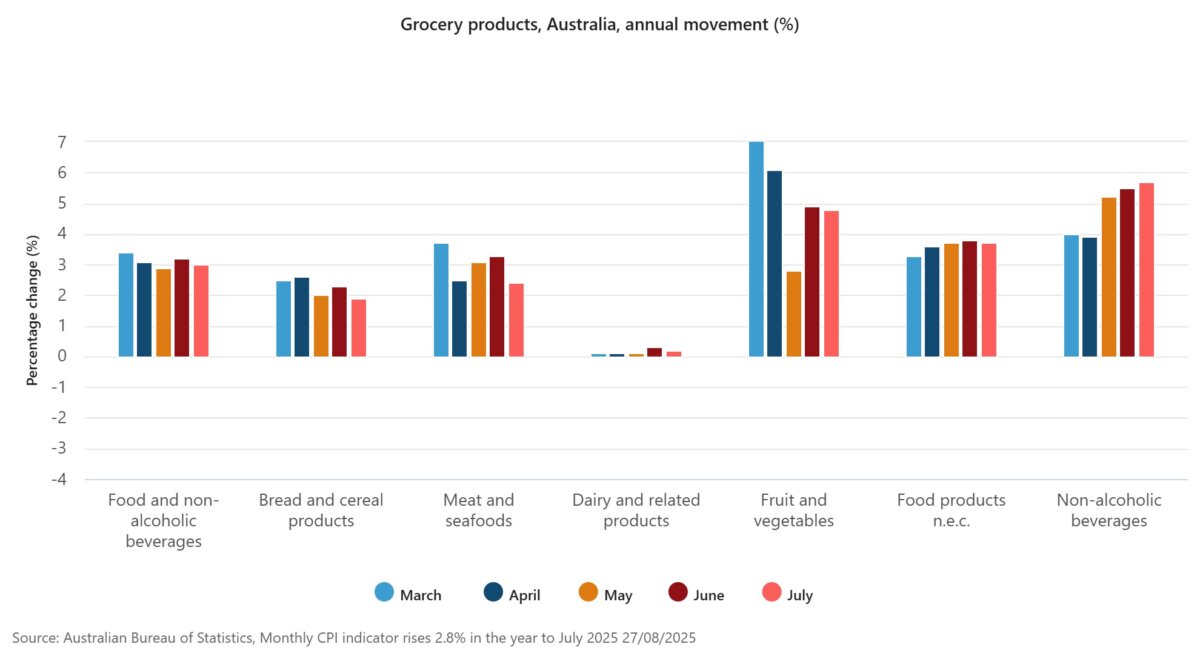
Annual inflation for food and non-alcoholic beverages was 3.0 percent to July, compared to 3.2 percent to June, and has remained around 3 percent for the past eleven months.
“While annual inflation eased for some food categories in July, coffee, tea and cocoa prices continued to rise, up 14.4 percent in the past 12 months. This comes as supply has been affected by adverse weather conditions impacting major overseas coffee bean-growing areas,” explained ABS head of prices statistics Michelle Marquardt.