The small Australian Capital Territory (ACT) is facing a budget deficit of almost $1 billion, which is expected to worsen over the next 35 years, and is now pushing the federal government to come to the rescue.
ACT Labor Treasurer Chris Steel has blamed the Territory’s small taxation base (centred around the public service) and aging population for the parlous economic prospects of the jurisdiction.
When Street provided a mid-year budget update in February, he was forced to admit that the deficit had grown 50 percent larger than the figure predicted just seven months earlier—and unless the country’s tax structure changes, it’s only going to get worse.
According to the Australian Bureau of Statistics, at the end of last year, the ACT had a population of 481,700.
Its expenditure on health in the 2024/25 budget was put at $2.6 billion, or around $5,400 per person. By June 2060, the ACT Treasury projects a population of 784,043, so if the health budget remains roughly the same per capita, a treasurer in 35 years’ time will need to find $4.2 billion for health alone.
However, the actual figure is likely to be considerably higher, as—in common with most of the rest of the Western world—its population is aging.


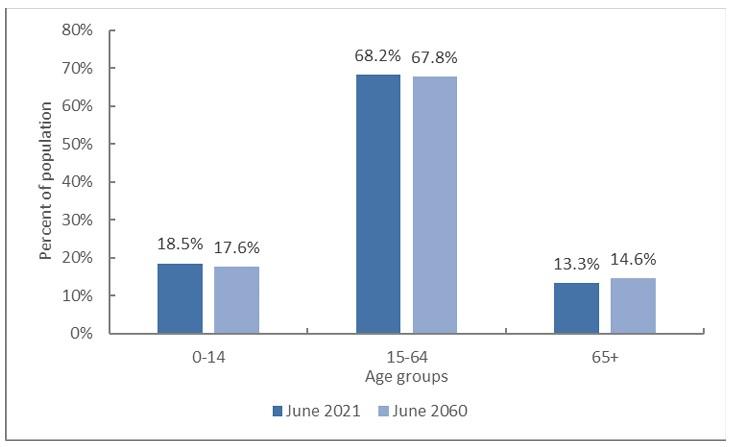
According to ACT Treasury forecasts, the proportion of the population aged over 65 across both sexes is expected to increase from 13.3 percent in June 2021, to 14.6 percent in June 2060.
In contrast, the 0 to 14 years age group is expected to reduce from 18.5 to 17.6 percent over the same period.
Importantly, the key age group for labour force participation, 15 to 64 years, is expected to decrease marginally as a share of the population, meaning fewer people to tax and more reliance on funds from outside the ACT—which means the federal government.
In the 90s, health spending accounted for less than 30 percent of the Territory’s budget; now it represents 36 percent, Steel points out. That, plus lower-than-forecast revenues, means the ACT is being squeezed on both sides of its balance sheet, and it wants the federal government to step in.
“All of us are facing this massive fiscal challenge from the growth in demand and cost on our hospital systems,” the treasurer said. “That is something that we want to address with the Commonwealth, sitting down and getting underway with negotiations on a new five-year National Health Reform Agreement.”
The agreement outlines the amount of funding the federal government allocates to states and territories for operating their hospital systems.
The current agreement expires on June 30, and the Commonwealth has only guaranteed funding for one more year in a stopgap deal for 2025/26. Although that gives the ACT a 16 percent increase from the current financial year, Steel says it’s not enough.
Current funding arrangements would result in the federal government contributing to 33 percent of ACT hospital funding, below the national average of around 39 percent.
Federal Contribution Has Remained Fixed
Successive federal governments have managed to keep health spending under control. According to the Australian Institute of Health and Welfare (AIHW), in 2012/13, health spending comprised 15.9 percent of total Commonwealth spending at $61 billion. Over the next several years, that share of the budget only slowly increased, peaking at around 17.0 percent in 2021/22 during the pandemic.It then dipped slightly, returning to 15.9 percent in 2022/23.
A spokesperson for the federal Department of Health said the Commonwealth was working on finalising negotiations with the states and territories by the end of this year.