After a false start and years of negotiating, Australia and Vanuatu have signed the long-awaited “Nakamal” agreement following a meeting in Canberra between Prime Minister Anthony Albanese and his Vanuatuan counterpart Jotham Napat on June 29.
New Agreement Means No Foreign Bases
According to Albanese, the new agreement enshrines Vanuatu’s sovereign decision not to allow a foreign military base or infrastructure on its soil, and to keep its critical infrastructure free from militarisation.“We respect the right of all nations to make sovereign decisions about their engagement with other countries,” he told reporters on June 29.
“But what this does do is to provide certainty for Australia that there will be no foreign military base. That we’ll prioritise policing cooperation with Pacific Island Forum members—something that we’ve asked for across-the-board—and that there will be any consultation on any third-party engagements in critical infrastructure.”
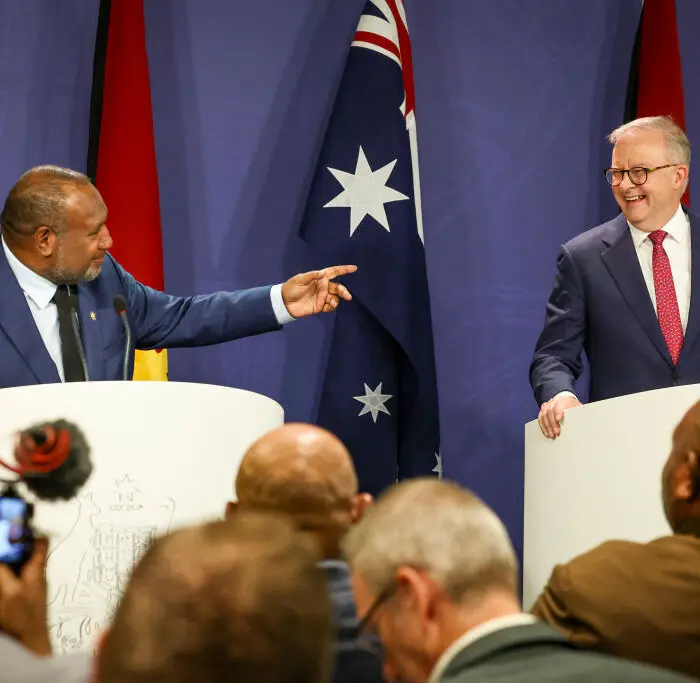
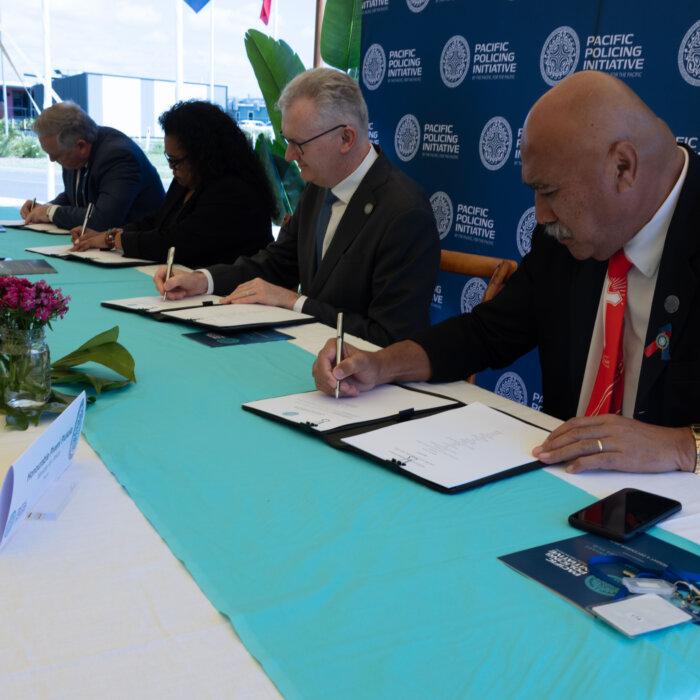
Albanese also said that under the Nakamal agreement, Vanuatu remained committed to seeking support from Pacific Islands Forum members, including Australia, for its policing needs.
“We’ve concluded a balanced agreement that will protect our collective and individual security and our sovereignty. And it will support our interest in a stable, prosperous and secure region that we both call home,” he said.
No ‘Veto’ Power for Australia
However, unlike other deals with Tuvalu, Nauru, or Papua New Guinea, the deal does not give Australia “veto” power over foreign relations matters connected to defence or security.Vanuatu is still allowed to accept funding or investment from other countries—potentially China—only requiring it “consult Australia on proposed third-party engagement” in relation to critical infrastructure.
Napat said Vanuatu had passed a law forbidding any militarisation of its critical infrastructure.
Australia’s conservative-leaning leader Pauline Hanson of One Nation—who is surging in the polls—has said Pacific nations cannot take Australian funds while double-dipping in Chinese aid or investment.
Cost of Deal to Australia Not Clear
While Albanese did not confirm whether the agreement was still worth $500 million over the next decade, he said the final figure would be revealed in December as part of the Mid-Year Economic and Fiscal Outlook (MYEFO).He also highlighted that the Nakamal deal will support the economic development of Vanuatu.
“That is in the interests of the people of Vanuatu, but it’s also in Australia’s national interest as well, to have economic development in our region. That is one way in which you ensure that security in the region, prosperity in the region,” Albanese said.
China is also negotiating its own pact with Vanuatu—the Namele Agreement—which has yet to be signed. However, Napat said the agreement was awaiting “clearance from Beijing.”
“We will share the agreement. There is nothing to hide. Our government is transparent. And I am so grateful that the Prime Minister has also given me the clearance to share the Nakamal agreement,” he said.
“Today marks a significant step in the Vanuatu-Australia relationship.
“With the signing of the long-awaited Nakamal agreement, Australia and Vanuatu are close neighbours, trusted partners.”