On May 1, Cold Lake RCMP responded to a call about a masked man breaking windows at a business, Cpl. Mathew Howell, an Alberta RCMP public information officer, said in a statement provided to The Epoch Times. The man is also accused of throwing stones at a security guard who approached him before getting into a taxi to flee the scene.
The same man is alleged to have returned to the building the following day carrying duffel bags and demanding to see the owner. He subsequently asked to see one of the partners of a law firm on the second floor, who was out of town at the time.
The investigation led to the arrest of John Cook, 31, of nearby Cherry Grove the next day. Cook is well known to the Cold Lake RCMP. The police force had arrested him two years ago for arson, including burning a church to the ground and setting fire to a post office. He was charged with 10 counts of arson in 2023, and at the time he was also in breach of a conditional sentence order from an earlier unrelated incident.
For the law firm attack, Cook was charged with assault with a weapon, mischief over $5,000, disguise with intent to commit an offence, and failing to comply with conditions of a probation order, the Cold Lake RCMP said. He was released on a $250 cash bail, ordered to not come within 25 metres of the building he is alleged to have vandalized, and is to appear at the Alberta Court of Justice in Cold lake on May 28.

“This is a terrifying thing because you really don’t know what to do. You just have to prepare for the worst and hope for the best,” Grey told The Epoch Times. “The worst part is the way it’s impacted the staff. Apart from their home, that’s where they spend most of their time, and these are mostly ladies, and they just don’t feel safe.”
“I’m hoping [this attack] will awaken people to the reality of what’s going on in our country. We have to demand more from our legislators in terms of effecting laws that will allow the police to protect us from people like this,” Grey said.
Another recent example is the case of Arvin Pasha, who pleaded guilty to stabbing two sisters vacationing from Alberta who had rented his Vancouver Airbnb in 2022. On May 1, a B.C. judge gave Pasha a 22-month conditional sentence to be served in the community, followed by three years of probation.
‘It Is the Court’s Decision’
A statement from the Department of Justice sent to The Epoch Times notes that although the federal government creates and enacts crime laws, decisions on how to treat the accused and convicted still lie with police and judges who have leeway when working within the framework of those laws.“The decision to detain or release an accused person while they await their trial is made by the police or by the courts,” the statement says.
“When a person is charged with an offence, the police may either release them - with or without conditions that they must follow during their release - or detain them for a bail hearing. If a person is charged with an offence that is subject to a reverse onus, then it is the court, following a bail hearing, that must determine whether to detain them in custody or release them while they await their trial.”
Premiers, Police Associations Call for Bail Reform
Still, Bill C-48 and its bail reforms received scrutiny and criticism from Canada’s premiers after Tori Dunn, a woman from Surrey, B.C., was murdered in her home in June 2024. The man who was arrested for the crime had been released on bail just days earlier, having been charged for an unrelated robbery and despite a lengthy criminal history.In a letter to the prime minister in July 2024, the provincial and territorial premiers urged the federal government to revisit Bill C-48 and its bail reforms that aimed to make bail more difficult to access for repeat violent offenders. The letter says the changes don’t go far enough.
“Police services should not have to chase the same criminal three or four times because of an inadequate bail system,” the letter said. “This not only represents a drain on policing resources but is a hindrance to public safety.”
The call came after 23 people were arrested and 16 firearms seized following a shootout in Toronto’s west end. Among those arrested was a young offender who had three firearms prohibitions.
‘People Are Sick and Tired of It’
Cait Alexander is a survivor of a domestic violence assault by her boyfriend, who in July 2021 brutally beat her and left her for dead. He was charged and released on $500 bail and was never forced to defend himself in court because the charges were stayed due to court backlogs causing delays and time limits under Jordan’s Principle.“I don’t call it the justice system; it is the injustice system. It provides nothing for survivors or people who are victims. And there’s no way that this was just happening to me, so we have put so much pressure on the government.”
Describing EVE as a “one-stop shop for survivors,” Alexander’s organization helps provide resources for abuse victims. But equally important is its effort to put what she describes as a broken legal landscape on the front burner of the political conversation.
‘The System Is Broken’
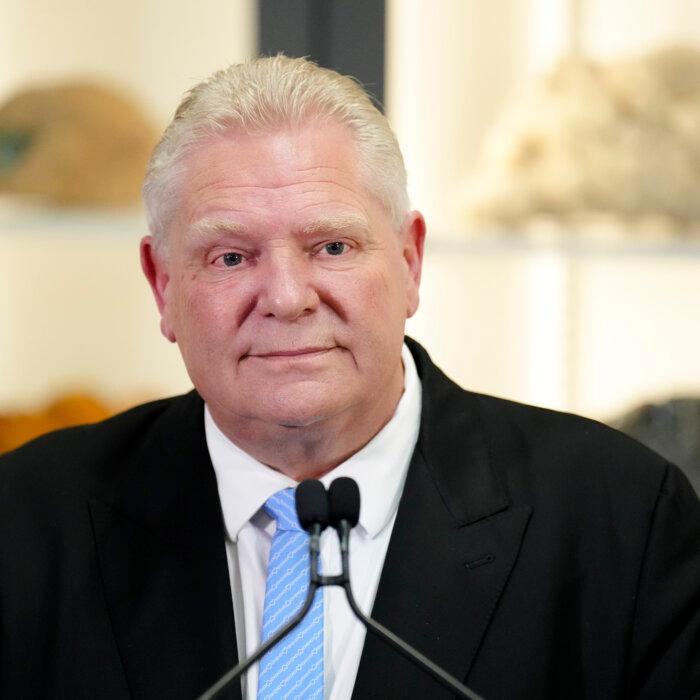
The judicial system was singled out for criticism last month by Ontario Premier Doug Ford. The premier expressed dismay with aspects of the country’s legal system and also said he will introduce legislation through which his province may be able to counter what he considers to be weak bail laws, which fall under federal jurisdiction.Ford also took aim at judges who he feels put ideology ahead of safety, suggesting that judges should be elected rather than appointed.
“It’s not a knock against all the judges because there [are] good, qualified judges. … But the system is broken, and once these judges get into their position, they have a sense of entitlement—that’s what drives me crazy.”
Ontario Attorney General Doug Downey says what’s needed is judges who appreciate the frustration communities feel when their safety is compromised.
“I’m looking for somebody who is going to enforce community standards,” he said at the press conference he attended along with Ford. “I’m looking for somebody who understands community, and somebody who will, quite frankly, help protect our communities.”
Alberta Justice Minister Mickey Amery is also concerned about shortcomings in the bail system.
In a statement to The Epoch Times, he said that Alberta has been asking Ottawa to address its concerns regarding bail reform, and that recent federal legislation, including Bill C-75 and more recently Bill C-48, has impacted citizen safety.
“For far too long, the criminal justice system has been unable to properly protect public safety due to Ottawa’s ineffective bail legislation. This system made it easier for violent criminals to be released into our community, creating a vicious cycle of crime that is completely unacceptable.”