What began as a protest outside the Indonesian Parliament, aimed at MPs who had given themselves a monthly accommodation allowance equal to 10 times the minimum wage in Jakarta, turned into widespread protests against the government and the police after a motorcycle taxi driver was killed on Aug. 28.
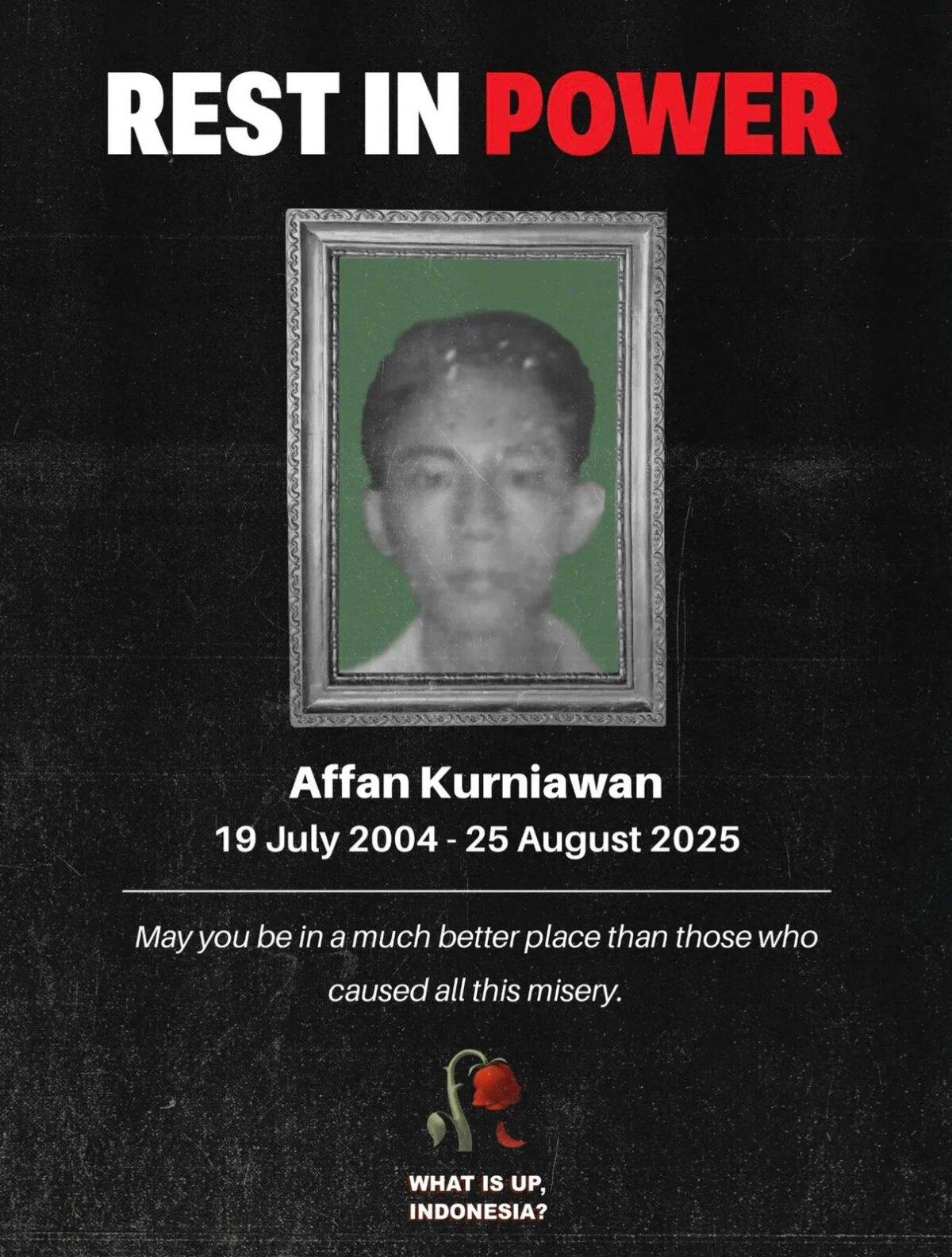
Police have acknowledged that they ran over 21-year-old Affan Kurniawan, but protesters say six people were struck by an armored police vehicle, all of whom sustained injuries.
On Aug. 29, protesters marched to the headquarters of the police mobile brigade in the capital Jakarta, and some attempted to storm the compound.
Police used water cannons and fired rounds of tear gas to push back the demonstrators, who hurled bottles, rocks, and flares at them.
Some set fire to a five-story building near the police compound, trapping several people inside, while other protesters helped soldiers and residents rescue those who were trapped.
Protesters also destroyed traffic signs and other infrastructure, causing traffic to come to a standstill in the area.
As tributes to Kurniawan began appearing on social media, people began organizing protests outside of Jakarta.
The Epoch Times has been in contact with sources in Indonesia’s second-largest city, Surabaya, the capital of East Java, where protesters have begun emulating those in Jakarta, throwing rocks at police, who are responding with water cannons and rubber bullets.
Sporadic fires are also breaking out, although the protesters spoken to deny responsibility.
“A protester would not carry a can of petrol to a protest,” one said, “the most they would do is throw rocks.”
Protests Turned Violent
Abigail Limura, operator of the Instagram account What is Up Indonesia, has published a post saying the protests on Aug. 28 were initially organized by the Indonesian Labour Party (Partai Buruh).However, as the evening progressed, “other elements of society took over the streets and continued a harder, more zealous protest,” according to the post.
The account claimed “police brutality, and chaos” had erupted earlier in the week, when protesters were targeting parliamentarians, but that Kurniawan’s death on Aug. 28 had “reignited a nationwide zeal which results in the protest that’s currently happening.”
Acknowledging that the demands of the initial Aug. 26 protests were unclear, the account stated that it is nevertheless “undeniable that many members of society with real grievances and real anger [at the government] took to the streets.”
“Mass layoffs continue to happen, unemployment in Indonesia ranks highest among all Southeast Asian countries and purchasing power has been on the decline,” it said.
Government actions have increased living costs, most recently through a new tax on online purchases (on top of a value-added tax, or VAT, the existing consumption tax), and a “social media tax” is coming next year, which expands the tax base through increased digital transaction monitoring and VAT collection.
“All the while, those in suits and funded by our tax money literally dance about happily after their wages got bumped up,” the post said.
President Calls For Investigation
President Prabowo Subianto has called for calm and expressed condolences for Kurniawan’s death, promising there will be a thorough investigation.“I am shocked and disappointed by the excessive actions of the officers,” he said in a video message. “I have ordered a thorough and transparent investigation ... and officers involved must be held accountable.”
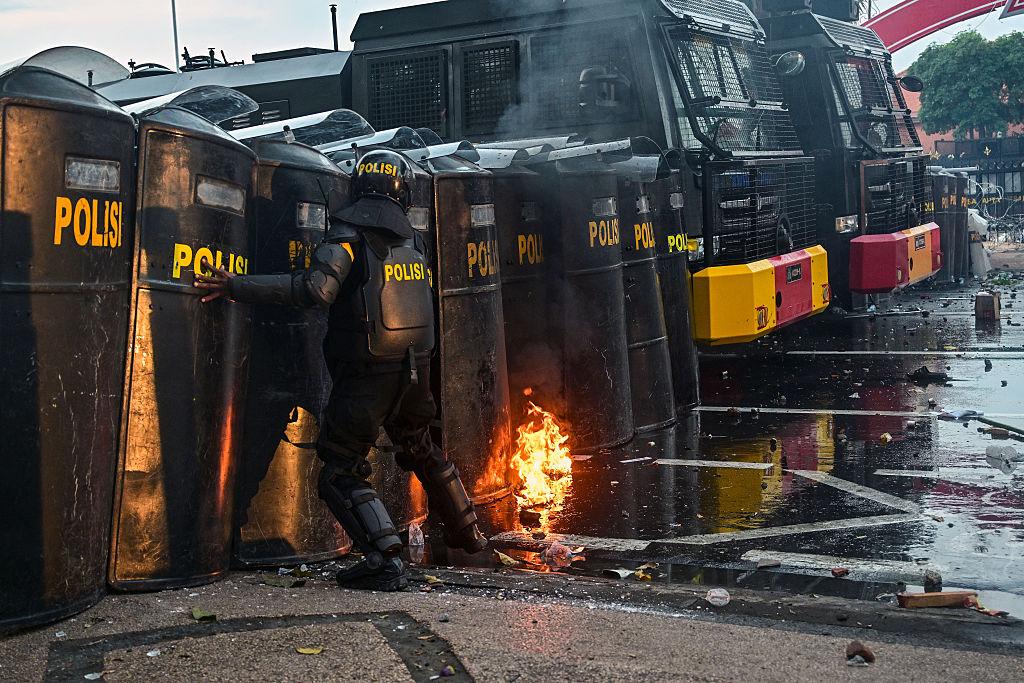
“Indonesian police once again violently repressed protests, beating protesters, unnecessarily and excessively firing tear gas, unlawfully firing water cannons, and recklessly drove an armoured vehicle in a crowded area, fatally hitting one online motorcycle taxi driver. This loss of life cannot go unanswered,” he said.