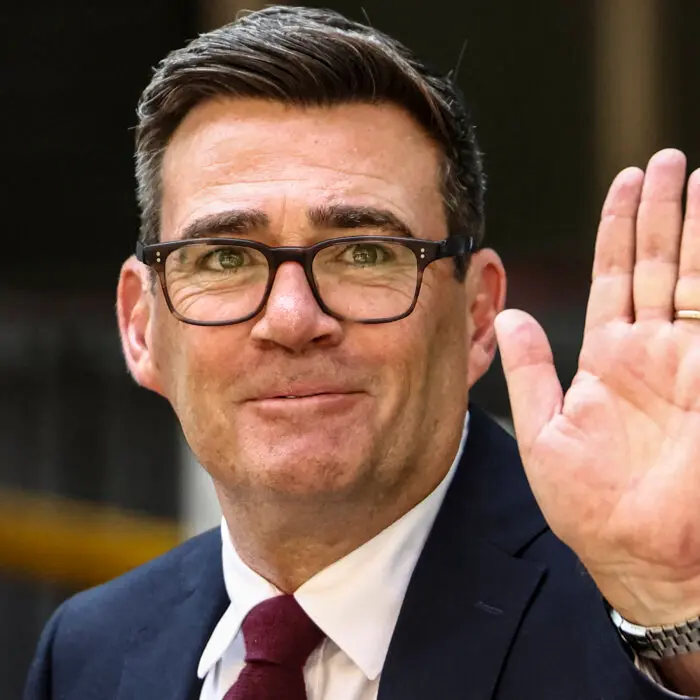
Former Mayor of Greater Manchester Andy Burnham replaced Keir Starmer as prime minister of the UK on July 20.
Burnham took the keys to No. 10 Downing St. following a visit to Buckingham Palace to formally accept the invitation from King Charles to form a government.
The new prime minister arrived at his new official residence, after leaving the palace, to a throng of cheering supporters.
He then addressed the nation, saying that he was “acutely conscious” of the fact that he was the seventh prime minister since 2016, calling his ascension a “moment for reflection and new resolution.”
Burnham said the moment “requires my generation of politicians to raise our game and rise to the new challenge.”
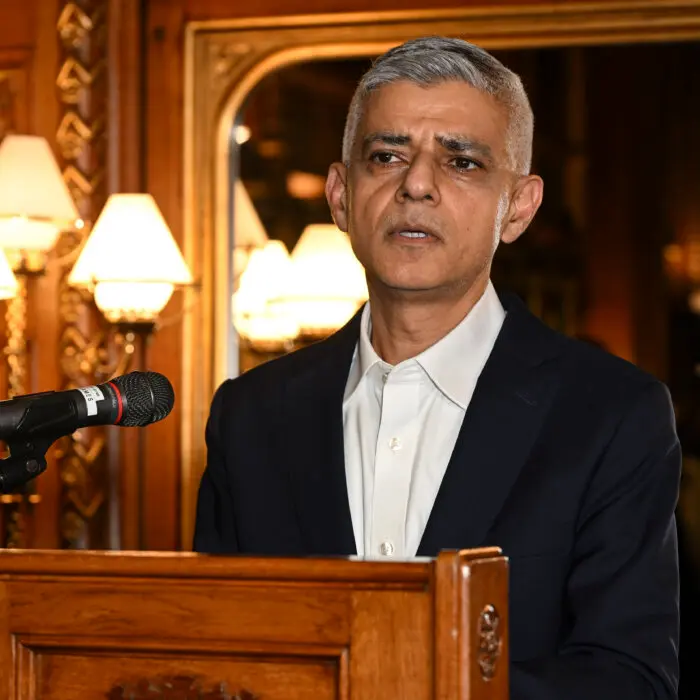
“Britain needs to show the world that we can regain our stability once again,” he said.
“I know people at home are fed up with politics.
“I hear you and I want to be honest with you—we have not been good enough, and we need to be better.”
Burnham said the UK needed “a new political model and a new economic model,” adding that the country had taken some “wrong turns” in the 1980s by centralizing power in the capital and privatizing large swaths of industry.
He promised to “take power” out of London and give it to local areas, so that they can “do more and, in doing more, build a new economy” in which the UK can “put life’s essentials back under stronger public control to make them affordable” to its people again.
Burnham said that later this year, he would lay out a “10-year plan” for the country, but that he can “do something to give people some breathing space now, some help with the cost of living.”
He promised to reform education to improve employment prospects for young people, offer them more mental health support, and build more social housing, but said his first action as prime minister would be to end homelessness in the UK.
“Let us make this the moment when Britain starts to believe again—the moment we bring back hope,” Burnham said, before shaking hands with some of the assembled crowd and entering No. 10 Downing St. with his wife, Marie-France van Heel.
The new prime minister assumed the role after Starmer officially stepped down the same morning, making his own trip to see the king to relinquish his office, a little more than two years after he was swept to power in a landslide Labour Party general election victory, which saw the left-wing party form a government for the first time in 14 years.
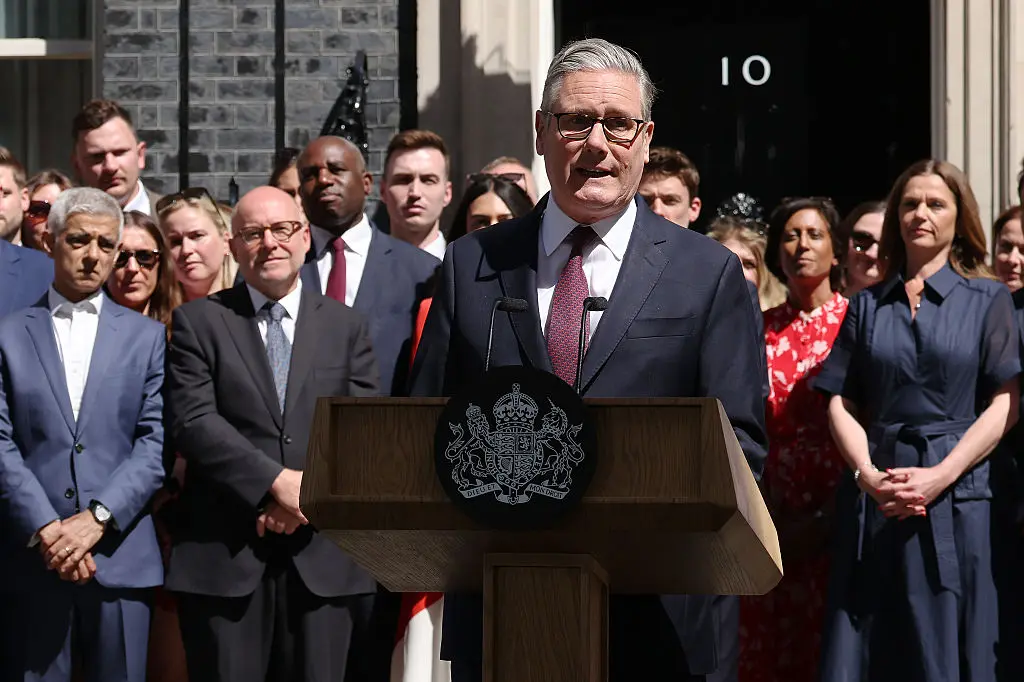
In his final address to the nation, Starmer said his “work is done.”
“In six and a half years, I took our party from a historic defeat in 2019, changed it so it was fit to face the country upon a landslide general election victory in 2024,” he said.
“Since then, it has been the privilege of my life to serve you and this great country as prime minister, and I am confident that Britain is now stronger and fairer than it was two years ago.”
Starmer further stated that Burnham had his full support and wished him “every success,” as he spoke outside No. 10 Downing St. for the last time as leader, before going to meet the king.
He said at the time that he would “set a direction that is distinctively Labour.”
“We won’t try to out-Green the Greens, or out-Reform Reform, or doing what we’ve done in the past and wear too many Tory clothes,” Burnham said.
First among his duties in the new role will be to appoint a new cabinet, which will indicate his priorities as prime minister.
Burnham’s Plans for Britain
Burnham’s plans for the UK remain largely unknown, although he has given hints since it became clear that he would become prime minister.
“All the time and resource that was going to be spent on a national ID scheme will go instead to where it’s most needed, such as helping with the cost of living,” Burnham’s spokesperson said in a statement.
The digital identification cards were initially going to be required for every worker until Starmer dropped the mandatory rule and made it optional in January after pushback.
Burnham is also expected to separately announce plans for oil and gas drilling in the North Sea, according to a post by U.S. President Donald Trump on July 19.
“The People of Aberdeen, in Scotland, are dancing in the streets because the new Prime Minister, Andy Burnham, has stated that he will be opening up, all the way, the invaluable North Sea Oil!” Trump wrote in a Truth Social post on July 19.
Trump called it one of the “greatest sources of quality oil on Earth,” saying that it will make the UK “one of the Richest Countries anywhere in the World!”
Burnham’s team has not yet confirmed this move, and approving new drilling licenses would be a reversal of a promise made by the Labour Party in its 2024 election manifesto, although fresh drilling under existing licenses was not explicitly ruled out in that pledge.
The Epoch Times reached out to Burnham for comment but did not receive a response by publication time.