



Alberta Premier Danielle Smith says the B.C. premier’s opposition to her B.C. pipeline proposal violates her province’s right to export its resources and blocks a project she says would benefit all of Canada.
Smith made the comments on Oct. 7, responding to remarks B.C. Premier David Eby made the previous day, where he described Alberta’s proposed pipeline as a “fictional” project that lacks First Nations’ consent, “makes no financial or economic sense,” and would cost taxpayers “billions,” adding that it was a political stunt for political advantage in the next provincial election.
Alberta last week announced it will act as proponent and submit an application to the federal government’s Major Projects Office (MPO) for a new bitumen pipeline to B.C.’s northwest coast. The Major Projects Office, launched in August, is a federal initiative aimed at fast-tracking projects deemed to be of national interest by streamlining approval processes and coordinating related financing. The office was created as part of the Building Canada Act, which allows projects to bypass some laws to speed up their construction.
Alberta has committed $14 million for the early planning of the bitumen pipeline, saying it expects the private sector will take over once the project reaches the approval stage.
The province said it doesn’t ultimately want to own the new pipeline, but that it decided to act as proponent because private companies aren’t willing to take the risks in the current investment climate. Smith maintains the current investor uncertainty is caused by federal policies, such as the Impact Assessment Act, the proposed oil and gas emissions cap, and the tanker ban off B.C.’s northwest coast.
Eby said the proposed pipeline would affect B.C. jobs and projects and “threaten” the ecosystem on B.C.’s coast and the Great Bear Rainforest, on which he said thousands of jobs in coastal industries, such as salmon aquaculture, depend. He has previously suggested that Alberta’s plan to submit the pipeline proposal to the MPO is a misuse of the office, calling it “not a real project” due to the lack of private backing and saying it “comes at the expense” of shovel-ready private sector projects.
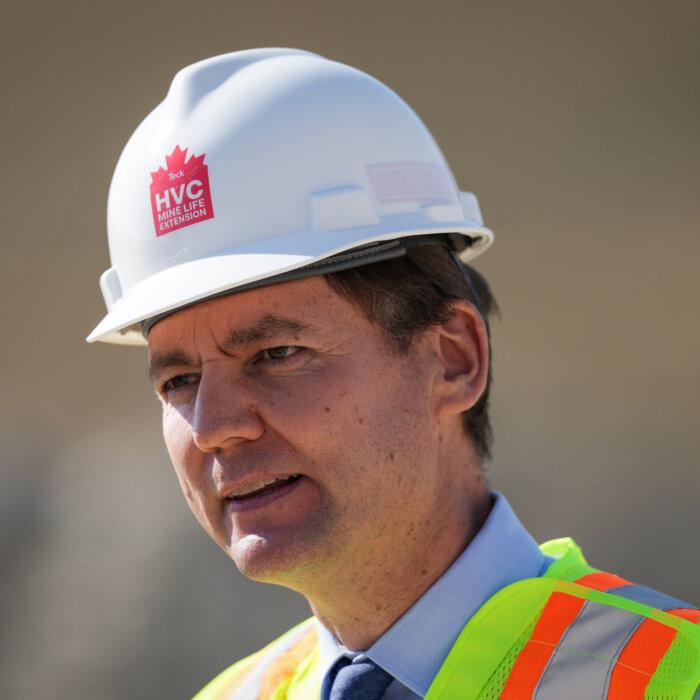
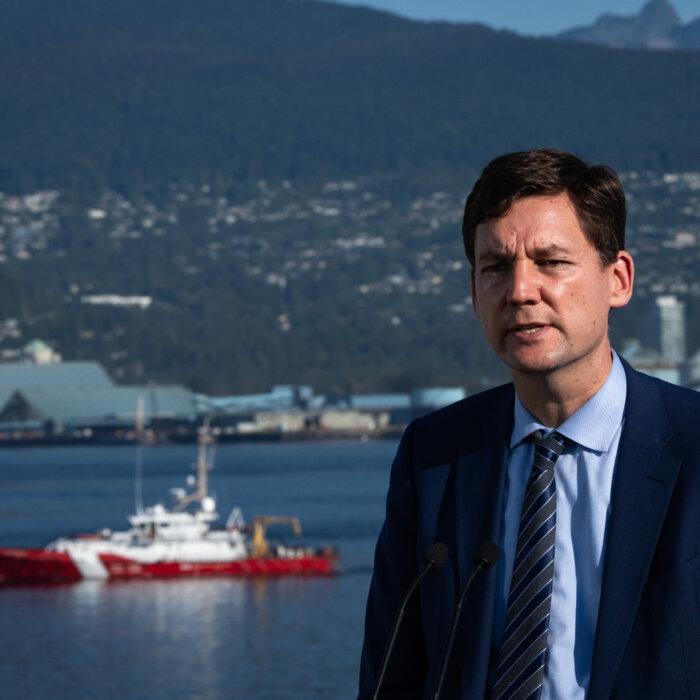
“The Alberta fantasy bitumen pipeline means putting all of that—the major projects, the economy, the jobs, and our coastline—at risk,” Eby said on Oct. 6. “As your premier, I promise you this—I will always stand up for B.C. jobs, for B.C.’s economy, for Canada’s economy, for our country, and our province’s beautiful and abundant coast.”
In response, Smith said her province would “not tolerate being landlocked in our own country by our neighbouring province,” arguing that Eby has “demonized” the oil and gas industry, which she says has created significant wealth for his province and the country.
“Premier David Eby’s threat yesterday to fight against and block Alberta’s most valuable asset from export off of Canada’s northwest coast was both un-Canadian and unconstitutional,” she said in an Oct. 7 social media post.
“If Canada is going to become a functional country again, the Prime Minister, federal government and every province must support their fellow provinces’ initiatives to develop and export their most valuable resources.”
Saskatchewan Premier Scott Moe backed Smith’s position. “The Premier of Alberta is right,” he said in an Oct. 7 social media post, referring to Smith’s response to Eby’s comments. “The NDP Premier of British Columbia is wrong.”
Moe has expressed support for Alberta’s pipeline proposal, saying shortly after its announcement that the project “strengthens Canada’s economy, opens new markets and creates opportunities to advance Canada’s national interests.”
In his Oct. 6 comments, Eby suggested that Alberta’s pipeline proposal is a political strategy by the province’s United Conservative Party, as a provincial election is set for next year.
“What the Conservatives in Alberta are pushing is an entirely political creation in the lead up to their election for wedge politics at the expense of British Columbia and Canada’s economy, and they are being supported by the B.C. Conservatives, again, at the expense of British Columbians and our valuable coast,” he said.
Smith also addressed Eby’s remarks earlier on Oct. 7 while speaking to reporters in Ottawa. She said his comments illustrate why the Supreme Court of Canada provides certain powers to the federal government—so that a single premier cannot “block” nation-building projects.
“I think that the courts have been pretty clear on that, and I would hope that Prime Minister Mark Carney would realize it’s his obligation to make sure that these kinds of projects get built,” she said.
She said she expects to reach an agreement with the prime minister “by Grey Cup” in November on how Ottawa will address what she calls the “nine bad laws,” the federal policies she says hinder Alberta’s energy production.
“I think [Carney] understands that there needs to be a repeal or substantial revision,” Smith said, referring to the federal policies she wants Ottawa to address. She added that the prime minister has shown a willingness to act by reducing the consumer carbon tax to zero earlier this year and by delaying implementation of the electric vehicle mandate.
“I think he has demonstrated that if something isn’t working, that he’s prepared to repeal or modify,” she added. “I don’t want to get ahead of our potential agreement, but do know [that] is factoring into the discussions that we hope to have an answer for by Grey Cup.”


