Alberta Transportation Minister Devin Dreeshen said the ruling will be considered as his government finalizes new legislation he says is intended to “work for all road users.”
Alberta’s United Conservative Party government is drafting a bill expected to be introduced this fall that could give the province greater authority to assess and potentially remove municipal bike lanes that are found to have negative effects on traffic flow.
Dreeshen has previously said some bike lanes worsen traffic congestion in various Alberta municipalities.
“The appeal court made clear that governments have the authority to make and change transportation policy and that there is no constitutional right to a bike lane,” Dreeshen said.

Lower Court Ruling
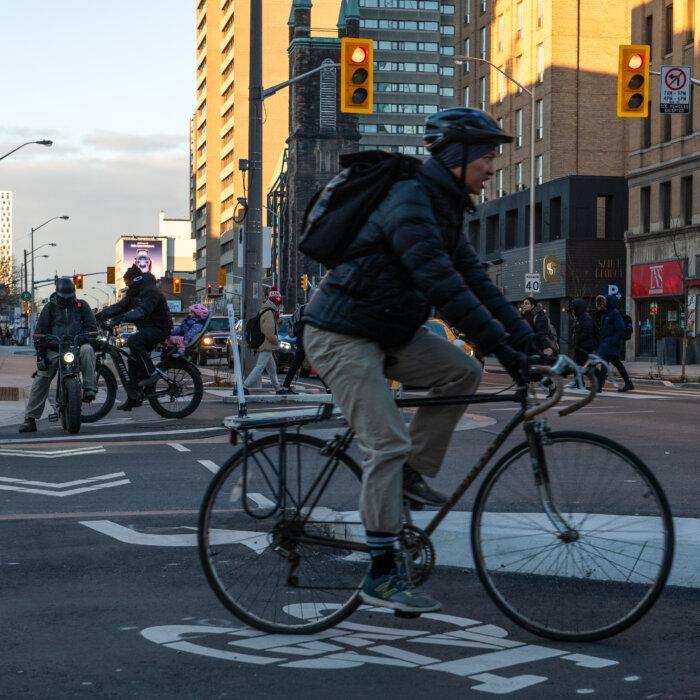
In its Aug. 14 decision, Ontario’s Court of Appeal overturned a lower-court ruling that had prevented the provincial government from proceeding with the removal of bike lanes in downtown Toronto.
The Court of Appeal disagreed with a 2025 decision by the Ontario Superior Court, which found that removing the bike lanes would increase the risk of serious harm to cyclists and engage their rights to life and security of the person under Section 7 of the Charter of Rights and Freedoms.
Ontario appealed the decision, arguing that Justice Paul Schabas’s Section 7 analysis was flawed. The Court of Appeal sided with the province, with Justice Grant Huscroft finding that the lower court had improperly ventured into questions of legislative policy rather than determining whether the legislation was constitutional.
“There is no Charter right to bicycle lanes,” Huscroft wrote, adding that “policy is for politics.”
“The Ontario legislature is as free to establish bicycle lanes as it is to remove them or authorize their removal,” Huscroft wrote, concluding that the Charter does not determine “whether bicycle lanes are a good or a bad idea” or “wise or unwise policy.”
The ruling removes the constitutional barrier created by the lower-court decision, clearing the way for the Ontario government to proceed under Bill 212, which requires the reconfiguration of bike lanes on Bloor Street, University Avenue, and Yonge Street. The legislation was introduced in 2024 and subsequently amended in 2025.
Ontario Transportation Minister Prabmeet Sarkaria responded with agreement to the appeal court’s ruling, calling it a “victory for common sense.”
“Our government received a mandate from the people to tackle the traffic and gridlock costing Ontario’s economy more than $56 billion every year,” Sarkaria said. “We’ve always been clear: bike lanes should go where they make sense, on secondary roads, not at the expense of vehicle lanes on our busiest streets.”
Cycle Toronto, which brought the Charter challenge along with several individuals, said it has not yet decided whether to seek leave to appeal the Ontario appeal court’s ruling at the Supreme Court of Canada.