



Alberta Premier Danielle Smith says recent changes to the policy governing how senior officials report expenses deviate from their original intent of protecting officials’ privacy and security, and that she plans to reverse them.
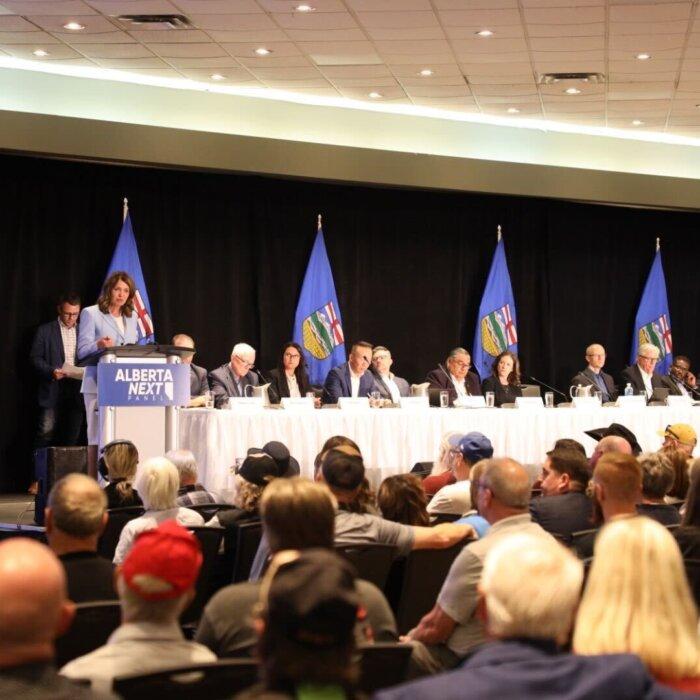
The premier made the comments at an Aug. 14 Alberta Next town hall in Edmonton, after being asked by one of the attendees to explain the rationale behind the policy shift. The province on Aug. 1 published an updated version of its public disclosure of travel and expenses policy, removing the requirement for the premier, ministers, associate ministers, and their political staff to post receipts for reimbursed expenses over $100.
The premier said she could not explain the changes because “I’m confused by that too.” She said the policy was revised due to safety concerns from some ministers who wanted the names of hotels they typically stay at to be redacted.
“That was what the policy was supposed to be—it turned out to be something quite different,” she said. “So we’re going to see if we can maybe try to track down how that happened and do a reversal on that.”
She said her cabinet would be discussing the issue when they meet on Aug. 19.
Other changes to the policy include extending the time—from 10 to 15 business days—ministers have to ensure reports of their expenses and those of their staff are publicly accessible online on a bi-monthly basis.
The policy also introduces a five-year requirement for those reports to remain online, while the previous version did not specify a time frame. Accordingly, the expenses publicly available as of publication time date back to 2020, although the public disclosure policy has been in place since 2012.
The changes drew criticism from the Opposition NDP, which described them as a step toward reduced transparency.
“Albertans expect and demand to see receipts whenever the Premier, her cabinet, or senior staff make expense claims that are reimbursed by public funds,” NDP House Leader Christina Gray said in an Aug. 15 social media post.
“The only reason they did it was to hide the receipts from Albertans, who pay the bills. It’s entitled and it’s the exact opposite of being open and transparent.”
Gray called on the government to “reverse this bad policy today.”
The office of the treasury board and finance told The Epoch Times that the policy changes still require expense details to be publicly disclosed, and that while receipts would no longer be posted online, they must still be submitted for approval by department officials and could be accessed by the public through freedom of information requests.
“The purpose of the treasury board directive was to ensure the privacy and safety of elected officials and staff specifically as it relates to the physical location of their accommodations while traveling,” reads an Aug. 15 statement from the ministry, adding the measure is “consistent with most other jurisdictions.”
“This directive will be further reviewed by Cabinet next week to ensure the right balance between security, privacy and transparency are achieved.”
Jurisdictions like Ontario do not publish receipts of senior officials’ expenses but requires them to provide details of each expense.
The Aug. 14 Alberta Next Panel town hall was the third in a series of in-person and virtual sessions hosted by the UCP government across the province to gather public input and develop proposals to “assert” provincial sovereignty within Canada.
The panel is one of the measures Smith announced following the re-election of the federal Liberals earlier this year, aimed at finding ways to “protect” the province against current or future “hostile policies” from Ottawa. The panel will recommend potential referendum questions for a province-wide vote in 2026.
At each town hall, the 16-member panel, chaired by the premier, listens to and engages with attendees on topics such as a provincial pension plan, equalization, a provincial police force, and greater provincial control over immigration.
The next in-person town hall is scheduled for Aug. 26 in Fort McMurray, Alta.


