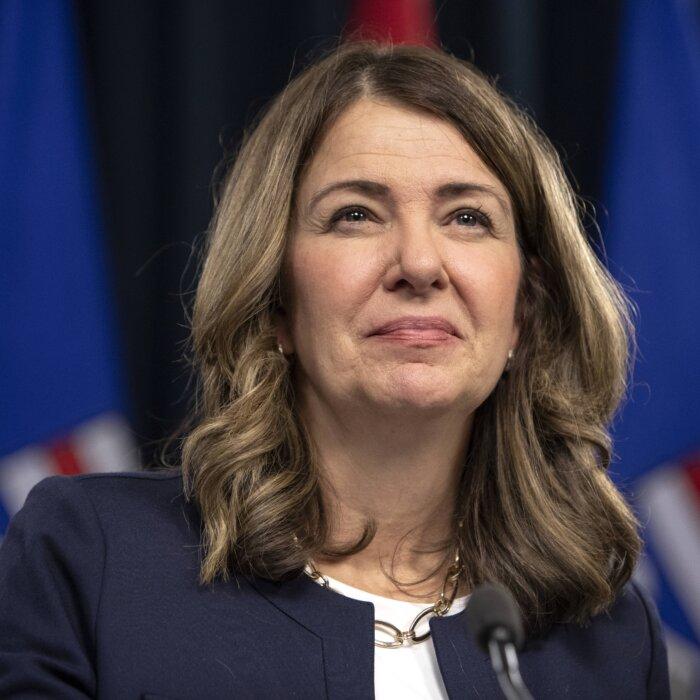
Alberta Premier Danielle Smith says her government’s proposal to withhold funding for new judicial appointments is intended as a negotiating tactic with the federal government, aimed at securing greater input over the selection process.
Smith made the comments on Feb. 7 during her weekly call-in radio show, where she said her threat to withhold funding is a “negotiating position” aimed at obtaining an outcome that is “fair” to Alberta.
“We want some parity, so we started the conversation, and hopefully we'll have some success on it,” she said.
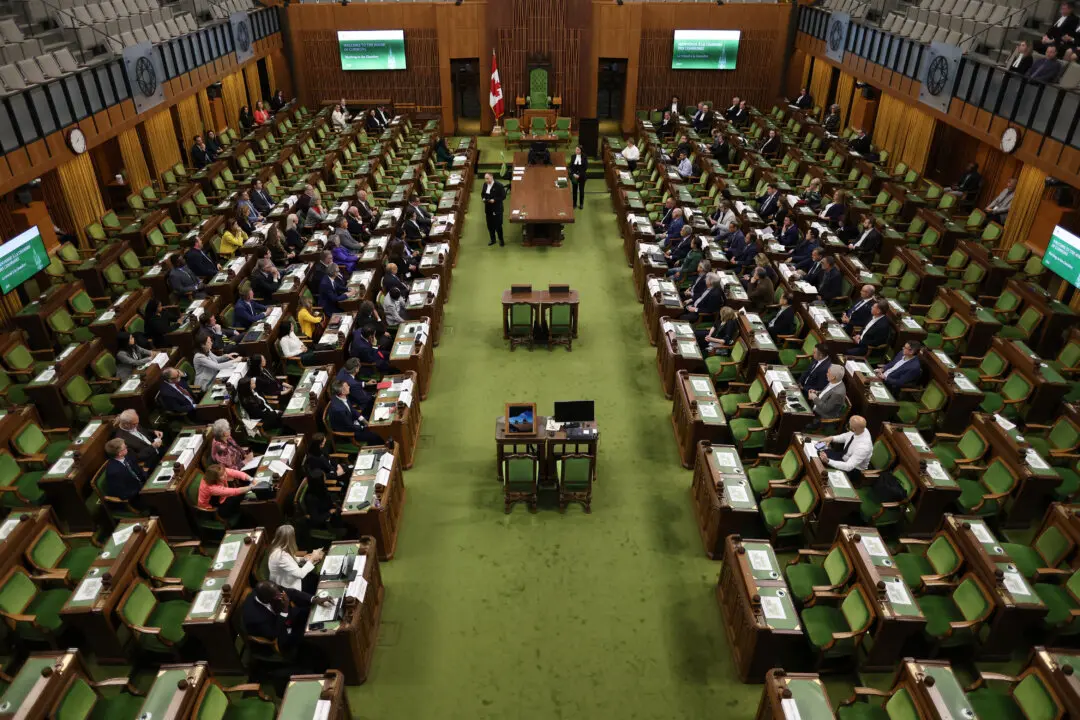
Smith wrote a letter to Prime Minister Mark Carney last month asking for the province to be given a “formal and meaningful role” in the process of appointing judges. The Jan. 23 letter called for Alberta to be consulted on future judicial appointments to the Alberta Court of King’s Bench, the Alberta Court of Appeal, and the Supreme Court of Canada.
“Alberta’s government will not agree to provide the necessary funding to support any new judicial positions in the province until such engagement and collaboration are provided,” Smith wrote in the letter.
Under the current system, Alberta’s superior court judicial advisory committee includes one member nominated by the province, along with several members appointed by the federal government and legal organizations. Smith’s letter proposed replacing it with a special advisory committee of four non-partisan experts—two appointed by Alberta and two by Ottawa—to assess judicial candidates and determine their qualifications.
For King’s Bench and Alberta Court of Appeal vacancies, the candidates recommended by the committee would be presented to Alberta’s justice minister, who would then “work collaboratively” to identify the successful appointees.

Smith noted on her radio show that Quebec has a similar policy for vacancies, where an ad hoc advisory committee with equal provincial and federal representation is used to recommend candidates for the province’s three designated seats on the Supreme Court of Canada.
Smith’s letter also asked that Ottawa loosen the rules around bilingualism for federal judicial appointees, saying this requirement “further entrenches systemic barriers and alienation” for western Canadians who only speak English.
Alberta’s chief justices issued a rare joint statement on Jan. 27 defending judicial independence and the separation of powers, emphasizing that judges must decide cases impartially, free from external influence.
The justices, which represent the province’s three courts of the Court of Justice, the Court of King’s Bench, and the Court of Appeal, said they recognize that their “fundamental role is to serve Albertans.”
“We do this by upholding our oath of office to decide each case honestly, impartially, and to the best of our ability. We know that our decisions can profoundly impact the people who come before the courts. We take this responsibility seriously,” they wrote.
Justice Minister Sean Fraser has rejected Smith’s proposal, telling reporters on Feb. 4 that the federal government would continue with its current system for selecting judges, a system that he said “has independence, that has rigour, that has led to stellar candidates being appointed, including as recently in Alberta.”
The justice minister said an independent judiciary is a “hallmark of democracy” and needed to be protected from “political threats about the resources that are going to be made available to them to do their jobs.”
Fraser also said the government has independent judicial advisory committees that “factor in feedback” from the provinces and territories, and Alberta had been “uniquely helpful in pointing us in the right direction” on judicial appointees.
“We welcome the feedback from representatives of the Alberta government through that process, and they’ve participated. It’s been very helpful. I hope that they continue to participate so we can continue to make stellar appointments,” he said.