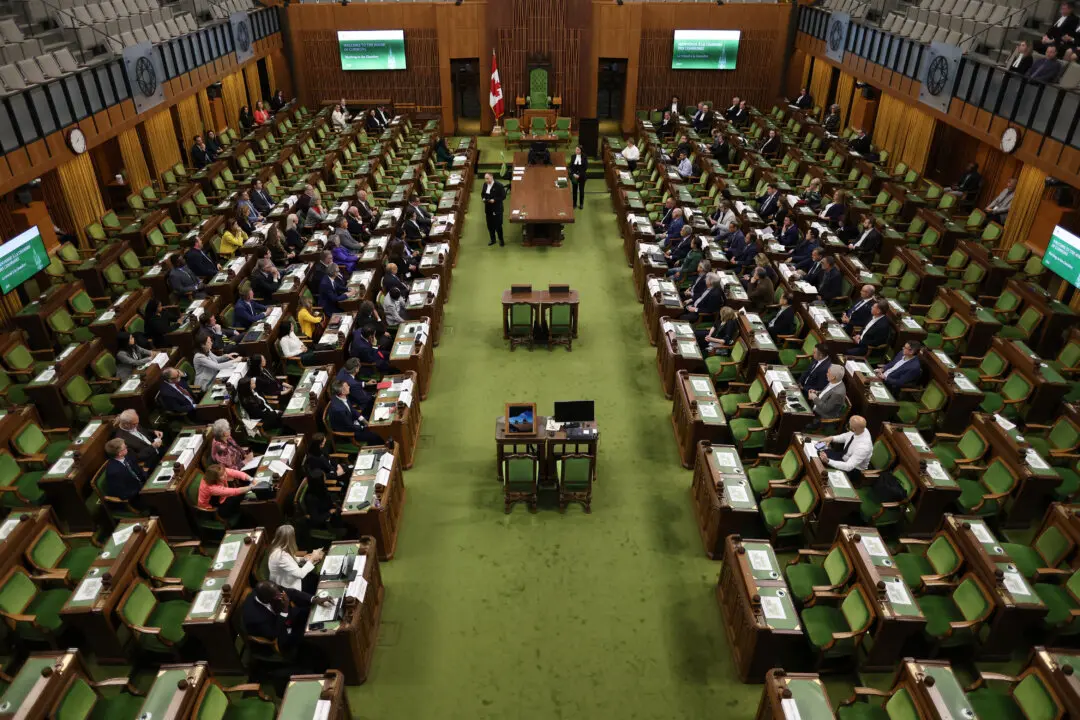
Conservative MP and shadow immigration minister Michelle Rempel Garner is calling on the federal government to amend the Criminal Code to prevent judges from imposing lighter sentences on non-citizens convicted of serious crimes to avoid triggering their deportation.
“Giving non-citizens who have been convicted of serious crimes in Canada lenient sentences to avoid deportation creates a two-tier justice system, where Canadian citizens are given harsher sentences than non-citizens who broke our laws,” Rempel Garner said during an Aug. 11 press conference on Parliament Hill.
Rempel Garner said lighter sentences for non-citizens send a “clear message” that it is “okay to break Canada’s laws with impunity,” when they are permitted to remain in the country after committing serious crimes such as sexual assault. She said a two-tiered justice system is “corrosive” to trust in public institutions and could lead to new immigrants to Canada all being “painted with the same brush.”
The Tory MP cited recent cases such as a temporary resident from Ghana who was convicted of assault and theft but granted a conditional discharge, and a Nigerian man convicted of breaching a no-contact order with his former partner and received a conditional discharge. In both cases, the judges cited the risks of deportation as a reason for lenient sentences.

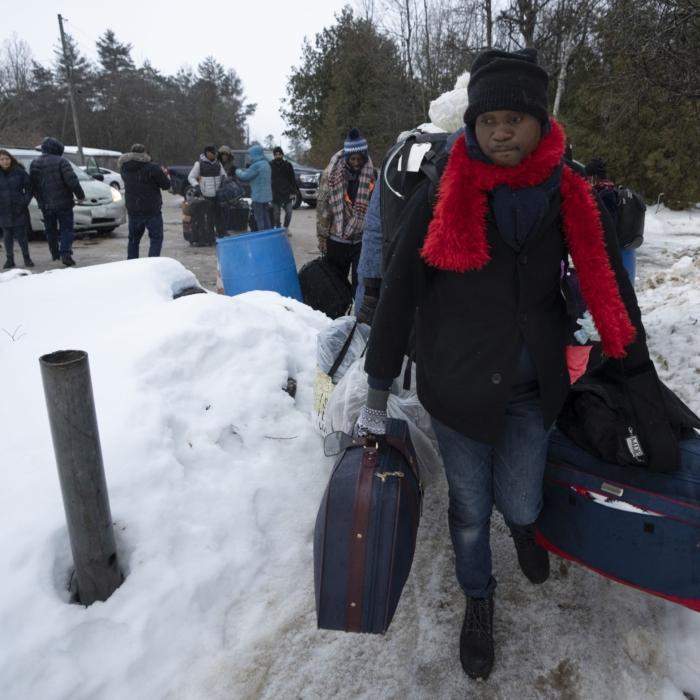
Rempel Garner said the issue could be fixed if the federal government changed “one line” of the Criminal Code. She also called for Immigration Minister Lena Diab and Justice Minister Sean Fraser, who served as immigration minister from October 2021 to July 2023, to be “fired” from their positions.
The issue came to a vote when the Conservatives previously introduced Bill C-220, which would have prohibited courts from considering an offender’s immigration status or the immigration consequences of a sentence. It was defeated at second reading on March 25, with Liberals, NDP and Greens voting against it and Conservatives and Bloc Québécois voting for it.
Liberal MP Julie Dzerowicz argued in debate on the bill that a non-citizen can face a second punishment via their sentence—deportation—which can mean permanent separation from family and removal from Canada. She said allowing judges to consider that consequence is “not special treatment” but a way of ensuring the overall punishment is proportionate.
Diab said during House debate on specific cases on May 28 that “serious crimes deserve serious consequences,” and that when a non-citizen is convicted of a serious crime, immigration consequences follow, including that CBSA investigates, due process applies, and deportation occurs where the legal requirements are met. She emphasized that CBSA and Public Safety Canada are responsible for following up on those cases.
“Criminals, whether Canadians, visitors, or whatever their status is in Canada, will be held responsible by the law. The courts do their best,” Diab said.
Prime Minister Mark Carney touted his government’s immigration reforms in July, saying it had “taken back control” of the country’s immigration system after acknowledging that the number of newcomers entering Canada had been “too high” at the start of 2025. He said the number of asylum seekers entering the country had fallen by one-third, while the number of temporary foreign workers had dropped by half.