Air Canada is expecting most of its flights to be up and running on Aug. 21, two days after resuming operations following a three-day strike by its flight attendants.
Overall, Air Canada is aiming to carry out 95 percent of its flights on Aug. 21, and says it will continue to update customers via its website, text, and email.
Vice President of system operations control Cale Daniels says Air Canada has had a “successful launch” with all teams collaborating, including airports, maintenance, flight operations, in-flight service, and systems control teams. He said that while the ramp-up process takes time, the airline’s plan to restart its services is “on track.”
“One of our challenges with our ramp-up is getting our international operations back on track because we don’t have crews overseas. We’ve had to send an aircraft with crews, which then requires a layover so they can rest.”
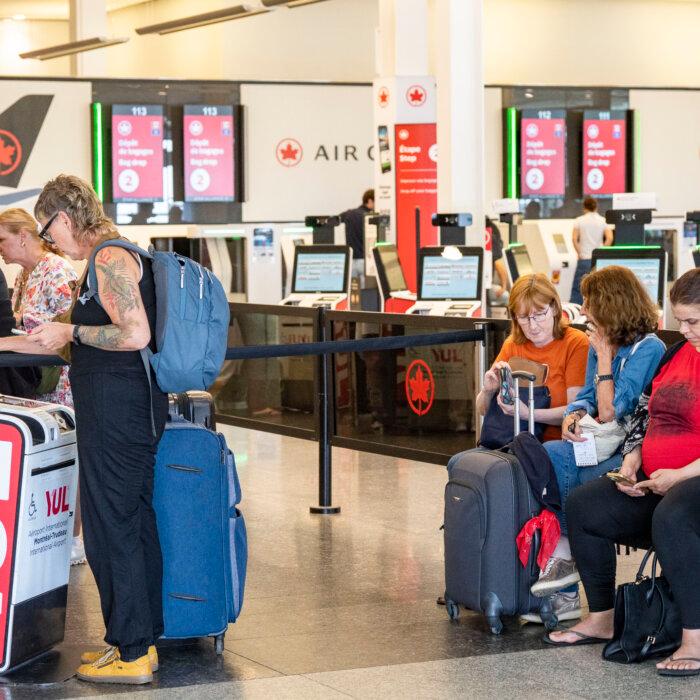
Air Canada Executive Vice President Mark Nasr said earlier in the week that the restart process would take longer for international routes since the airline brought crews back to Canada before the strike, which meant staff weren’t yet in position overseas when the strike ended.
The airline advised that during the ramp-up period to return to regular service, some flights will continue to be cancelled until the schedule is stabilized.
Tentative Agreement
The airline resumed its Air Canada and Air Canada Rouge flights on the afternoon of Aug. 19 after they had come to a complete halt on Aug. 16 due to flight attendants’ labour action.Air Canada and the union representing its flight attendants reached a tentative agreement on the morning of Aug. 19 with the assistance of a federal mediator. The agreement required flight attendants to return to work immediately following the three-day strike.
The union says it will hold a ratification vote from Aug. 27 to Sept. 6, in which members can vote “yes” or “no” to indicate whether they agree with all proposed changes to the union’s collective agreement with the airline, including wages. Members can vote online or by phone.
Additionally, all members are set to receive a 3 percent pay raise in 2026, 2.5 percent in 2027, and 2.75 percent in 2028.
The tentative agreement is set to run until March 2029, and also addresses the issue of ground pay by providing flight attendants with half of their hourly wage for 60 minutes of ground time on narrow-body aircraft and 70 minutes on wide-body planes.
Ground pay was a central issue for the striking flight attendants, who said they should be paid for all time worked, not only for the time in the air.
‘Refund Assistance’ Program
On Aug. 20, the airline said it was launching a new “refund assistance” program to reimburse some customers who incurred expenses as a result of only completing part of their trip with Air Canada or having to take alternate transportation after their flights were cancelled.The program applies to flights that were set to depart between Aug. 15 and Aug. 23, but were cancelled due to the labour disruption.
Those who paid a “reasonable fare on another airline” within five days of their original departure date are entitled to a reimbursement, Air Canada says, adding that fares must be in the same or lower cabin as their original flights.
Customers are also able to submit claims for alternative transportation options, such as bus, ferry, or car expenses.