Air Canada is launching a new “refund assistance” program to cover transportation expenses for some customers affected by its flight attendants’ labour action.
Those who booked directly with Air Canada are able to fill out the form, while the airline says that those who booked through Aeroplan, a travel agency, or another airline cannot.
Executive Vice President Mark Nasr said this policy would apply to those who were unable to rebook their flights and had to make alternative arrangements after their Air Canada flight, which was originally scheduled to leave between Aug. 15 and Aug. 23, was cancelled.
Air Canada says that those who paid a “reasonable fare on another airline” within five days of their original departure date are entitled to a reimbursement. The airline specifies that the fares must be in the same or lower cabin as their original flights.
Passenger Rights
Air Passenger Rights (APR) advocacy group founder Gabor Lukacs told The Epoch Times that it’s important for passengers facing a flight cancellation to know their rights, but to also give the airline time to “do the right thing.”Airlines are required to either rebook passengers on the next available flight or refund the ticket and return passengers to their point of origin. The refund must be issued within 30 days but no compensation is required to be paid.
If passengers choose to take the next available flight, the airline must cover transportation costs if the new flight is at a different airport, but it is not required to pay compensation or provide food or beverage.
However, if a passenger is travelling across an international boundary and incurring costs due to the delay—including meals, ground transportation, accommodation, telecommunications, lost wages, prepaid hotel stays, or events missed at the destination—the airline is liable for these damages. However, APR notes that if the airline can prove that it took “all reasonable measures” to prevent delay for its passengers, it will not be held liable.
Meanwhile, when flights are preemptively cancelled ahead of a strike, airlines could have greater responsibilities to accommodate customers.
Customers must be provided compensation for the inconvenience of rebooking and must be provided food and beverage free of charge if the delay is more than two hours. If the flight is delayed overnight, the airline must cover accommodation costs for its customers as well.
Ramping Up Operations
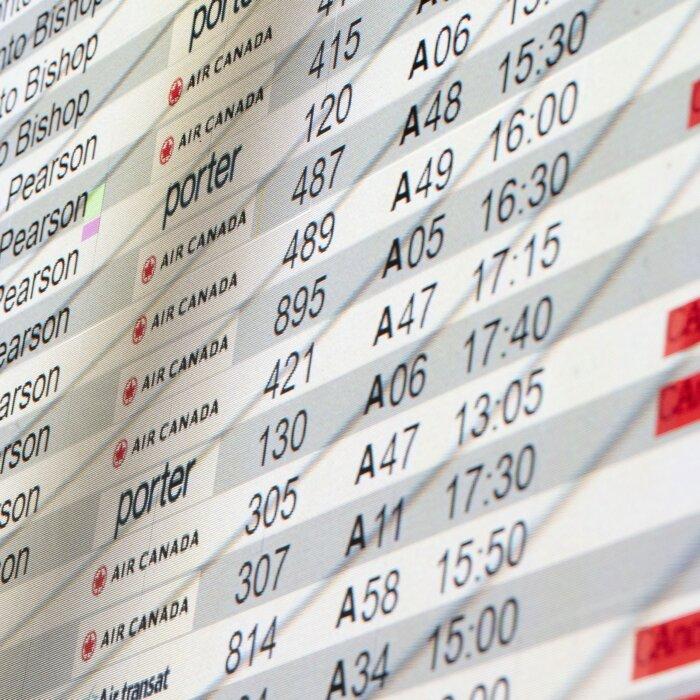
Air Canada’s new reimbursement policy comes as the airline is ramping up flights during its operational restart, which is expected to take seven to 10 days.The airline resumed its Air Canada and Air Canada Rouge flights on the afternoon of Aug. 19 after they had come to a complete halt on Aug. 16 due to its flight attendants’ labour action.
Air Canada and the union representing its flight attendants reached a tentative agreement on the morning of Aug. 19, which required flight attendants to return to work immediately following the three-day strike.
The airline said it was focusing on outbound international routes immediately upon resuming operations, with 155 flights across North America and to Europe, Asia, and the South Pacific taking off on Aug. 19. Meanwhile, Air Canada planned to ramp up the number of flights within North America on Aug. 20.
The airline has advised that a full return to its regular service could take up to 10 days as its aircraft and crews are “out of position.” In addition to the delays, aircraft that were on the ground for more than three days must undergo mandatory maintenance checks.
As of 2 p.m. on Aug. 20, Air Canada expects to operate 90 percent of its flights within Canada over the following 24 hours, as well as 95 percent of its U.S. flights, and 54 percent of its international flights.