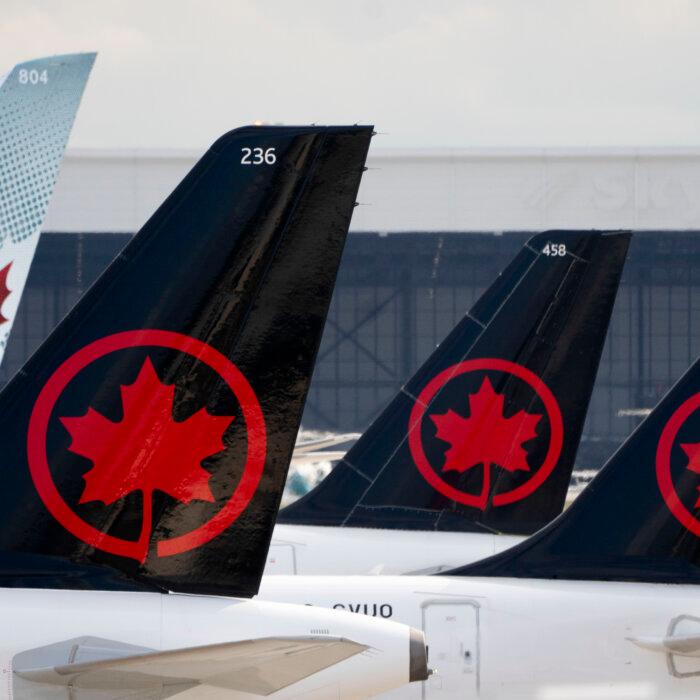
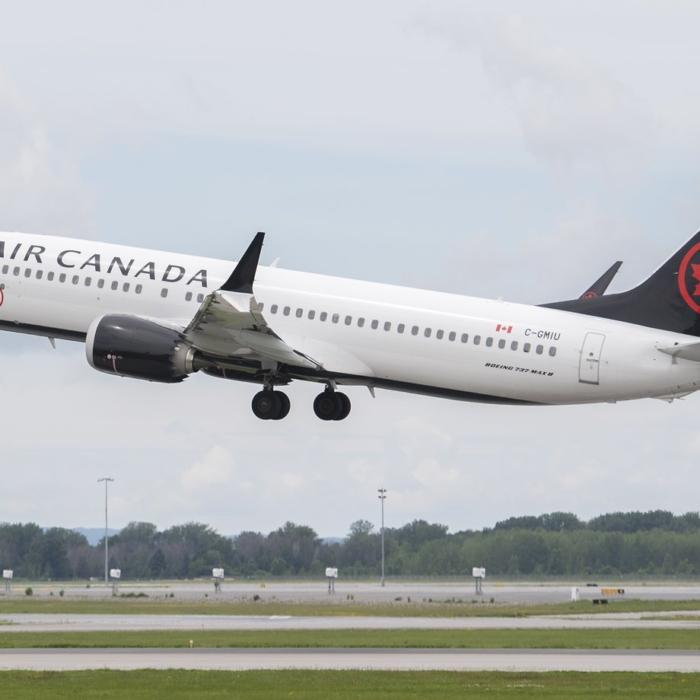
Air Canada says it has issued a lock-out notice to flight attendants and will “wind down” its operations in anticipation of a labour dispute, but it has a legal obligation to take care of passengers on any cancelled flights, says nonprofit group Air Passenger Rights (APR).
The union issued a 72-hour strike notice on Aug. 13, and Air Canada responded by issuing a 72-hour lockout notice for the employees.
Air Canada has warned it will begin cancelling flights on Aug. 14, with a complete cancellation of all flights by Air Canada and its Air Canada Rouge brand by Aug. 16. The airline says cancellations could include the majority of its estimated 700 daily flights on Aug. 15. Air Canada said flights operated by Jazz and PAL will continue to operate as normal.
“Wait until the airline actually cancels [your] flight. Don’t jump the gun,” he told The Epoch Times in an interview. “You have to give the airline a chance to do the right thing and to give them a chance to rebook you.”
Pre-emptive Flight Cancellations
A passenger’s rights depend on the itinerary when it comes to preemptively cancelling flights before a strike, according to APR.Regulations require airlines that pre-emptively cancel flights to offer passengers two options: The first is to rebook customers on the next available flight free of charge, even if it is a competitor airline. The new booking must be within nine hours of the original departure time.
In addition to the rebooking, airlines must provide compensation for the inconvenience, and provide food and beverage if the delay is two hours or more. If passengers have to wait overnight for a flight, the airline is responsible for the cost of accommodation.
The amount of the compensation depends on the length of the delay. For passengers who are delayed between three and six hours, the compensation amount is $400, for those delayed six to nine hours, the airline must pay $700, and for delays of nine hours or more, the compensation amount is $1,000. Airlines are also legally obligated to pay for meals and accommodations during the delay, and “cannot place an arbitrary cap on these expenses,” APR said.
Flights Cancelled Due to Strike
In the case of a strike, such as the one Air Canada is facing, the airline still has a legal responsibility to care for its passengers but may not have to provide compensation, according to APR.Airlines are required to offer two options to passengers impacted by flight cancellations due to labour disputes.
The first is to rebook passengers on the next available flight, either on the same airline or with a partner airline. If the new flight is at a different airport, the airline must cover the cost of transportation for affected passengers.
If passengers choose option one, the airline does not have to pay compensation or provide food or beverage.
The second option is to refund the ticket and return the passengers to their point of origin. The refund must be issued within 30 days, APR said. No compensation is paid if there is a strike.
For those travelling across an international boundary, including to the United States, the airline is liable for damages passengers incur due to delay, which can include meals, ground transportation, accommodation, telecommunications, lost wages, prepaid hotel stays, or events missed at the destination.
If the airline can prove that it or its agents have “taken all reasonable measures” to prevent delay for passengers, it will not be held liable, APR said.
Passengers travelling via Air Canada from the EU, UK, or European Economic Area can also be paid compensation, according to the legislation by the European Parliament and Council, which is codified in UK domestic law, according to APR.
Passengers who are delayed at least three hours, but less than four hours, are entitled to EU$300. For those delayed four hours or more, the compensation doubles to EU$600, and the airline must provide meals, accommodation, ground transportation, and two free phone calls or emails.